



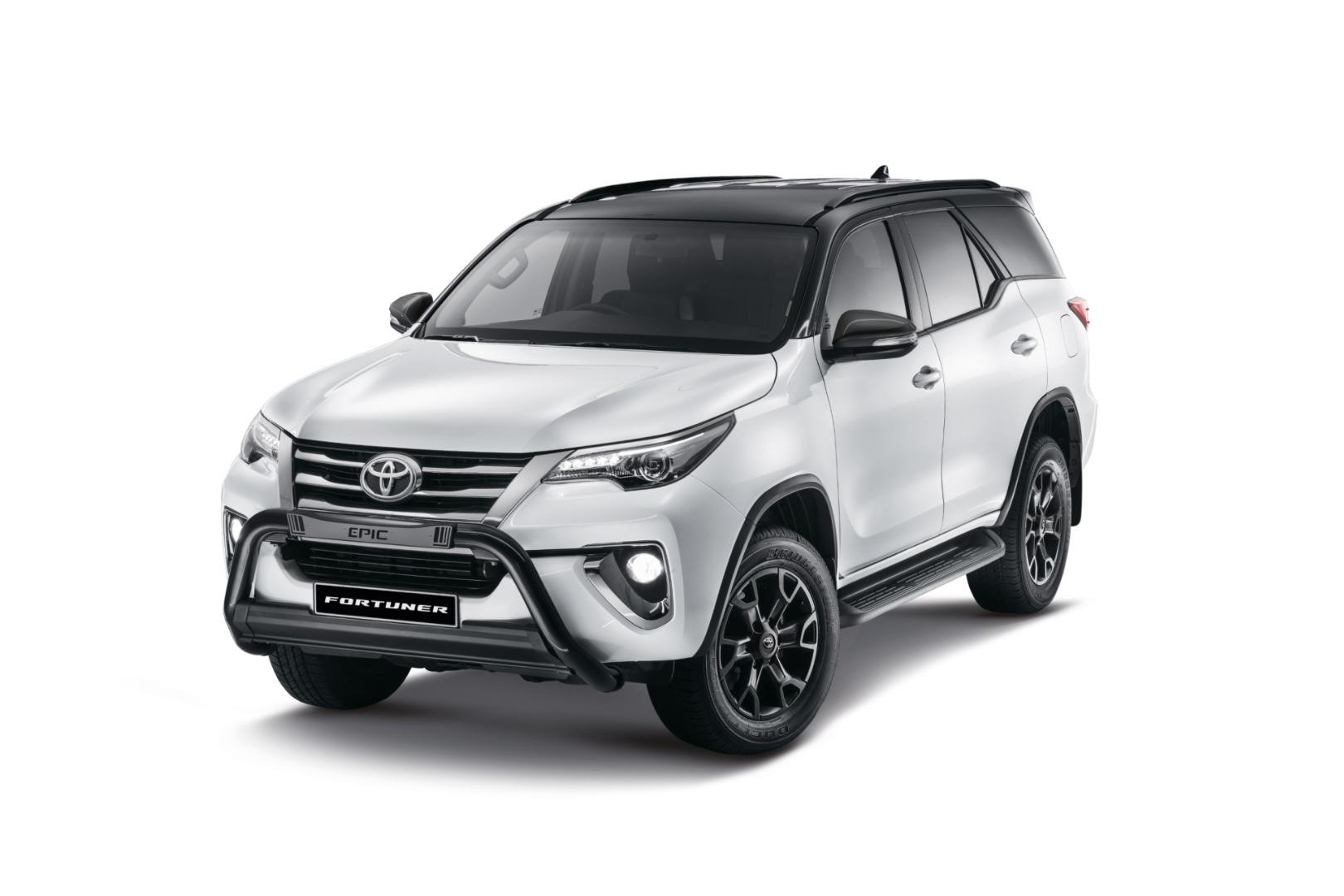
Toyota’s Fortuner is probably the vehicle that is most envied of all in this market by rival manufacturers. Since it was introduced in 2006 it has been the country’s top-selling SUV. What makes the Fortuner such a thorn in the sides of Toyota’s competitors, however, is that it generates sales numbers that rival those of the most popular entry-level hatchbacks. Yet it is a relatively expensive vehicle, and consequently offers Toyota dealers much bigger profit margins on each sale, than smaller cars can manage.
The new-generation Fortuner
In early 2016 the Fortuner received its first radical re-style. Up until then changes had only been of the minor facelift variety. It was notable that in 2015 – the outgoing year for the first-gen Fortuner – the big SUV sold over 8 300 units, figures unheard of in the SUV market until this time. This was achieved despite this generation of Fortuners suffering a reputation for high-speed instability in certain conditions.
Sales of the Fortuner now
Since then, the sales story has remained much the same, despite challenges from Land Rover, Ford with its Everest, Mitsubishi’s much-revised Pajero Sport and newcomers like the Isuzu mu-X and Haval H9. Peruse the current monthly SUV sales figures and there at the top is the Fortuner, selling over 970 units a month from December 2019 through to February 2020. Its nearest competitor, Ford’s Everest, sold an average of about 200 units a month during this period.
So what makes the Fortuner so good? It isn’t the most stylish of SUVs, and nor does it enjoy the most sophisticated specification. But it nevertheless has a mix of attributes that is hard to match. Here we list the Fortuner’s stand-out features that make it such a sales winner.
Top 5 Fortuner features that stand out from the competition
1. Reliability
Like or not, there is no company that enjoys a reputation for reliability like Toyota does. This has been earned over the past five decades and in any discussion about any Toyota product, reliability is probably the first factor that is mentioned.
2. Ruggedness
The current Toyota Fortuner is again based on Hilux bakkie mechanicals and this includes its body-on-chassis design. This format doesn’t offer the most sophisticated ride quality, but its basic design makes it ultra-reliable and inexpensive to maintain.
3. Sensible model range
The Fortuner is available with a choice of two diesel engines and, until recently, two petrol engines. However in early April the range was revised and the previous range-topping 4,0-litre V6 petrol version has been dropped. There are currently eight models, seven of which are diesels and prices range from R520 900 to R753 900.
4. A useful 7-seater format
The Fortuner caters for large families and offers accommodation for five adults and their luggage, and an additional two smaller children in the third row of flip-down seats.
5. Off-road ability
The Fortuner is offered with 4-wheel-drive and low range in some models, and its diesel engines are known for being better at accepting lower grades of diesel than rival brands. This comes in handy when the Fortuner is used in countries beyond our borders, where quality of diesel can be quite “iffish”.
Recommended next:
Ford Everest 2.0Bi-Turbo Limited vs Toyota Fortuner 2.8GD-6 Epic
How to change wiper blades on a Toyota Fortuner
Toyota Fortuner test drive: Make sure to check these features out