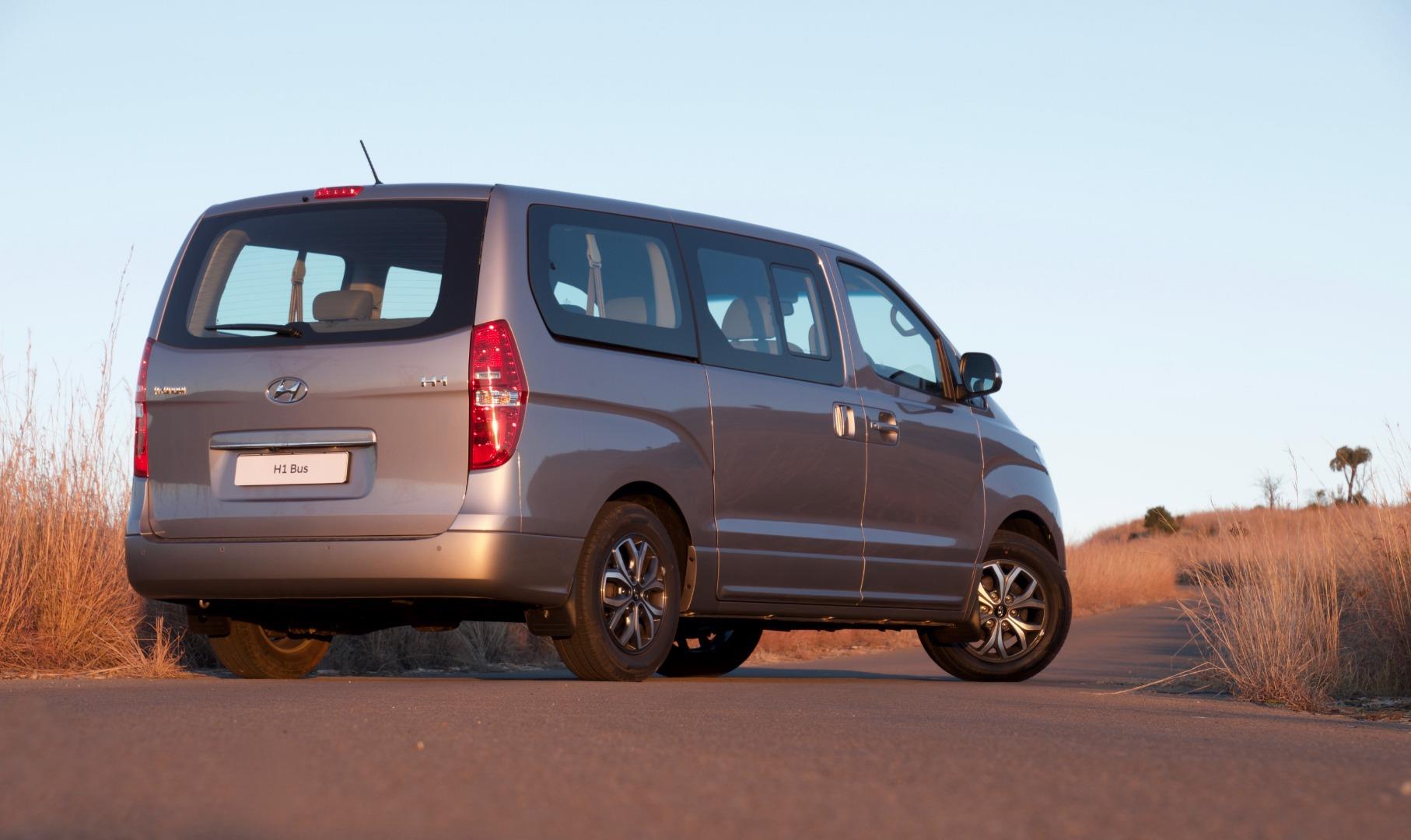
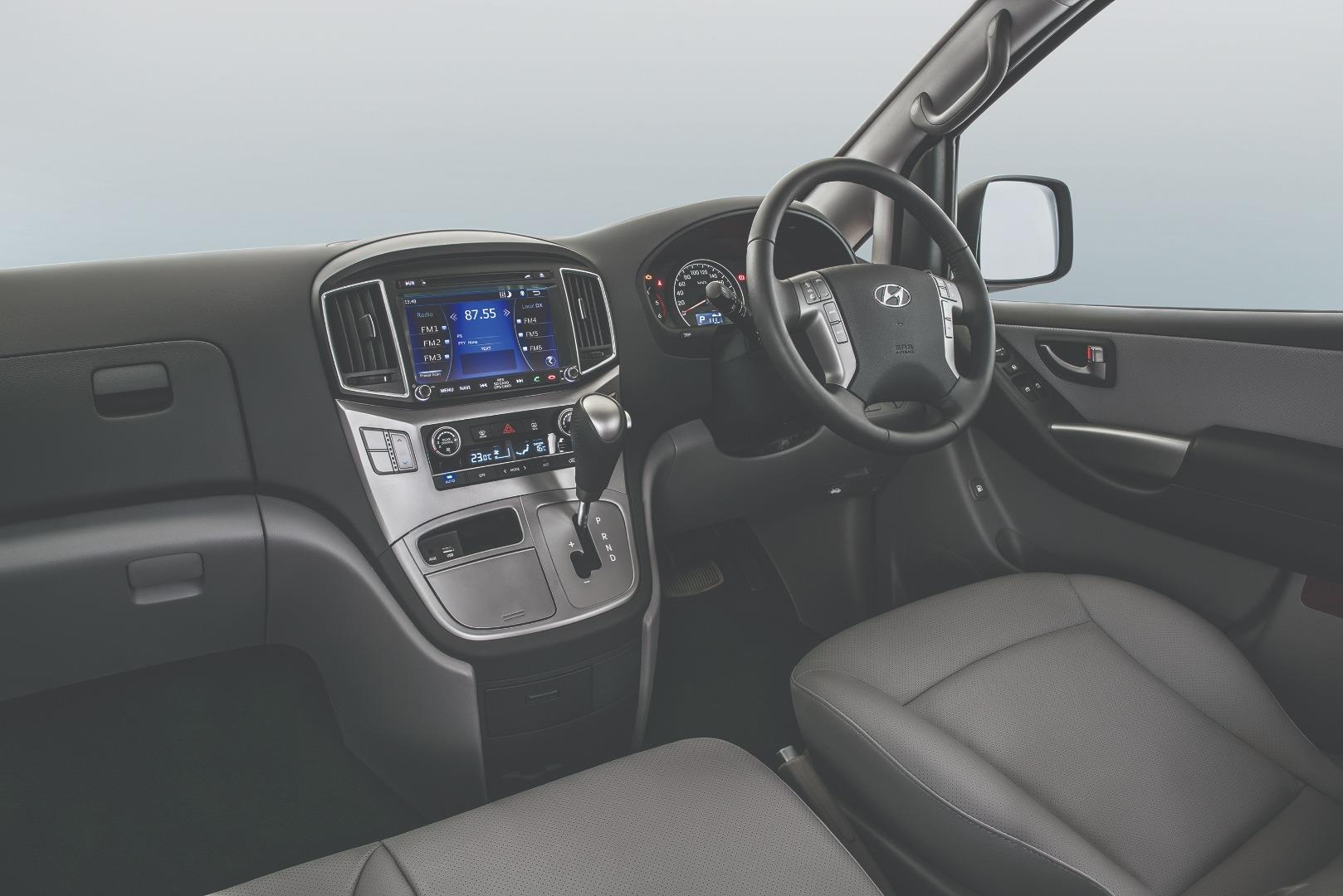
Before we dive in, let's take a look at our current H-1 lineup:
Hyundai H-1 2.5 CRDi panel van: R491 000
Hyundai H-1 2.4 bus Executive: R544 900 (naturally aspirated petrol)
Hyundai H-1 2.5 CRDi Multicab: 562 900
Hyundai H-1 2.5 CRDi bus Elite: R647 900

So what does the H-1 have that makes it such a value package?
1. Some very positive power figures
The entry-level Hyundai H-1 panel van may cost a somewhat pricey R491 000, but compared to its slightly more affordable Ford Transit Custom, Mercedes-Benz Vito, and Peugeot Boxer counterparts, it has the most impressive power figures: 125kW and 441Nm from its 2.5-litre turbodiesel engine. The Peugeot Boxer has 96kW and 320Nm, the Vito 84kW and 270Nm the Transit Custom panel van has 74 kW with 310 Nm.
The same goes for the other segment competitors in the people mover department, such as the VW Kombi and Ford Tourneo custom of similar engine size. The H-1 outshines them all, and when you have a pair of bottoms on every seat and a boot-ful of luggage, more power is always preferable.
Related: Just hop on the bus, Gus! (Review of the Hyundai H-1 Elite diesel, 2018)

2. An impressive specification sheet, including a touchscreen
The Hyundai passenger buses have standard leather upholstery, an absolute must-have if you're the queen of carpooling. It also has standard alloy wheels, and the flagship 2.5 CRDi bus Elite has an automatic gearbox which the Kombi 2.0TDI SWB Trendline (R598 900) and Ford Tourneo Custom 2.2 TDCi LWB Ambiente, R588 900, have not. In the other MPVs' defence, the Tourneo has brake assist, and both the Kombi and Tourneo have hill-start assist which the Hyundai busses don't.
The Kombi also has a tyre pressure monitor, but only two airbags vs. the H-1's four. However, it's the Ford Tourneo Custom which trumps them all with 6 airbags.
The H-1 is the only bus with a standard touchscreen in this price range. Should you opt for the much more expensive VW Kombi 2.0BiTDI SWB Comfortline at R773 200, you'll get a lot more spec, including a DSG gearbox and infotainment system. But is it really worth it?
If you are keen on a more affordable people mover, Volkswagen Caddy range offers seven seats from R 310 00 for the 1.6 crew bus!
Related: Look for pre-loved VW Caddy models on our sales site

3. That ninth seat in front
The Hyundai bus's secret super power is that extra seat up front, bringing the total to nine. When not in use, it can be neatly folded and used as a surface for a handbag or briefcase. This seat comes in especially handy when people prone to carsickness are on board, since they will have a good view of the horizon! The competitors named in this article only have room for eight passengers.
Related: VW Caravelle test drive - be sure to check out these features

4. A cavernous boot
A common complaint among seven and eight-seater owners is that there's not much space for everyone's luggage once all the seats have been filled. In the H-1 this is not the case, as there is still a massive 842 litres' worth, making the H-1 ideal for surf trips or airport shuttles. Did you know that even the third row's backrest in the H-1 can be adjusted for your passengers' comfort?

5. And finally, the warranty, service plan, and roadside assistance
Hyundai's piéce de résistance is its outstanding five-year/150 000 km warranty, with an additional two years'/50 000 km manufacturer’s powertrain warranty, as well as a 5-year/150 000 km roadside assistance plan and 5-year/90 000 km service plan.

Recommended next
Toyota Quantum vs. Mercedes-Benz V-Class vs. VW Caravelle - best value for money