Top 3 MINI Countryman trims head-to-head: here’s our winner
The MINI Countryman offers fans of the quirky British marque with a more practical product that fits a small family and caters to various lifestyle activities. We compare the three Countryman trims to get a better idea of the differences.

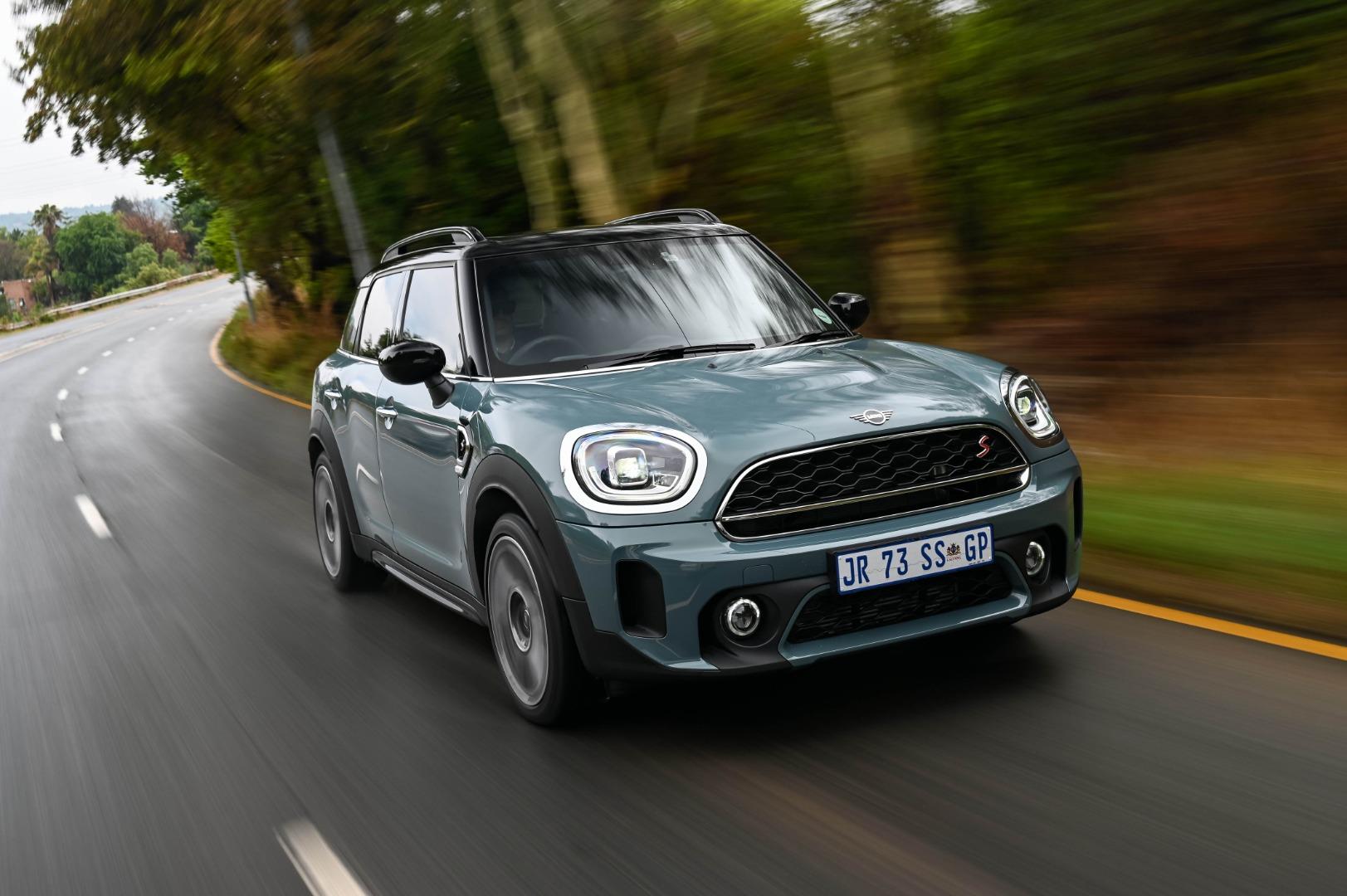


The second-generation F60 MINI Countryman may share its UKL2 platform with the likes of the BMW X1 and X2 but the product appears to appeal to a far more niche market than its German cousins, providing those that require a larger vehicle but like the quirky appeal of a MINI, with a compact SUV option. With a range of turbocharged three-and-four-cylinder petrol engines as well as an endless amount customisation options, MINI's biggest car may have ventured off of the path of the iconic original, but it still offers a competitive package within the premium market.
Related: MINI Cooper Countryman – English estate-living in suburbia
For our purposes today, we will be looking at the three trim levels available across the MINI Countryman line-up locally. Since each trim level features distinct powertrains and features, the purpose of this piece is to show key differences between the models which will go a long way to explaining the rather large price difference between the trio.
Powertrain
The MINI Cooper Countryman is powered by a 1.5-litre, three-cylinder turbocharged petrol engine that sends its power to the front wheels via a 7-speed dual-clutch transmission while the Cooper S Countryman shares its gearbox with the Cooper but features a 2.0-litre four-cylinder turbocharged engine which also sends its power to the front wheels. The flagship John Cooper Works (JCW) model features a reworked version of the 2.0-litre motor from the Cooper S and also benefits from the brand’s ALL4 four-wheel drive system as well as an 8-speed torque converter automatic gearbox.
|
|
MINI Cooper Countryman |
MINI Cooper S Countryman |
MINI John Cooper Works All4 Countryman |
|
Engine |
1.5-litre, 3-cylinder, turbocharged petrol |
2.0-litre, 4-cylinder, turbocharged petrol |
2.0-litre, 4-cylinder, turbocharged petrol |
|
Transmission |
7-speed dual-clutch automatic |
7-speed dual-clutch automatic |
8-speed automatic |
|
Price |
R591 524 |
R696 354 |
R901 940 |
|
Power |
100 kW |
141 kW |
225 kW |
|
Torque |
220 Nm |
280 Nm |
450 Nm |
|
0-100 km/h |
9.7 sec |
7.5 sec |
5.1 sec |
|
Top speed |
203 km/h |
226 km/h |
250 km/h |
|
Fuel consumption |
6.3 L / 100 km |
6.7 L / 100 km |
7.6 L / 100 km |
|
CO2 emissions |
143 g / km |
153 g / km |
175 g / km |
Exterior
Both the Cooper and Cooper S models are family similar from an exterior perspective and have benefited from a new front grille design which features horizontal struts in the Cooper model and a hexagonal pattern with an ‘S’ badge on the Cooper S. Both models get LED headlights and fog lamps, rear LED taillights with the Union Jack motif, various two-tone body paint finishes and 17-inch alloy wheels on the Cooper and 18-inch items as standard on the Cooper S. Both models can be ordered with the ALL4 exterior design package as well as roof rails for those looking for added versatility. The JCW derivative is the sportiest in terms of design, featuring a unique body kit, lightweight 18-inch alloy wheels and red brake callipers to distinguish itself from the rest of the range.

Interior
In terms of the interior of the three models, again, expect the Cooper, Cooper S and JCW to be broadly similar, featuring a 5.0-inch colour screen digitised instrument cluster, a sports leather steering wheel, and an 8.8-inch Connected Media infotainment system. The Cooper model comes standard with combination cloth/artificial leather seats while the Cooper S gets leather items. The JCW model distinguishes itself with Dinamica/leather combination sports seats as standard along with various ‘John Cooper Works’ badges throughout its cabin.

Specification
All models feature niceties such as cruise control, a multifunction steering wheel, keyless start, front and rear electric windows, 40/20/40 split-folding rear seat, ISOFIX child seat mounting points, heated front seats, an electric tailgate, six airbags and climate control. As with all MINI models, many optional extras can be specified in terms of personalisation and specification. The JCW model is available with three optional packages when specifying the vehicle. These include ‘Classic’, ‘Signature’ and ‘Iconic’ and vary in price from R30 000 to R57 500, with each succeeding package offering more specification.

Conclusion
The three MINI Countryman variants, despite looking the same and broadly speaking, featuring many of the same features, have a massive gap in their respective prices. This gap comes down to some of the standard features as well as the powertrains fitted to each model, which in the case of the John Cooper Works model, has made it significantly more costly than the Cooper and Cooper s models.
It would come down to the buyer’s budget and requirements at the end of the day, with those after a sporty experience with sure-footed all-wheel drive being better off with the JCW model, and those on a tighter budget benefitting from the cheapest Cooper Countryman model. This leaves the Cooper S Countryman as the potential sweat spot within the range, offering a near middle ground for consumers.
Recommended next:
BMW X2 vs Volvo XC40 vs Mini Cooper Countryman: Which one has the lowest running costs?
MINI Countryman test drive: make sure to check these features out.