


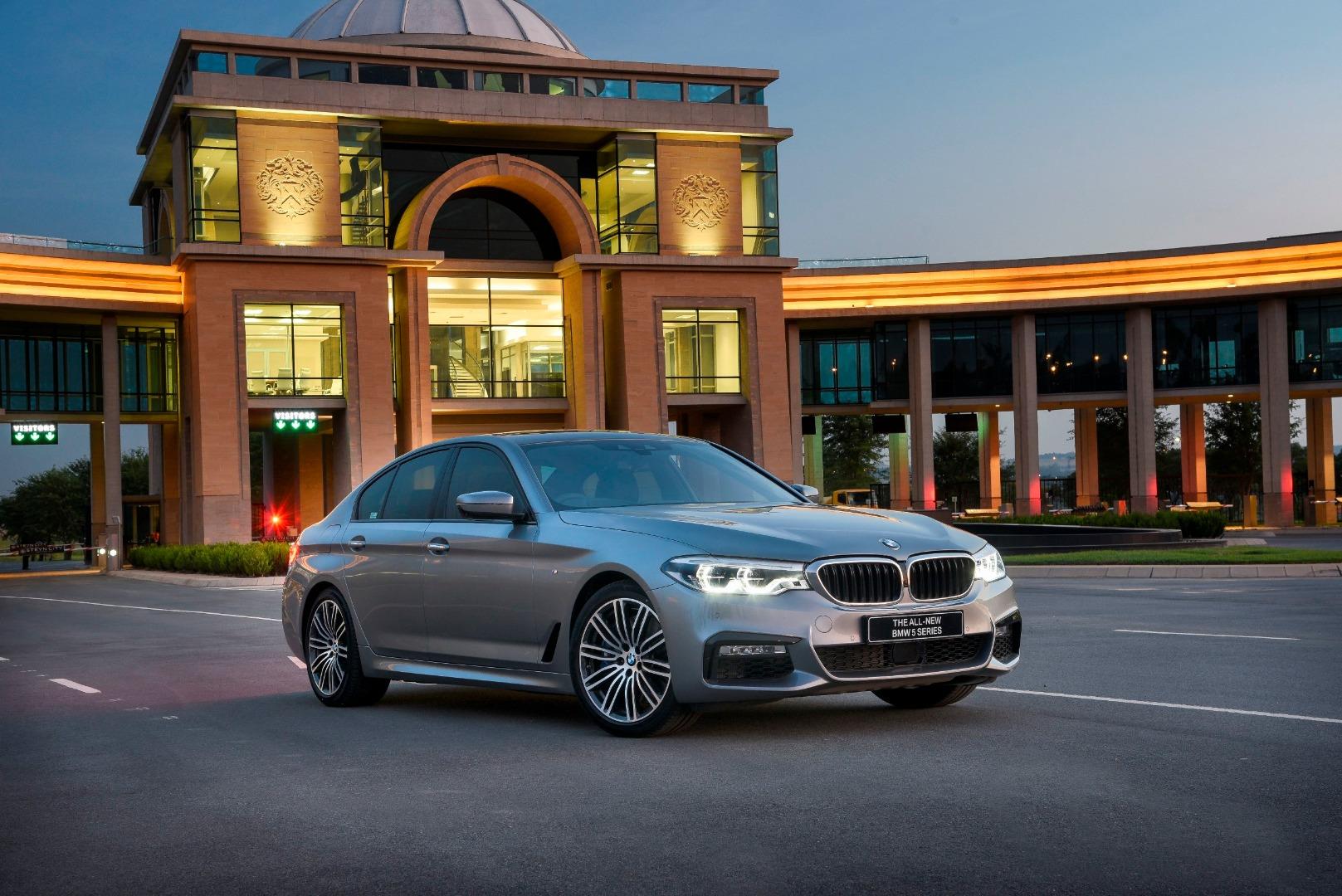
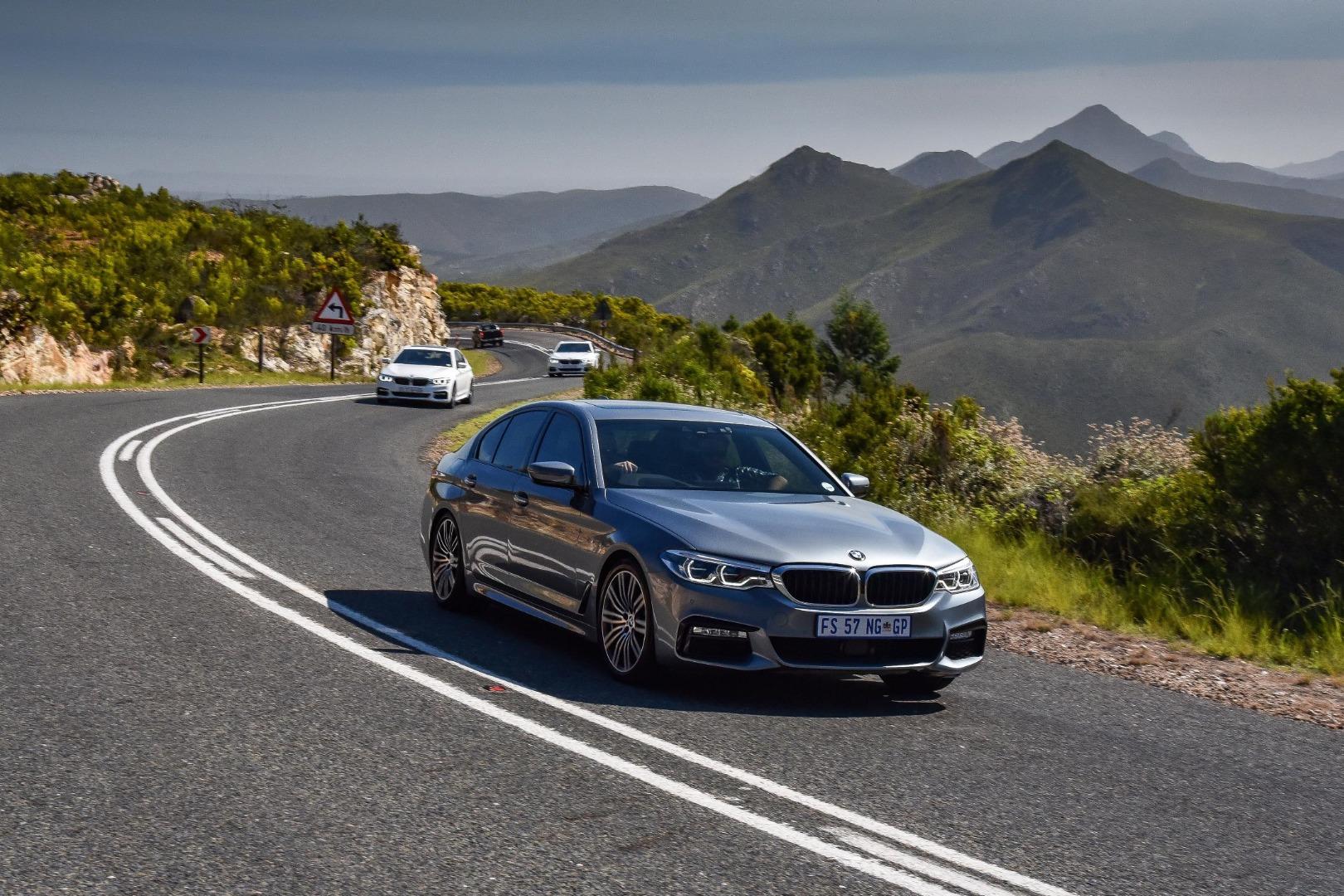
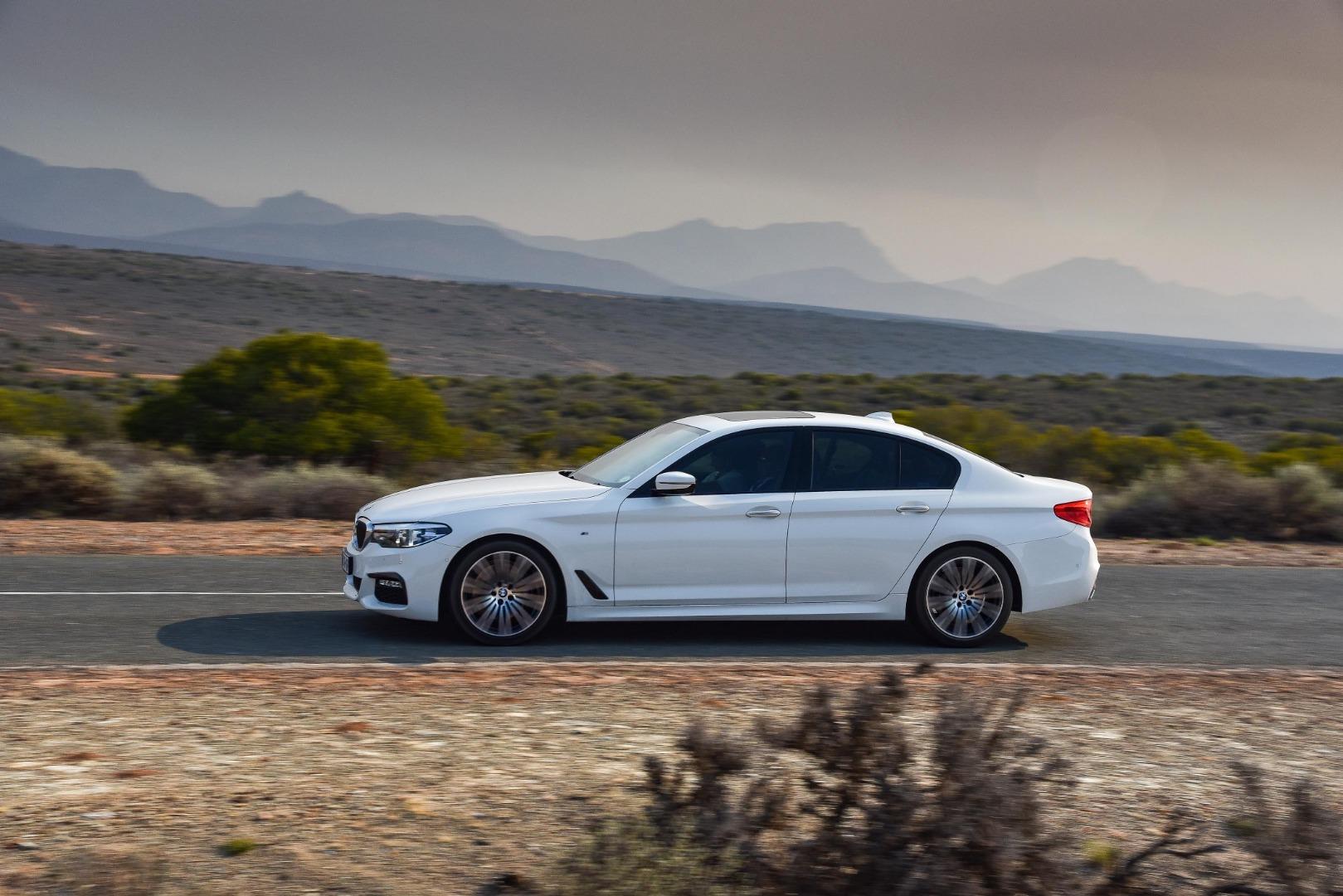
BMW’s 5 Series sedan was launched in its latest incarnation in March 2017. Experiencing this car reminds you once again that BMW produces superb driving machines in all its model lines. The current 5 Series draws on a heritage that goes way back to 1972, and in fact the first-gen 5 Series was the first model to be assembled in BMW’s South African plant in Rosslyn in large quantities, staring in 1974. The Rosslyn plant was the first factory outside of Germany to undertake assembly of BMWs, and in fact Plant Rosslyn holds a special place in the hearts of BMW Munich-based management because of this.
In its latest generation, which is fully imported, the 5 Series is quite conservatively styled and appointed. In earlier days BMWs were always a bit more flamboyant than its rivals from Mercedes-Benz, but nowadays it is Mercedes-Benz that is more likely to push the “brashness boundaries”.

A face-lifted 5 Series is on the horizon
However, it should be noted that a face-lifted 5 Series range (with bolder frontal styling) is due to make its appearance here in the fourth quarter of 2020, which is only a month or two away. However, these plans were put in place pre-lockdown, so it will be interesting to see if the face-lifted 5 Series does in fact make its way to South Africa before 2021.

5 Series basics
The 5 Series is a premium-luxury 5-seater sedan. All the current 5 Series cars here have in-line-mounted engines, with an 8-speed automatic gearbox driving the rear wheels. The exception to this rule of thumb is the specialised M5 Competition model which is more of a supercar with four door configuration, and is not included here in this comparison. The M5 has all-wheel-drive to cope with its stupendous power output of 460 kW and a 0-100 km/h time of 3,3 seconds. Also rather stupendous is the M5 Competition’s price of R2 119 286.

Current model range
The BMW 5 Series can be categorised by its engine options. There are three of these, in models badged as the 520d, 530d and 540i. And with each of these nameplates comes the option of buying the standard model, or one fitted with the M Sport package which adds visual differences to both the exterior and interior, but no mechanical changes. The M Sport package adds an additional R50 000 to the price of the three basic models.
BMW 520d - R877 002
This is the entry-level 5 Series model and comes with a 4-cylinder 2,0-litre turbodiesel producing 140 kW and 400 Nm of torque. The claimed 0-100 km/h time is 7,5 seconds and the top speed is 235 km/h. This means the entry-level 5 Series is still a reasonably rapid motorcar, but most customers opting for this one will be seduced by its diesel frugality when it comes to topping up the tank. The claimed average consumption is 4,7 litres/100 km, so owners can expect overall consumption in the 5,5 to 6,0 litres/100 km range.
BMW 530d - R1 070 382
The big difference with the 530d version, as compared to the entry model, is that it comes with an in-line 6-cylinder turbocharged diesel engine. This is a magnificent piece of engineering by BMW, and one of the smoothest-sounding diesels on the market. The engine displaces 2 993 cc, produces 195 kW and an impressive 620 Nm of torque. The 0-100 km/h time is 5,7 seconds, the top speed is 250 km/h and claimed average consumption is 5,1 litres/100 km. In real life owners can expect consumption in the region of 6,5 litres/100 km.
BMW 540i - R1 109 522
This is the only petrol-engined version of the 5 Series range (disregarding the super powerful M5, which, as mentioned, is not included in his comparison). The engine used is a 2998 cc in-line 6-cylinder unit that is turbocharged, and produces an impressive 250 kW and 450 Nm of torque. The 0-100 km/h sprint is dealt with in 5,1 seconds, top speed is an electronically limited 250 km/h and overall fuel consumption is claimed at 7,2 litres/100 km/h. We feel owners will more likely be returning figures of 9,0 litres/100 km, even with careful driving.
*Pricing correct at time of publishing and subject to change without notice.
And the winner is…
If you simply have to be in a 5 Series, but don’t require too much in the way of performance, then the entry-level 520d makes sense as it is R200 000 less-expensive than the 530d model. However, status is important to 5 Series customers and the most likely candidates for model-of-choice will be the 530d and the 540i.
Much as we admire the excellent characteristics of the 530d, not to mention its performance which is very close to that of the 540i, we would still opt for the 540i. The price difference between these cars is negligible, and in fact if you choose the M Sport cosmetically-enhanced version of the 530d it will cost you more than the standard 540i.
So our choice is the BMW 540i in standard trim. We could do without the M-Sport add-ons, but would seriously consider a set of optional 19-inch wheels to replace the standard 18-inch items. This car utilises the famous in-line 6-cylinder petrol engine that has made BMW famous, and its power and refinement is worthy of the dynamically-excellent 5 Series chassis. There is nothing quite like the sound of revving a BMW 6-cylinder engine to 6500 rpm, something that the slow-revving diesel cannot manage. So for us, the 540i is our top 5 Series choice.
Recommended next:
Infiniti Q70 vs BMW 5 Series vs Mercedes-Benz E-Class: Which one presents the best value for money?