
The new Porsche Cayenne - More purpose, performance, and poise
The new Porsche Cayenne - More purpose, performance, and poise


By Ané Theron
Off to the Riviera on Fujairah
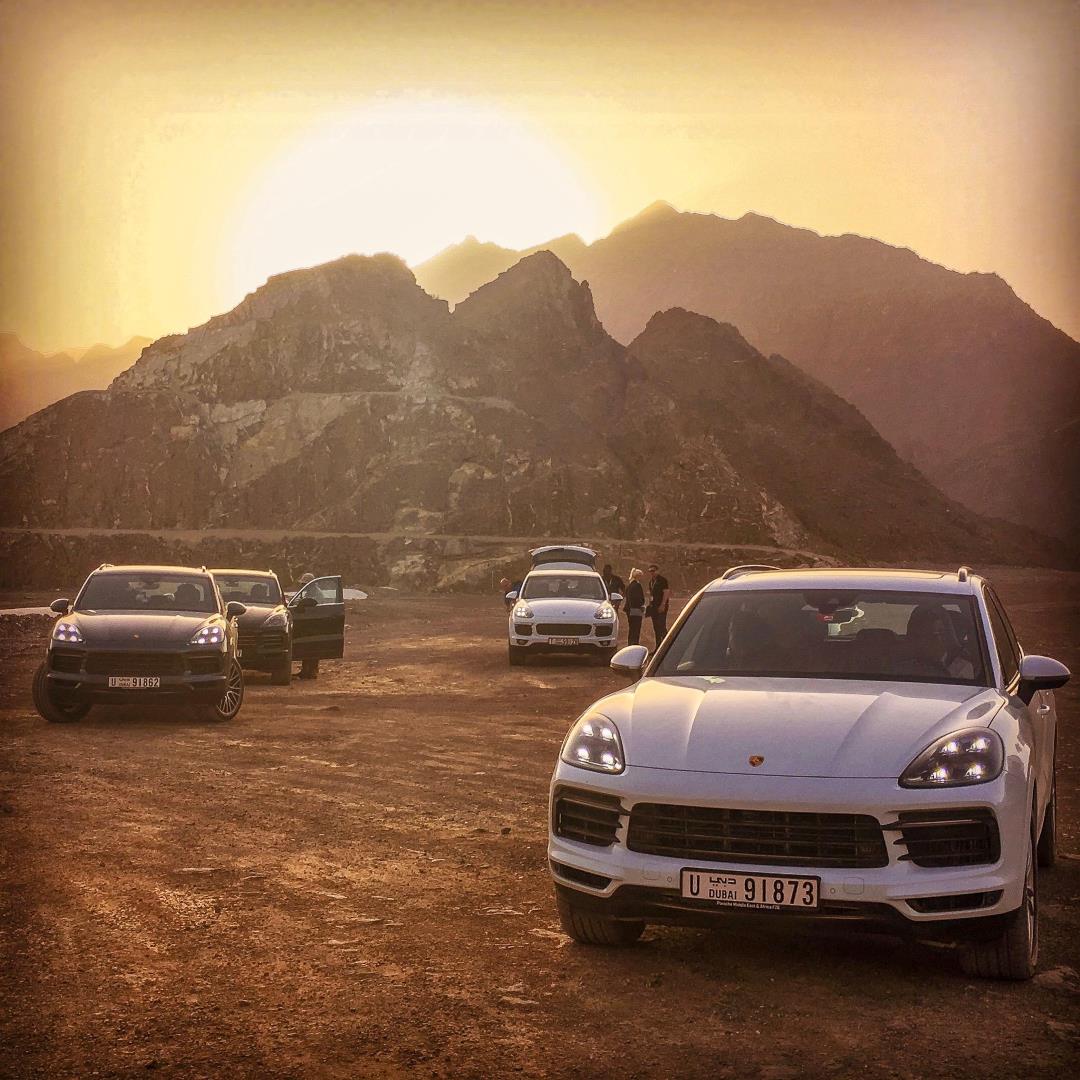
To showcase the new Cayenne’s love for the outdoors, Porsche could not have chosen a better location than Fujairah on the Eastern gulf of the United Arab Emirates. The winding gravel road through the stark and dramatic Hajar Mountains, towards the Sultanate of Oman, would prove to be the ultimate testing ground for the Porsche Cayenne’s new off-road features, evolved chassis and advanced new air suspension.
Even though only one Porsche has the Turbo-label attached, all three Cayennes benefit from turbocharging. The entry-level Cayenne’s 3.0-litre, V6 turbo-petrol engine now has 450 Nm and 250 kW on tap (0-100 in 6.2 sec); the smaller-engined Cayenne S has a 2.9-litre, V6 bi-turbo engine with 550Nm and 324kW (0-100 in 5.2 sec), and the flagship Cayenne Turbo boasts a bi-turbo, V8 engine with 770Nm and 410 kW (0-100 in 4.1 seconds). If you add the optional Sport Chrono Package, you can shave about 0.2 seconds off their respective 0-100 acceleration figures.
Climb every Mountain
Snaking our way through Dakar-like gorges at a slow but steady speed, my co-driver and I spent the morning in the new Cayenne S. The road surface consisted mostly of slippery gravel, and loose, sharp rocks, but the Cayenne S seemed unperturbed – but one can certainly feel those rocks through the mammoth rims and skinny rubber tyres as we made our way forward, even with the adaptive air suspension set to ‘gravel’. Other new settings comprise mud, sand and rock. With the off-road settings on any of these, the Cayenne’s engine and new chassis systems will adapt to whatever surface it finds itself on, and the all-new adaptive three-chamber air suspension is automatically raised or lowered.
Soon a layer of pale, fine dust covered every Cayenne and Cayenne S, which made it even more difficult to differentiate from the outgoing model that was carrying the camera crew. The new Cayenne’s front-end hardly looks as if it’s seen anything more than two weeks at a health spa in Mallorca, when it actually had some major surgery done, albeit mostly on the inside. The Cayenne is now of all-aluminium construction, shedding up to 65 kilograms as a result. It also shares the MLB platform of the VW Touareg, Bentley Bentayga, Audi Q7 and new Lamborghini Urus. Brand new optional rear-axle steering is carried over from the 911 and Porsche Panamera, for a smaller turning circle and added nimble-footedness. Other changes include the addition of an electric roll stabilisation system with even faster reflexes.
Same-same, but different
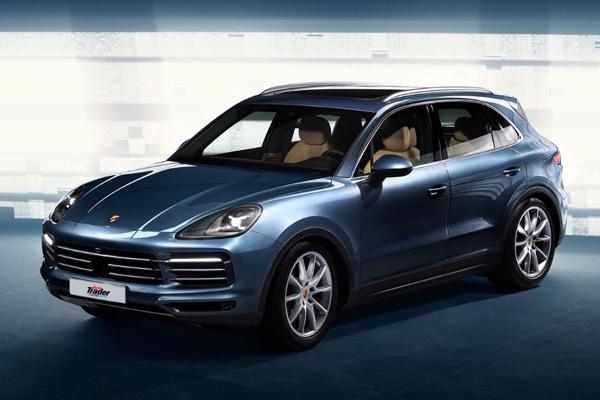
If you look very carefully (and I mean VERY carefully), you’ll notice that its nose looks longer and more tapered than before, with a more focused demeanour overall. The headlight contour has been redesigned (so they say), the vehicle is lower to the ground, and the side windows are narrower. LED lights are standard on every model derivative.
Extreme makeover at the rear
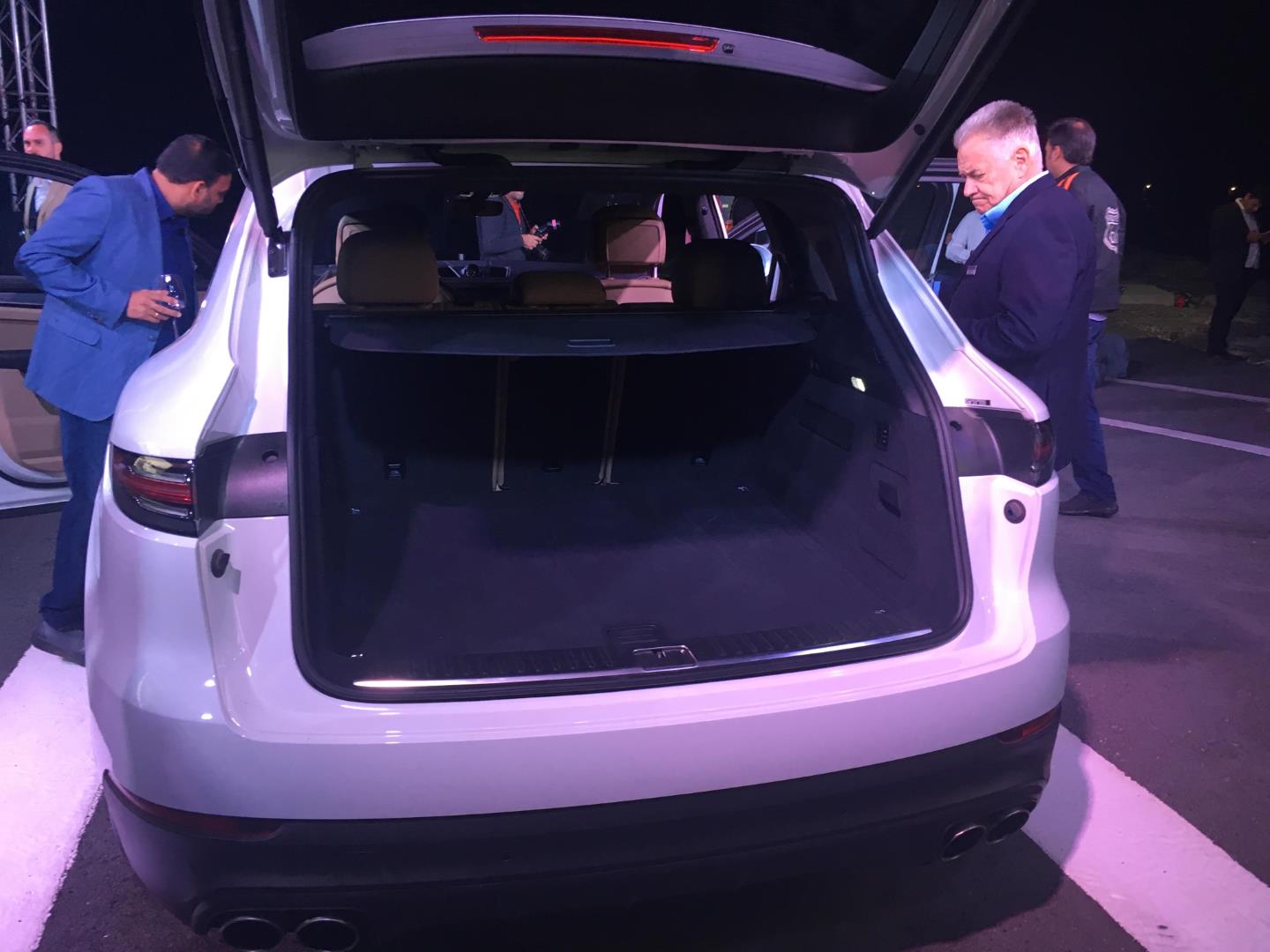
Changes to the rear are however anything but subtle – we’re talking about an extreme makeover here. Did Porsche go too far? To me, the outgoing model’s backside was looking dated, even at the time of its launch. But the new connected rear lights may be a little too raunchy for Porsche purists. Others may find it nondescript; generic, not elegant enough, like something on a slightly less luxurious SUV. I find myself sitting on the fence here – I would have liked the Cayenne to receive a rear that’s more along the lines of the statuesquely athletic Porsche Macan’s, yet I don’t think that it’s ungainly.
Steel vs. air?
After a traditional Arabic lunch at the top of the mountains overlooking idyllic Zighy Bay in Oman, we were handed the keys to a white entry-level Cayenne, which rides on traditional steel springs. Call me old-fashioned, but I much preferred the drive home over the rough gravel section in this “basic” Cayenne, which also had more practical tyres – but the catch is that you cannot raise or lower the car without the aforementioned adaptive air suspension option, which was fitted in the S (prices of options to be released closer to the local launch date). The morning ride in the Cayenne S was hard, but very stable, whatever the conditions. In the afternoon, the “regular” Cayenne felt a little less unperturbed on the gravel surface, but it was a little more gentle on our backsides.
Pretty classy
Off-road ride quality aside, the interior of the entire new Cayenne-range is a classy, designer spacecraft-like affair – pretty much like you’ll find in the latest Panamera. The perfectly-designed sports steering wheel had me waxing lyrically (see photos). Slender, elongated chrome buttons, set in glossy piano black, surround the new 8-speed Tiptronic S gearbox lever on the centre tunnel. The intuitive new touchscreen (the display for the PCM or Porsche Communication Management) of 12.3 inches is next-level – graphics are clear and crisp as the ocean underneath Arctic ice, and can be configured for up to six individual profiles (hello car-sharing?) with their exact preferences for interior settings, lights, driving programs and assistance systems.
Gimme some apexes to clip
As previously mentioned, both the Cayenne and Cayenne S see power gains, and so does the Cayenne Turbo, the flagship model. Sadly, there weren’t any of these supercar-SUVs to test, but the Cayenne and Cayenne S almost proved to satisfy our speedy needs – not because they’re not powerful enough (believe me, they are), but because our launch route involved very little tarmac and left us all wanting more. We simply couldn’t give the Cayenne Turbo even half of the spirited treatment it deserves on those short sections of tar.
To experience the Cayenne in its full athletic glory, some twisty tarmac-time was much needed. However, since the SUV-segment is experiencing a continuous growth spurt, it makes sense for Porsche to focus more on the off-road lifestyle, even though most Cayenne owners will never go much further off the beaten track than the dirt shortcut to their children’s private school. Since there’s some tough competition in this segment from the likes of Land Rover, Maserati, Jaguar and now also Lamborghini, one has to stay one step ahead of the Joneses.
What I can tell you from a short sprint around a surprise bend or two, is that the new Cayenne’s handling certainly feels more precise, and a reduction in weight as well as a tauter body clearly increase poise and purposeful performance. The Porsche’s 4D Chassis Control connects all the systems nicely, for enhanced sportiness. However, both the Cayenne and Cayenne S suffer from a smidge of turbo lag, especially if you’re just cruising along in a relaxed manner and decide to put your foot down, just for fun.
Space for days
On the practical side of things, the boot of the new Cayenne-range gets another generous hundred litres’ worth of volume for family paraphernalia. When I was in the front passenger seat, I could also fully extend my legs, despite having a tall passenger sitting behind me (who also had room to spare). So yes, if you’re looking for room to stretch, you’ll find it in the Cayenne.
With such vast differences in price between the Cayenne S and the Cayenne Turbo, it will be interesting to see if the people of SA will drop two bar on a car which can never fully be utilized on our local roads – unless they plan on regularly throwing it around the track. If you were trying to (superficially) win someone’s affections, just having the most affordable Cayenne as your everyday wheels is probably enough to seal the deal - whether you’re driving a Cayenne S or Cayenne Turbo probably won’t make much of a difference to your potential arm-candy. What I am trying to say is that the new Cayenne is just divine – whether you’re spending one million bucks, or two.
Cayenne: R 1 131 000
Cayenne S: R 1 272 000
Cayenne Turbo: R 2 064 000