
The Electrifying Auto China 2018 Beijing International Automotive Exposition
The Electrifying Auto China 2018 Beijing International Automotive Exposition


By Chad Lückhoff
If there was one resounding element from the recent Auto China 2018 Beijing International Automotive Exposition, it was the one of electrification. It was near impossible to walk through a stand and not have some variant of hybrid, EV or concept vehicle on display, all choosing electrons over fossil fuel.
This is not a new trend, not by any stretch of the imagination. The green theme has been on a roll for nearly the last decade. With ever-increasing emissions regulations and stiff penalties for those who do not meet the grade or offer an environmentally-friendly alternative, it's become the focus of many a manufacturer.
Here in South Africa, we're a little slower than most and by that, I mean that we haven't embraced electrification in the same way that many other countries have. While the Toyota Prius, Auris Hybrid, a handful of BMW hybrids and a few Lexus examples roll on our roads, the uptake is considerably slower than that of the rest of the world.
China has shown what can be done when the government urges manufacturers and dealers to push the EV trend. The Chinese government has stated that it wants environmentally-friendly vehicles to account for at least 20% of all vehicle sales in China by 2025. They're fast on their way to doing so and over the last few years, the largest automotive market in the world has overtaken the USA and the fastest growing EV market globally. Almost 800 000 EVs were sold in China in 2017, making up 2.7-percent of total sales, which tipped at a staggering 28.7-million vehicles. In comparison, the USA only moved around 200 000 units, 1.2-percent of total sales.
The Asian market has willingly embraced Tesla Motors on their shores and fleets of Model S' and X's can be found roaming the streets of the more affluent cities, like Beijing. A stark contrast up against the rental bicycles that line the streets in their yellow, grey and day-glow orange. Now, with help from the government who has placed subsidy schemes in place for local manufacturers, and strict penalties for those not meeting the 10% Green regulations, the local firms are investing heavily in new-energy research and development.
This year's Auto China Expo saw more than 1020 cars on display with nearly 200 new-energy vehicles on show, of which, 124 are made by Chinese firms. It's comfortable to say that China is on the fast track to becoming the global leader in NEV technology and production.
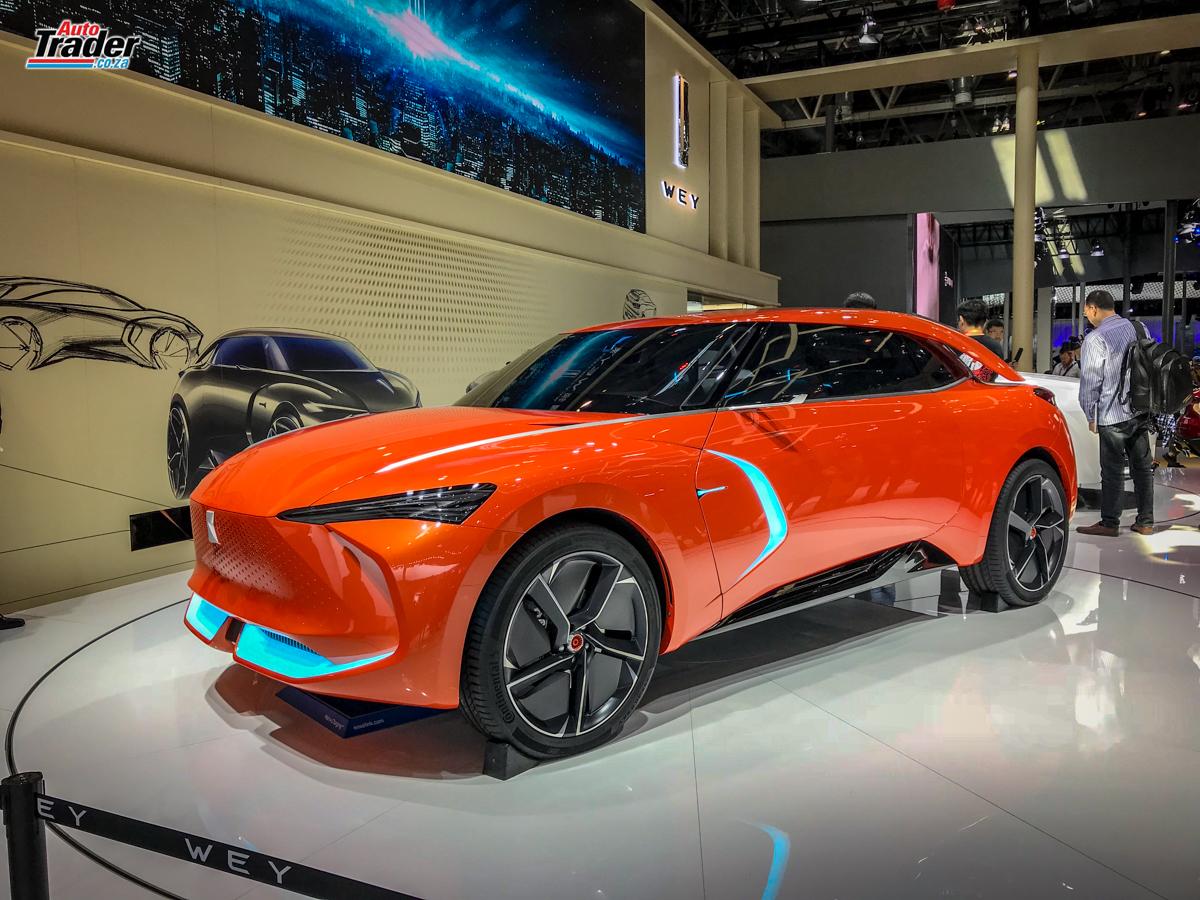
Our hosts, Haval, unveiled the new P8 under their luxury brand, Wey. A large SUV with class-leading range and connectivity, packaged into an attractive and contemporary shell. GWM (the holding company of both Haval and Wey) has expressed an interest in the South African market but due to the right-hand drive format locally, more consideration is needed before committing to a local introduction of the hybrid SUV. We may, however, see the VV5 and VV7 locally in the next 24 months.
Wey was one of the many manufacturers to unveil concept cars, hinting at what production versions of the full-electric vehicles may look like.
Mercedes-Maybach showed the Vision Mercedes-Maybach Ultimate Luxury with an 80kWh battery pack with an NEDC range of over 300 kilometres. The all-wheel-drive system transmits 500kW of power and boasts a top speed of an electronically limited 250km/h.
Nissan pulled the covers off of the second generation Leaf and debuted the Imx KURO concept, a full-electric crossover. Their third offering, a Leaf-based sedan, the Sylphy was also on display. José Muñoz, Nissan’s chief performance officer and chairman of the Management Committee for China, was quoted as saying “The new Sylphy Zero Emission is the next step in our electrification strategy for China. The new Sylphy Zero Emission will be Nissan’s first mass-production electric vehicle for the China market and one of the 20 electrified models that we plan to introduce over the next five years.”
Honda introduced their China-specific brand, Everus, a division that will be dedicated to the development of electric cars with a focus on ride-sharing technology. The Honda Everus EV concept draws parallels with the compact crossover, the HR-V and while no technical information was offered, it was said that the Everus concept is designed with car-sharing in mind.
Volkswagen, not to be outdone, has a Chinese joint-venture with JAC. They launched a dedicated electric brand, SOL, and launched their first offensive. The SUV E20X is a full-electric SUV with a range of over 300km and intended for mass volume sales. A 300km range may not seem like much, but the vehicle is touted to cost a mere R250 000. The public launch is scheduled for Q4 this year.
Tesla launched the Model 3 locally and Chinese customers will see them on the floors of the already established Tesla dealership network in the coming weeks.
Other interesting, traditional fossil-fuel vehicles and concepts also made an appearance with the likes of the Polestar 1 on display and the bespoke McLaren Senna hypercar.
Mercedes launched the new A-Class Sedan (A-Class L) which satisfies the Chinese market's demand for a luxury, compact sedan offering in long-wheelbase format.
BMW showed the lines of the handsome 8 Series and launched the iX3, a full electric compact SUV concept, along with the BMW i Vision Dynamics, a svelte sedan with unmistakable BMW design language.
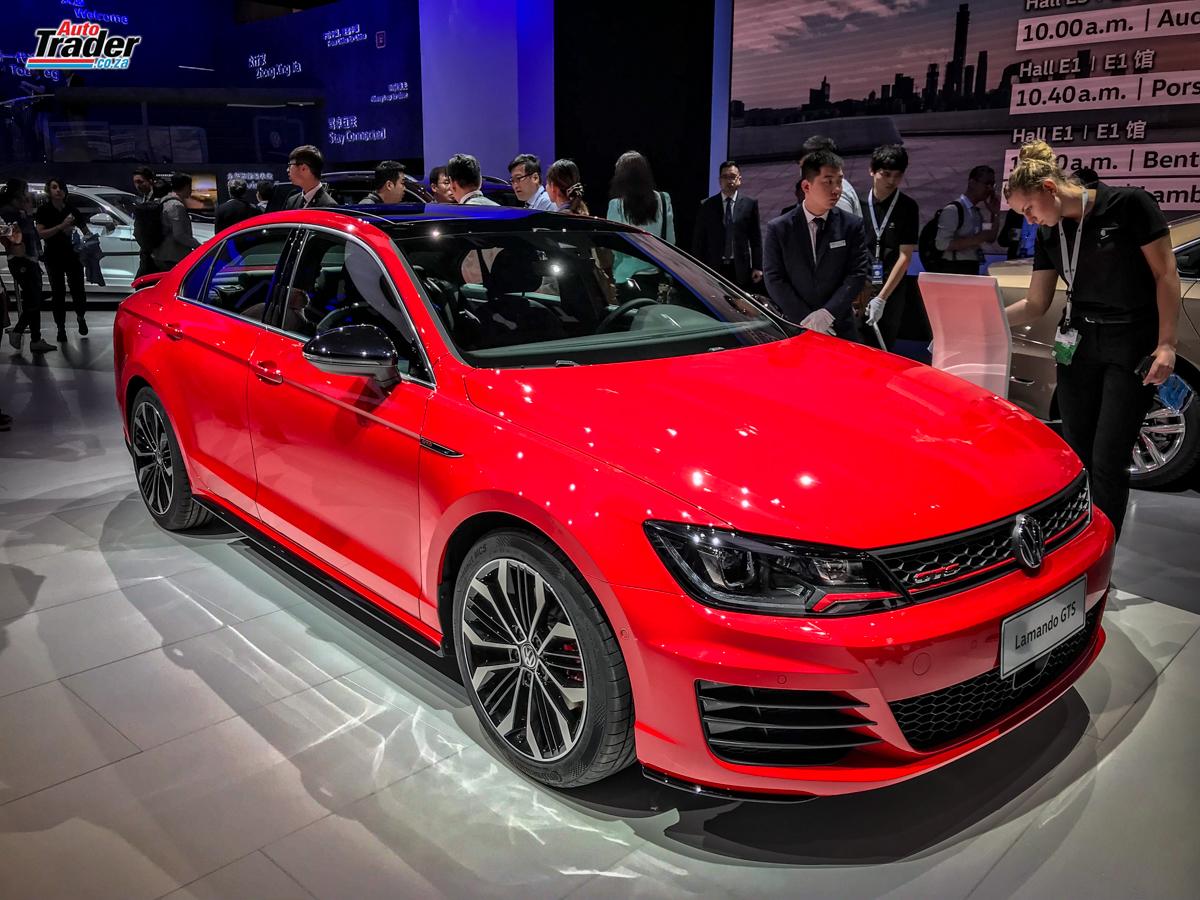
VW pulled the wraps off of the new Touareg and showed just how unique the local Chinese market is with a host of China-specific models, such as the Lamando GTS; a sporty coupé-styled sedan, the all-new Lavida; a compact sedan, and the next-generation CC; a large Passat-sized sedan (the sedan market is massive in China, with a preference for long-wheelbase models).
Auto China 2018 was also the international debut of the all-new Lexus ES which will be replacing the GS range. Styled to look like a compact LS, the ES will be available with 200, 250 and 350 petrol-engines while the ES 300h will feature a 2.50litre Atkinson-cycle engine producing 158kW and return a claimed fuel consumption of 3.9l/100km.