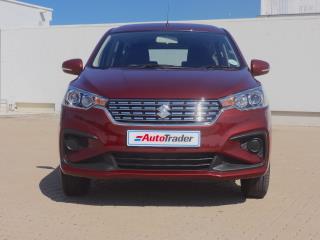
Suzuki Ertiga vs Renault Triber vs Datsun Go+: Which budget 7-seater is the best value for money?
Most buyers prefer the active image projected by crossovers over the practicality of an MPV (Multi-Purpose Vehicle), but for many customers, the extra space and passenger-carrying capability of an MPV is more important than image considerations. We compare the value proposition of the Suzuki Ertiga with those of two 7-seater opponents, to see if the Ertiga is worth its price premium.


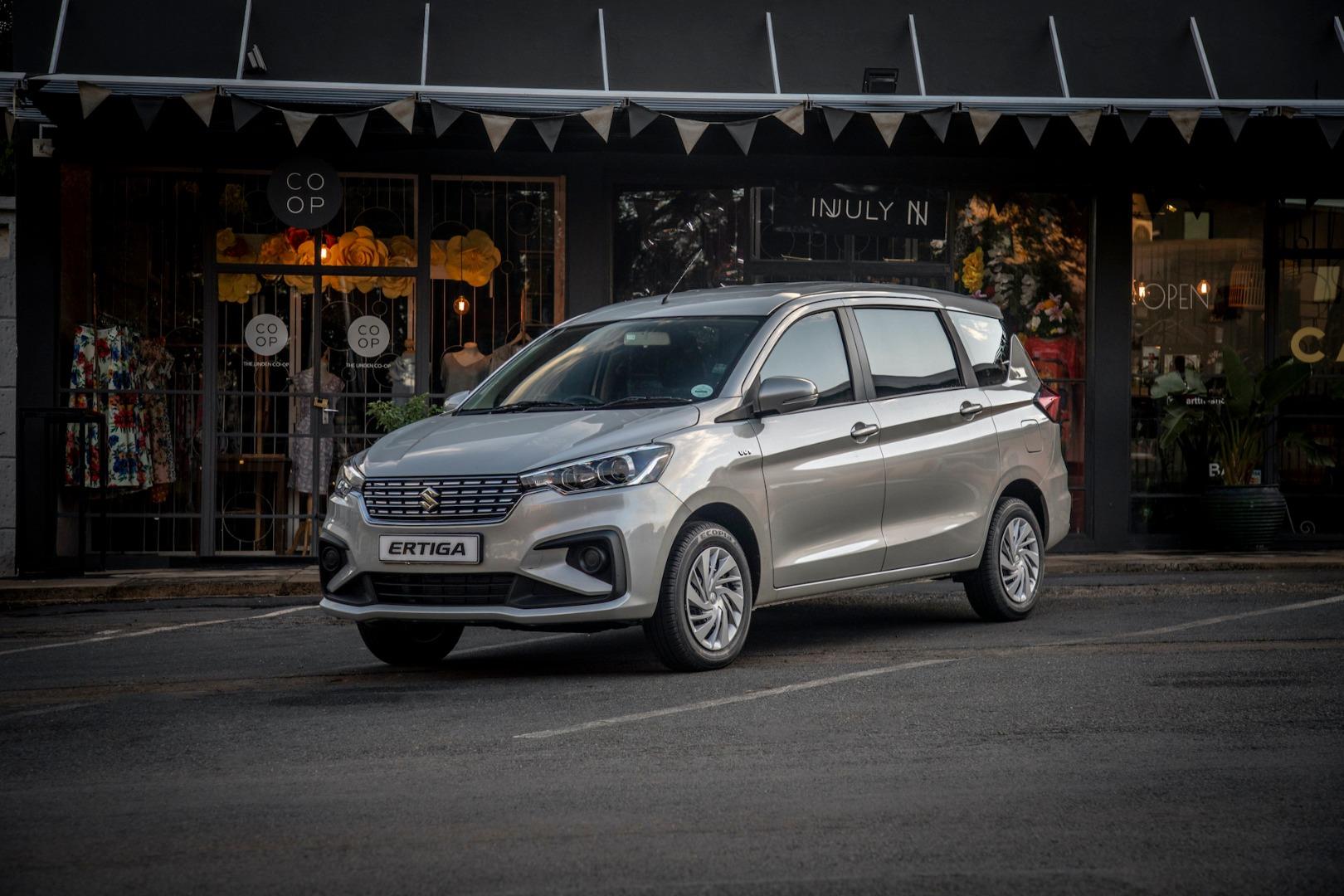
With a model range spanning 5 derivatives, and with R 70 000 between the cheapest and the priciest variants, the Suzuki Ertiga can be as affordable or as plush as the budget allows. The whole range is a fair bit more expensive than the other car-based budget 7-seaters on the market, though, partly due to its larger engine and superior refinement.
We decided to pitch high-trim variants of the Datsun Go+ and Renault Triber (both with manual gearboxes) against the entry-level Suzuki Ertiga, thus closing the price gap as far as possible, but losing some of the trimmings that help make an Ertiga so enticing in the process. Will this highlight a particularly strong value proposition for the Ertiga, or will these opponents give buyers even more for their money?
Related: Shop for new and used Suzuki Ertiga cars for sale here.

Facts and figures:
First, let’s look at the key numbers:
|
Suzuki Ertiga 1.5 GA |
Renault Triber 1.0 Prestige |
Datsun Go+ 1.2 Lux |
|
|
Engine size (cyl/size) |
4-cyl, 1.5-litre petrol |
3-cyl, 1.0-litre petrol |
3-cyl, 1.2-litre petrol |
|
Power/Torque |
77 kW/138 Nm |
52 kW/96 Nm |
50 kW/104 Nm |
|
Kerb Weight |
1 130 kg |
957 kg |
837 kg |
|
Length (mm) |
4 395 |
3 990 |
3 995 |
|
Airbag count |
2 |
4 |
2 |
|
Load Volume * |
550 litres |
625 litres |
347 litres |
|
Top Speed (km/h) ** |
175 |
160 (est) |
161 |
|
Ave Consumption ** |
6.2 ℓ/100 km |
5.5 ℓ/100 km |
5.5 ℓ/100 km |
|
Warranty |
3 yr/100 000 km |
5 yr/150 000 km |
6 yr/150 000 km |
|
Price |
R 234 900 |
R 209 900 |
R 200 900 |
* In 5-seater mode (rearmost seating row folded away/removed)
** Manufacturer's official claimed figures.
Pricing was accurate at the time of writing and includes VAT and carbon tax, but may change without prior notice.
Analysis
Power, performance, and drivetrains
There’s no doubt that one of the Suzuki Ertiga GA’s main advantages lies in its engine room. It’s the only 4-cylinder car in this group and has the largest engine displacement, giving it by far the most power and torque. And, even though the Ertiga GA is 294 kg heavier than the Go+ and 173 kg heavier than the Triber, this power advantage hands it a clear edge on performance.

It has the highest top speed here, and its power-to-weight ratio of 68.1 kW/ton compares very favourably with the 59.7 and 54.4 kW/ton on offer in the Go+ and Triber, respectively. The Ertiga’s substantial torque advantage (42 Nm more than the Triber and 34 Nm more than the Go+) will also pay dividends when loaded with passengers and/or luggage, enabling it to maintain higher cruising speeds and requiring less stirring of the gear lever.
Related: Shop for new and used Renault Triber cars for sale here.

Economy
Being endowed with the most-potent engine in this group, as well as the highest kerb weight of this trio, does exact some fuel consumption penalty from the Ertiga, but the difference is smaller than you might think. Suzuki claims an average consumption figure of 6.2 ℓ/100 km for the Ertiga, which plays against the 5.5 ℓ/100 km averages quoted for both the Triber and Go+.

That’s a win for the two 3-cylinders in their on-paper figures, but it’s worth remembering that this picture will change rather dramatically when a load is added to the equation. Under such conditions, the Suzuki’s added torque and power will manage heavier loads and inclines much more easily, and spend more of its time in higher gears.
This will likely swing the balance back towards the Ertiga, because it won’t have to work anywhere near as hard as the other two while carrying a load. In short, the Renault and Datsun has lower claimed figures when unladen, but the Suzuki’s output advantages may just make it less thirsty than the other when faced with a full load.

Practicality
Renault has decades of experience in the MPV arena, and this shows in its incredible packaging efficiency. Within the shortest overall length, the Triber can offer seating for 5 as well as 625 litres of luggage, partly because its rearmost seats are easy to remove (rather than merely folding them away). It also has a plethora of lidded boxes and drawers to hide loose items, as well as a refrigerated container between the front seats.
The Suzuki Ertiga has folding rear seats, eating into the practicality it gains from having the longest and widest body. This leaves it with a luggage capacity of 550 litres, but also allows owners to quickly convert back to people-moving duties on the move (which isn’t possible when the third seating row is stored in your garage, as would be the case with the Triber).
The Datsun Go+ demonstrates what happens if a short body (5 mm shorter than the Triber) is combined with folding third-row seats, because it offers only 347 litres in 5-seater mode. For this reason, the Go+ ends up in third position in this criterion, behind the second-placed Ertiga and first-placed Triber.
Related: Shop for new and used Datsun Go+ cars for sale here.

Equipment and safety
Seeing as it’s the entry-level Ertiga variant, GA trim doesn’t really major on creature comforts. It has air conditioning and power steering, manual central locking and electric windows all round... and that’s about it, really. There’s no touchscreen unit with USB/Bluetooth integration or smartphone mirroring, no multi-function steering wheel or cruise control, and the wheels are made of plain, unadorned steel instead of aluminium alloy.
These features are available higher up in the Ertiga hierarchy, of course, but that would push its list price outside of our parameters. For this reason, the Ertiga GA ends up in third place in this equipment race: it really only has the bare minimum of comfort features, and miss out on many of the nice things you’d get as standard in the other two.

The other extreme is taken up by the Renault Triber’s Prestige trim, which has most of these add-ons included in its list price, with the Go+ not far behind. The only thing it (and the Go+) lacks, compared to the Ertiga, is a tilt-adjustable steering wheel, indicating that the Ertiga really belongs in a class above the other two contenders.
As for safety, there are some questions regarding these three cars. While the Suzuki Ertiga scored a respectable 3 stars in Global NCAP testing, the Datsun Go+ only received 1 star in 2017, and there are no concrete results out for the Renault Triber as yet.
However, it must be borne in mind that the tested Go+ predates the upgrades introduced at the end of 2018, and that one star only applied to the Go+ with a single airbag – local-market Go+ variants all have two airbags (as does the Ertiga). Similar issues come to mind when talking about the Triber’s safety credentials, because it’s based on the Renault Kwid’s willowy platform (albeit significantly uprated).

The top-spec Triber does have 4 airbags, however, which may or may not make a difference in its crash-worthiness. We really couldn’t cast a verdict over either the Go+ or the Triber, but common sense would award the Suzuki Ertiga the safety crown here, simply because it has a proven (and decent) track record in this department.
Aftersales support
The Datsun Go+ makes a strong comeback here, with a generous warranty for 6 years or 150 000 km. Its service plan is optional, however, which makes for a somewhat less-appealing new-car value proposition, and drops it to last place in this department. Renault offers a very good warranty for the Triber as well, which runs for 5 years or 150 000 km, alongside a service plan for 2 years or 30 000 km – good enough for a strong second-place finish.

In contrast, the Suzuki’s warranty is the weakest in this group, at 3 years or 100 000 km, but it has the strongest standard service plan: For the first 4 years or 60 000 km, even the entry-level Ertiga will benefit from standard pre-paid servicing. This ultimately adds a lot of value to the Ertiga’s package, and goes some way towards defending its higher purchase price, to land it a first place in this department.
Related: The 7 cheapest new 7-seaters in South Africa.
Verdict
At the risk of over-simplifying the choice, it’s clear that the Datsun Go+ and Renault Triber fight in a lower class than the Ertiga, even though they all have the same number of seats and general layout. The Datsun Go+ has to settle for third place here, however, thanks to its questionable safety rating, lack of a standard service plan, and least-versatile packaging. Yes, it’s the least expensive car here, but it’s also obvious why this is so.

The Renault Triber ends up in second place in this trio, but is comfortably ahead of the Go+ on account of its excellent practicality, very comprehensive spec sheet, great styling, and good warranty. However, in spite of its airbag advantage, its sluggish performance (especially when loaded) and questionable safety ratings are notable downsides.

But, even though the Suzuki Ertiga is rather barren inside and pricier than the other two, it deserves first place on the strength of its proven safety credentials, far superior performance, greater refinement, and ability to handle heavier loads. By all means, buy an Ertiga GL or GLX if you can afford one, but also remember that even the basic Ertiga GA is worth the extra money over a Triber or a Go+.