The Mazda CX-30 feels quite classical in comparison to the glitzy, trend-driven competitors that offer bells and whistles that don't necessarily make your life easier. Is it still relevant in 2026?
Read all our Mazda CX-30 Reviews here.
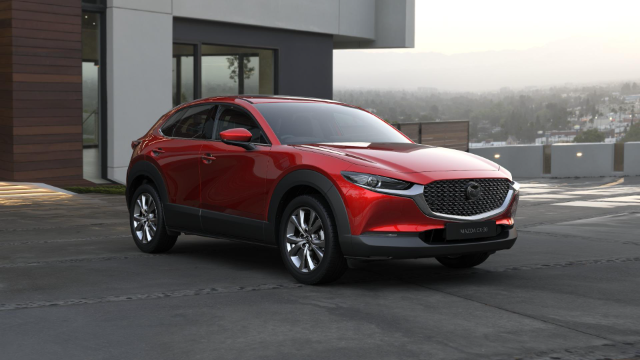
Driving feel and refinement
Pros:
The CX‑30’s 2.0‑litre naturally aspirated petrol engine and 6‑speed torque‑converter auto deliver smooth, linear power, so it’s easy to drive gently in traffic and settle at freeway speeds without jerkiness. Steering is accurate, the chassis is well balanced, and the suspension takes the edge off rough surfaces without feeling floaty, giving the car tidy, confidence‑inspiring road manners.
Cons:
Because the engine is naturally aspirated and gearing is relatively short, it needs to rev harder than turbo rivals to feel brisk, especially on inclines or when overtaking. At those times, the gearbox kicks down, holds lower gears, and the drivetrain sounds busier, which some buyers will interpret as “noisy” compared to turbo SUVs. It can almost sound like a CVT (continuous variable transmission).
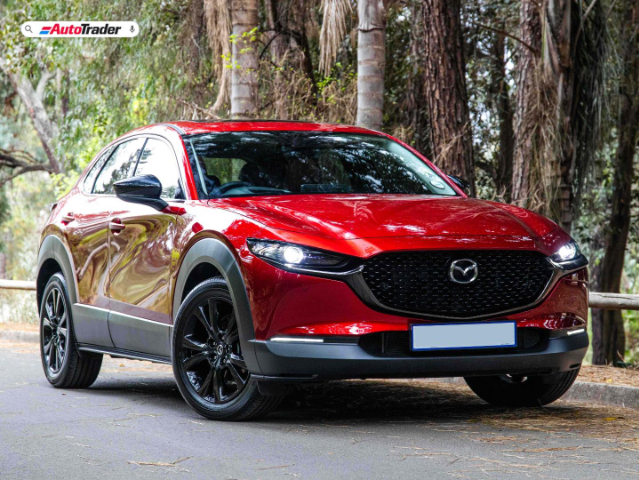
Cabin, ergonomics and tech
Pros:
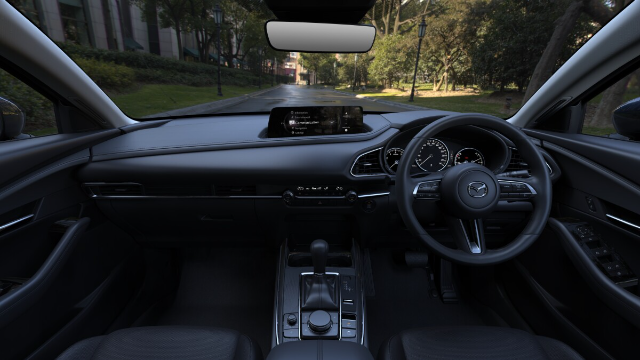
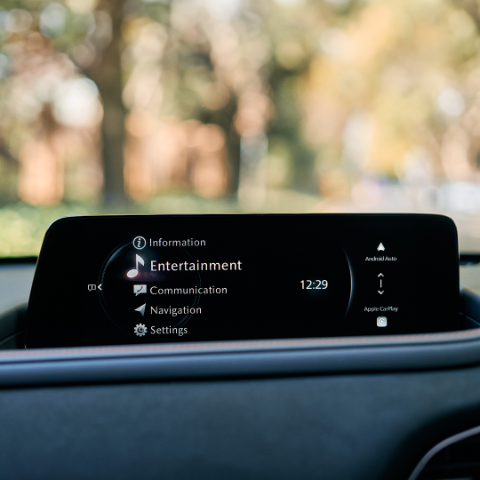
The cabin is well-made, with an uncluttered layout, solid materials, and sensible ergonomics that make everyday use easy. The screen sits high in your line of sight and is operated by the Mazda Commander rotary controller with shortcut keys, which reduces mis‑taps on bumpy roads and helps keep your eyes up. Wireless Apple CarPlay and Android Auto work through this interface, and the screen becomes touch-enabled when the car is stationary and the handbrake is up.
Cons:
If you want a big, fully touch‑driven “tablet” interface, the CX‑30 may feel conservative. Infotainment graphics and feature depth look traditional compared with the latest app‑heavy systems, and the limited touch-input options can frustrate some buyers. It can even be a bit finicky via the rotary controller.
Read all Mazda CX-30 comparisons, news, and advice here.
Safety, fuel economy, reliability
Pros:
Core safety systems (such as ESC and 7 airbags) are standard across the range, with higher trims adding extra driver‑assistance features, such as rear-cross traffic alert (top-spec model), giving the CX‑30 a credible safety story for family use.
The CX-30 gets a 5-star crash-test safety rating from EuroNCAP, and our SA-spec model it's built to the same underlying design as the Euro-spec car.
The CX-30's compact footprint and light, accurate steering make it easy to park and to manoeuvre.
Established dealer and parts support in South Africa further reduces ownership anxiety. Mazda's 2.0 Skyactiv-G is a naturally aspirated 4‑cylinder, so you avoid the turbo‑related issues seen on forced-induction CX‑30 models overseas.
Cons:
For buyers who equate “safe” with having every possible camera and sensor, the CX‑30’s safety package may seem less flashy on paper, even though the fundamentals are solid. (Adaptive cruise control is not available, but rear-cross traffic alert is standard on the top-spec model.)
Fuel efficiency is average, at 9.5-10.5 litres per 100 km on the combined cycle, at the coast.
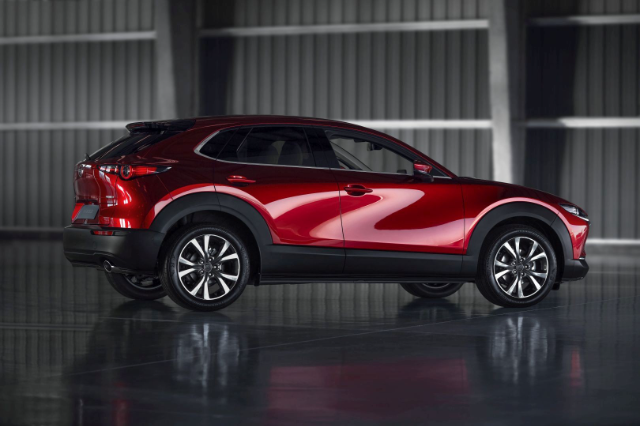
Space and comfort
Pros:
For singles, couples, or small families, the interior space is workable, and the car's more compact body makes it less intimidating in urban driving and tight parking. I like the wide central armrest and practical storage space below it; the CX-30 has 2 USB-C ports. Wireless charging is available from the Dynamic Edition trim and up. A power lift gate and sunroof in the Carbon Edition model enhance the premium ambience.
Cons:
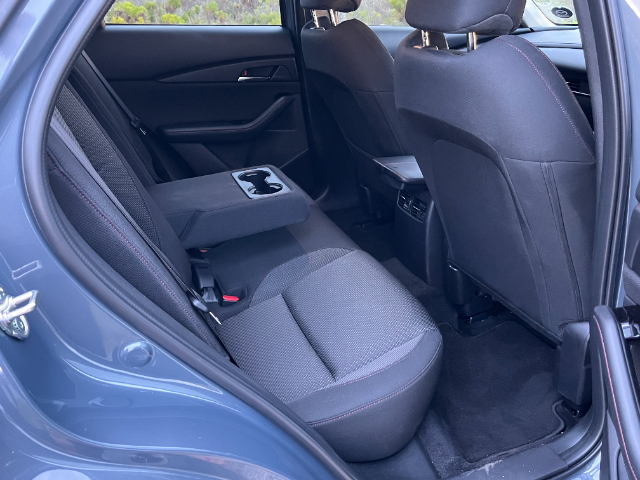
Boot space is smaller than in many rival crossovers, and rear legroom is only adequate for average-sized adults, which becomes more noticeable on longer journeys. Noise levels can also be higher than some softer‑riding competitors: the engine revs harder under load, and on South Africa’s coarse‑chip tar, tyre roar and mechanical noise are more evident, especially around 120 km/h.
Some electric seat adjustment would have been welcome at this price, and the cloth seats are not exactly the family-friendliest.
Some more USB-C ports for rear passengers would have been welcome. (Seen here is the Carbon Edition trim's interior.)
Who should buy it
Pros:
For buyers who prioritise driving feel, a straightforward, well‑made cabin and credible safety, the CX‑30 offers a very satisfying ownership experience. It suits drivers who value refinement, predictable responses and a car that’s easy to trust and use every day. I love how easy everything is to use, even though the infotainment system could use some fine-tuning.
Cons:
At the top of the range, CX‑30 pricing overlaps with larger or more powerful SUVs that offer more space or more tech per rand. If your main priorities are maximum boot space, the longest features list or the most advanced touch interface at a given price point, you may find better value among rival compact crossovers.
Verdict
I find Mazda's straightforward approach rather refreshing in a segment where there's so much fluff but not always enough substance. The straightforward, no-nonsense CX-30 is exactly what my tech-weary brain needed.
Grade walk