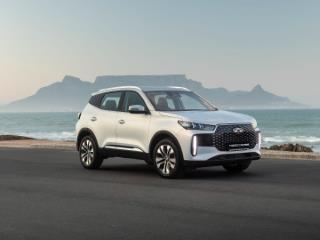
While spending some time with Chery Automobile at Auto Shanghai 2025, we had a chance to sample their fifth-generation Super Hybrid System, which debuted officially here. The Tiggo Cross, 7, 8 and 9 SUV vehicles were available to sample.
Related: Chery unveils Himla Bakkie and Super Hybrid Line
The new system features improvements from the fourth generation system, with the most significant improvement being the 44.5% increase in thermal efficiency, which is helpful in harsher climates. The batteries have been revised for higher performance and improved battery protection systems. The stepless DHT transmission has also received some revisions to improve overall range, fuel consumption, and the driving experience. The Super Hybrid system in the Tiggo 7,8,9 are plug-in hybrid, while the Tiggo Cross is a self-charging system.

Driving Impression
Unfortunately, finer complete details such as performance figures, real-world consumption figures, and the like weren't present at the time of testing, and we're awaiting final information on these vehicles. So we can only comment on the driving feel in this overview. We'll speak about the vehicles as a collective, as we felt somewhat similar, but there were some differences.

Power Delivery
Compared to the standard offerings in our local Chery vehicles, the hybrid variants switch things up a notch. Typically in the ICE only (Internal Combustion) variants, you'd see turbocharged 4-cylinder petrol engines ranging from 1.5 - 2.0 litres, with the transmission of choice being a dual-clutch automatic. The hybrid vehicles retain the turbocharged 4-cylinder engines, with the 2.0 TGDI being paired with the hybrid system in the flagship Tiggo 9 and proposed figures of up to 280 kW. The DHT transmission in function is like CVT, hence its stepless nature.

The transition from electric to ICE mode is nearly seamless, and when the systems work in tandem to unleash full power, the power is responsive. It eliminates the lower rpm lag typically felt in the ICE-only models, with the turbochargers needing to spool up. When you're not getting on it, though, everyday town driving is gentle, with a reasonable amount of dead zone calibrated into the throttle and transmission so the takeoff and such aren't jolty.

Handling
Typically, with hybrid systems added, you're introducing more weight into the vehicle, which can affect handling potential. On the course set up for us, we're happy to report that the handling has been tuned accordingly to accommodate the extra weight between all the vehicles. We'd describe the handling as neutral in all the cars, but they are susceptible to understeer if you come in a little too hot. In the bigger cars, such as the Tiggo 8 and notably the 9, you can feel the vehicle's weight shifting upon braking and cornering with noticeable body roll. However, the cars do handle the weight increase well.

Range potential
Though we didn't participate in this, before we arrived in China, a real-world test took place using a Tiggo 9 and other flagship Chery vehicles. The test consisted of a 1600km long-distance drive across four days from Three Gorges to Wuhan, Wuzhen, and Shanghai. This was done to show off the prowess of the Chery Super Hybrid system on a single tank of fuel. We don't have the official figures as the vehicle had just arrived during the show.

Concluding thoughts
Based on our initial impressions, the fifth-generation Super Hybrid system shows some decent potential, but to truly see what it's capable of, we need to spend more time with the vehicles and perform longer-distance drives. The power delivery and tuning to the handling are welcome. We'll wait and see how they fare on South African roads soon.