
New McLaren 720S vs used McLaren 650S: What are the top 4 differences?
After a three-year production run, the McLaren 12C was replaced by the closely-related 650S in 2014 – which itself only stayed in production for another three years, before being replaced by the 720S. We track the changes between the 650S and the 720S, to highlight the top four differences between these supercars.



One of the nice things about this rapid succession of McLaren masterpieces is the fact that older (used) examples can be had for a fraction of what they cost when new. Take the 650S, for instance: it carried a pricetag well over R6-million back in 2015, but can now be had for less than half as much in the used-car market.

But should you opt for a much less-expensive used McLaren 650S instead of its newer successor? What does the new-car price premium add to the overall package, and is it worth paying so much more for a new 720S? We looked into the details of these two models to find the answer.
The modern McLaren supercar family
While the ground-breaking, record-setting McLaren F1 is still widely revered, this small British manufacturer wasn’t in a hurry to build any road cars for many years after the F1 ended production. Taking their time to develop a machine that was slightly more mainstream-oriented, the next series-production McLaren only arrived in 2011, carrying the MP4-12C nameplate (later simplified to “12C”) to mixed reactions.

Yes, 12C was very quick and technologically advanced, but it was also a bit too anodyne for a market segment where flamboyance and engagement are valued more highly than bland speed and all-round capability. McLaren soon realised this, and re-developed the 12C to turn it into the 650S – and in the process, added yet more technology and power, along with some moderate character augmentation and a new design language.
The 650S and its derivatives took McLaren to 2017, when it was replaced by the 720S as the new mid-range “Super Series” McLaren, and again available in coupé or Spider (convertible) formats. Below it sat the 540/570 “Sports Series” models, with the range topped by the Senna- and Speedtail “Ultimate Series” capping off the range at the ultra-high performance end.

Since then, the 720S was also redeveloped to create the 765LT (or “Long Tail”), which has a more motorsport-focused mission. But, while they’re all related to each other and derived from the same starting point (the 12C), there are nonetheless significant differences between the 650S and the 720S.
1. Substantial power hikes
All modern McLarens employ some derivative of the firm’s twin-turbo V8 engine, with varying displacement and outputs that depend on the model it propels. The 650S used an earlier, 3.8-litre iteration of this powerplant, delivering 478 kW and 680 Nm in this application. The related 675LT (a higher-performance derivative) took this up to 496 kW/700 Nm, and the ultimate member of the “650S family” boasted 506 kW in the MSO (McLaren Special Operations) 688 HS.

For the 720S (and its derivatives), the V8 was substantially re-engineered with a longer stroke and more than 40% new component content, to take its displacement to 4.0 litres. The latest engine delivers 530 kW and 770 Nm in the 720S, and goes up to 563 kW/800 Nm in the track-focused 765LT. In other words, with power hikes of at least 10% compared to its predecessor, the current McLaren 720S is quite a bit more potent than its predecessor.
Related: Find out more about the McLaren 675LT here.
2. Optimised for light weight
As has since become commonplace among supercars, all McLaren road cars thus far have employed a racing-spec carbon-fibre central structure for both coupé and spider (convertible) models. The body panels are fitted to the outside of this central cell; and the suspension-, steering-, and drivetrain sub-assemblies are bolted to the front and rear of the cell.

You’d be forgiven for thinking that the 650S’s carbon “cage” was about as good as it could get, though: while it was largely carried over from the 12C, it only weighed 75 kg, and remains one of the lightest of its kind to this day. But McLaren took a closer look at construction methods when they developed the 720S, and managed to slash 18 kg from the “MonoCage II” carbon tub.
The sophisticated, computer-controlled suspension also came in for close scrutiny, and weighs a further 16 kg less than it did in the 650S. That’s 34 kg saved just on the centre tub and suspension, and, combined with the more-powerful engine, it contributes to the 720S’s improved performance, relative to the already-rapid 650S.
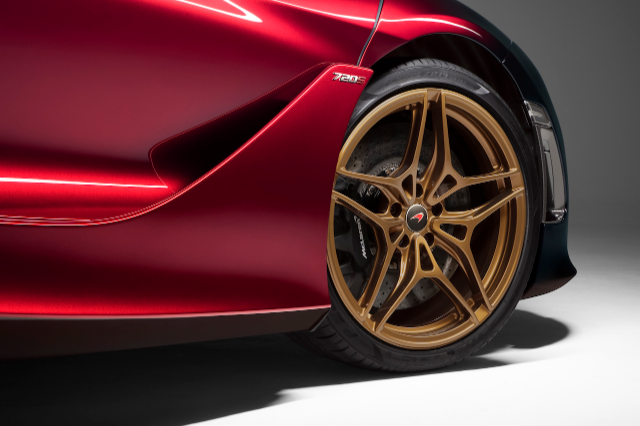
3. Refined aerodynamics
Every body part of the McLaren 720S has an aerodynamically optimised design, from the front end with its ducted radiators to the air intake channels in the doors to the rear diffuser/bumper assembly with its managed heat dissipation ducts. It’s the perfect antidote to the fake air vents scattered all over today’s premium cars – if there’s a wing or a scoop on this car, it’s there for a reason.
Speaking of wings, the McLaren 720S has an active rear wing, to tailor the aerodynamic forces on the car to prevailing conditions. That’s a pretty ordinary feature on supercars these days, but the McLaren’s has an extra trick: it jumps bolt upright in heavy braking, to act as an airbrake and keep the car stable when decelerating from high speeds.

This is a feature on the 650S as well, but the detail changes and new teardrop-shaped cabin results in a 50% increase in downforce, compared to the older car. The track-focused (and even more powerful) 765LT adds an extra 25% to the downforce of the 720S, making it capable of generating so much downforce that it has to be electronically modulated to avoid overheating the tyres and damaging the suspension in sustained high-speed operation.
Related: If the “normal” McLaren 720S looks a bit demure to you, there’s a solution to be found in the aftermarket.

4. Modernised interior
Inside, the McLaren 720S sees considerable upgrades, compared to its predecessor. The driver-focused cabin treats the driver to a new digital instrument cluster, while an up-spec Bowers and Wilkins audio system is now standard and accessible through a new hi-res infotainment display screen. Combined with fine leather upholstery and a range of personalisation options, this makes the 720S a rather more agreeable place to spend time than its predecessor.
Related: Taking McLaren 650S on a test drive? Make sure to check out these features!
Which one would we suggest?
That depends entirely on the buyer’s preferences, because the ability to pay up to R3-million for a car almost certainly implies that value for money doesn’t really feature in the shopping considerations. With that said, the McLaren 650S (and its derivatives) are fantastically fast and capable, and still looks exotic enough that (relative) bargain hunters will be more than satisfied with any one of them.
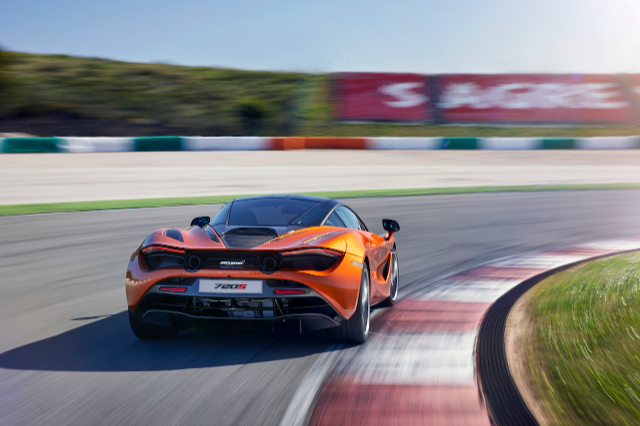
But when only the best and the latest will do, the McLaren 720S is indeed far more attractive. It’s quicker and more efficient than the 650S, has improved aerodynamics and even better handling, and it’s more comfortable and nicer inside as well. In a world where fractions of a second make all the difference, the new McLaren beats the old one with ease. As it should, at more than double the price...
Recommended Next:
Shop for used McLaren 650S cars for sale here.
Shop for new and used McLaren 720S cars for sale here.