


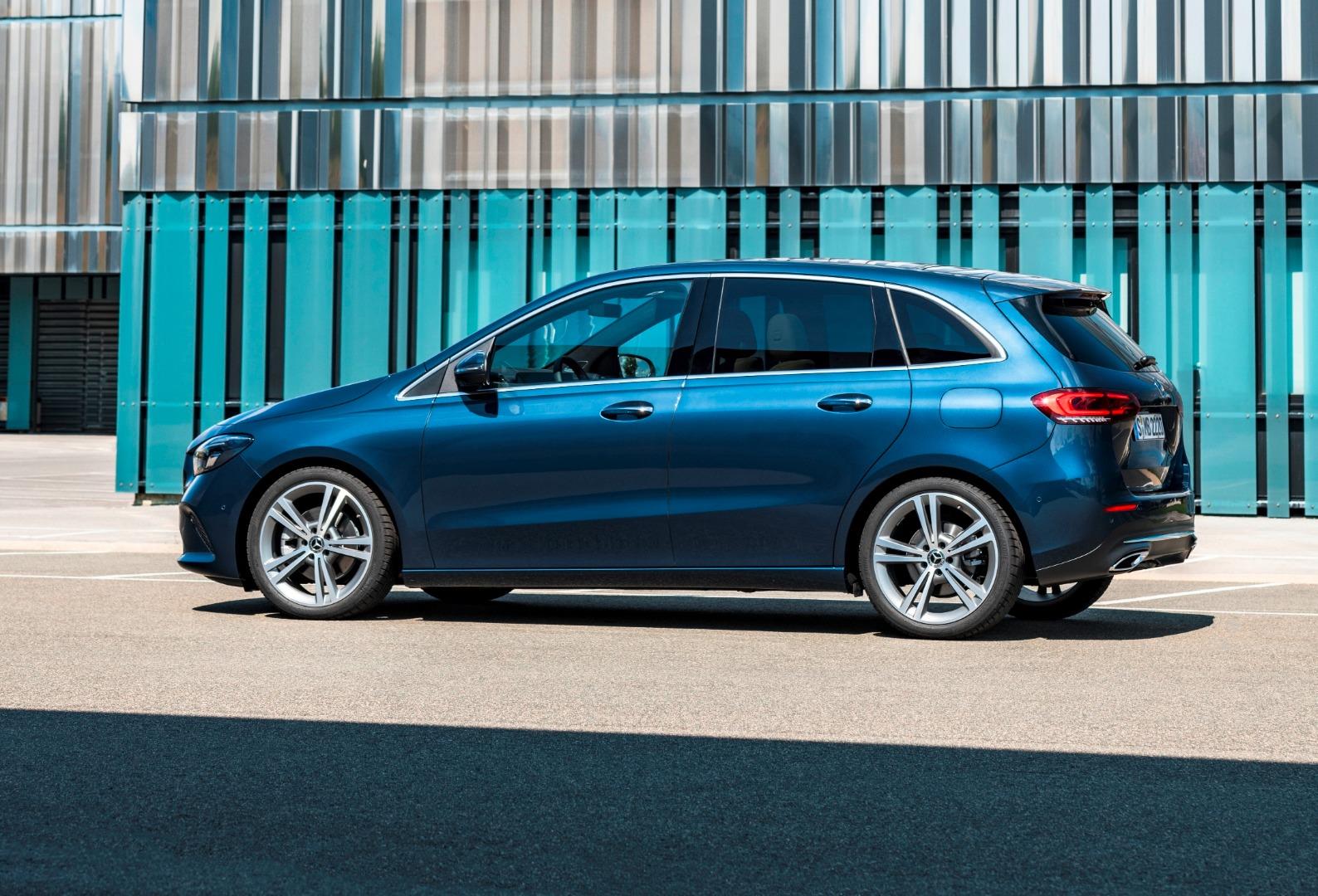


Mercedes-Benz’s B-Class was launched globally in 2005 and arrived here in South Africa shortly afterwards. Essentially this was a larger version of the first-generation A-Class, with a high driving position giving the car a mini-MPV (or van-like) feel. It also had an MPV-like design, with emphasis on utility, rather than sportiness.
The second-generation B-Class, also available here, arrived six years later and had a more conventional body construction, avoiding the “dual floor” approach. But it was still more MPV in its overall approach.
The third-gen B-Class is a whole new deal
Now the third-gen B-Class, launched here in April last year, is more cross-over SUV than MPV. Like the latest A-Class models, the B-Class is now much more sporting in its approach, although it still has appeal for Mercedes-Benz’s older customers, thanks to good interior packaging.
If you are in the market for either the new sporty B-Class or one of the older more conservative “people-movers” , you’ll be keen to know that AutoTrader currently lists 160 New and Used Mercedes-Benz B-Class models for sale.
Top 6 things you need to know about the latest B-Class
1. Although the new car looks much sportier, its height is only 4 mm lower than the previous B-Class, and it is some 90 mm taller than the current A-Class. The driving position is still much higher than that in the A-Class, so older customers will still appreciate this, as it is still easy to get in and out of.It's a very well-packaged design.
2. The boot on the new B-Class is slightly smaller than before but still generous at 455 litres. This load space can be expanded to 1 540 litres by lowering the backrests of the rear seats. The B-Class remains a 5-seater with very impressive rear legroom, while headroom is still good, despite a somewhat sloping roof-line at the rear.
3. The latest B-Class comes with a choice of a turbo-petrol engine or a turbo-diesel engine. The petrol motor is a 1,3-litte four-cyilnder and produces 120 kW and 250 Nm of torque. The turbo-diesel engine is a 2,0-litre unit that pumps out 110 kW and 320 Nm of torque. Performance is very similar, with both models offering a low-8-second 0-100 km/h sprint time and similar top speeds in the region of 220 km/h. Both cars come with dual-clutch automatic gearboxes, although the diesel gets an 8-speed ‘box as opposed to the 7-speed transmission used with the petrol model.
4. Fuel consumption is not that different between the petrol and the diesel model. The petrol’s claimed average consumption is 5,6 litres/100 km while the diesel version enjoys a claimed average of 4,5 litres/100 km.
5. The petrol B-Class 200 model sells for R539 320 and the diesel-engined 200d sells for R569 640. That’s a price difference of some R30 000, and be aware you’ll have to rack up many, many thousands of kilometres before you can write off that amount due to superior consumption figures between the two.
6. The two models are specced very similarly, although there are also AMG-Line versions of each available, these models having extra equipment mainly in the form of visual styling differences, such as sportier wheels and tyres and bumper differences. It is all too easy to add a lot more to the price of these cars by ticking some of the many options boxes. The basic price spec doesn’t offer items that you might expect to be included in a premium product, such as park distance control, LED lights, a rear-view camera and adaptive cruise control.
Recommended next
2019 Mercedes-Benz B200 AMG Line: Much like an A-Class, only better.