
Lexus RC F-Sport gets minor surgery, becomes a bit sharper
Lexus RC F-Sport gets minor surgery, becomes a bit sharper




Martin Pretorius
Since its initial local release in 2015, the Lexus RC has carved a comfortable niche for itself as an alternative to the plethora of stylish coupés on offer from the German premium brands. Now, following some minor surgery, the RC offers even sharper looks than before, and an enhanced driving experience, thanks to updates under its sharply-tailored suit.
Unchanged engine
Motive power still comes courtesy of Lexus’s buttery-smooth 3.5-litre V6 engine. Capable of delivering 232 kW and 380 Nm, this engine uses various tricks to deliver those numbers, including variable camshaft phasing on both inlet- and exhaust cams, along with a port- and direct petrol injection system. This power goes to the rear wheels through Lexus’s 8-speed torque converter automatic gearbox, which also features lock-up modes in all gears except first.
The result is the kind of silky performance you’d expect in a Lexus, combined with competitive fuel efficiency. The 0 – 100 km/h sprint time is quoted as 6.3 seconds, with the top speed electronically limited to 230 km/h. Claimed average fuel consumption stands at 9.4 litres/100 km.
Upgraded running gear
While the engine and transmission continue largely as-is, the suspension has come in for quite extensive attention. For starters, the suspension bushes in the all-independent setup has been stiffened to give more-accurate control over camber- and toe settings as the wheels move up and down. Revised shock absorbers smooth out sharp bumps more effectively, specifically when encountering small disturbances, while large disruptions are absorbed more effectively as well.
Another change comes in the form of new 19-inch alloy wheels, shod with enhanced tyres to generate more road grip and a smoother ride quality. In addition, revised aerodynamics provide greater stability at speed and increased cornering speeds.
Cosmetic changes
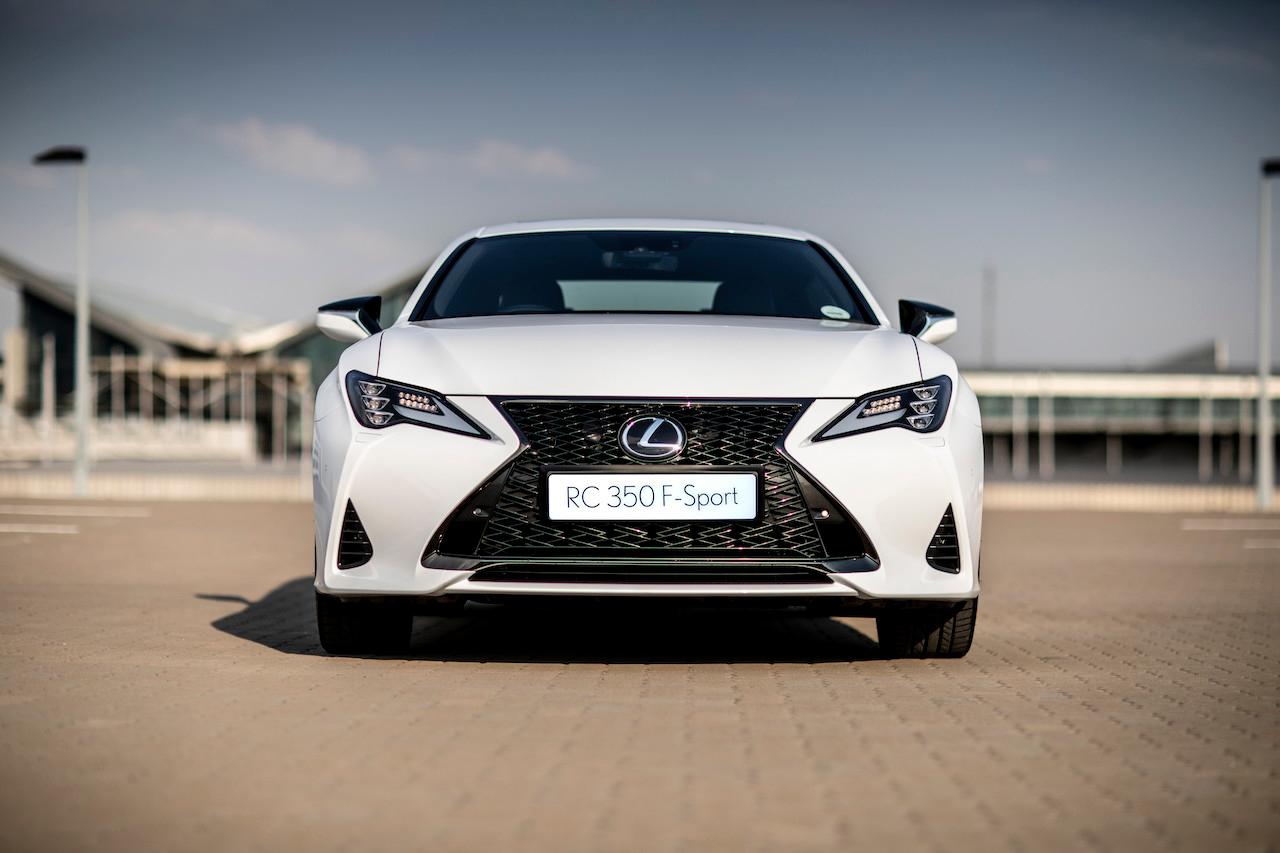
While the basic body shell remains as it was, enhancements to the front- and rear bumpers, inspired by the gorgeous LC Coupé, add more visual presence and allows the revised RC to slice more keenly through the air. Of course, Lexus’s “spindle grille” remains, so the front end is still dominated by that gaping maw, but the detailing in the grille is more intricate, and the creases in the bumper create a smoother appearance.
Rounding off the front end’s update are new LED daytime running lights (DRLs) and new multi-LED headlights. At the rear, the bumper allows for cleaner airflow around the backside and enhanced aerodynamic stability, and more-prominent taillights add some more visual drama. Those new wheels also modernize the RC’s appearance, of course.
Cabin Updates
Inside, the enhancements are significant only on a detail level, as the basic design remains unchanged. The impression of added cabin space is created by re-positioning the leather-upholstered knee pads on either side of the centre console, and ergonomics around the touch-pad infotainment interface have been revised for greater user comfort.
Other improvements are just as subtle, and includes re-shaped cup holders and the addition of a new brushed finish on the audio- and climate control panels. Lastly, there’s a new, high-mounted analogue clock in the middle of the dashboard, creating yet another reference to the LC Coupé.
Safety systems also receive an incremental upgrade, with blind-spot monitoring, automatic pedestrian braking and lane departure alert (with lane-keeping assistance) receiving some improvements in accuracy.
Verdict
As before, the Lexus RC is an off-beat choice among the luxo-coupé crowd, a position not substantially altered by this update. With only one engine available, high-end though it is, there isn’t any choice for buyers in search of something more powerful or more frugal. And, while the standard specification is indeed very comprehensive, some more differentiating options (apart from the 10 available exterior colours) surely wouldn’t go amiss. Perhaps the next update may include the lovely turbo-V6 from the LS500 as a high-end alternative, with the 2.0-litre turbo four returning to cater for those with a tighter budget? Let’s wait and see...