Jaguar F-Type vs Lexus RC F vs Nissan GT-R: here's our winner.
With the electric revolution, the roaring combustion engine is under threat. That is why you should get yourself a sports car sooner rather than later. To help you with your choice we compare the Jaguar F-Type R AWD with the Lexus RC F Track Edition and Nissan GT-R Premium Edition to find out which is our winner.


One of the defining cars for the Jaguar marque is the E-Type that started production in 1961. The British automaker tried to recreate the recipe with the XJS and more recent XK model, however, it wasn't until the F-Type arrived in 2013 that they truly created a spiritual successor. In 2020, Jaguar introduced an updated model which not only sees improvements made to the exterior styling and interior tech but also under the bonnet with the arrival of a new powertrain option.
The Jaguar is, however, not without competition as Nissan introduced the GT-R Premium Edition not too long ago and Lexus launched the RC F Track Edition in 2019. Like with the Jaguar, both the Lexus and Nissan are front-engined coupe models, however, only the Lexus sends its power to the rear wheels, whereas the Jaguar and Nissan power all four wheels.

Jaguar F-Type R AWD
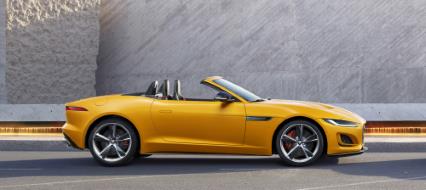
As alluded to earlier, the Jaguar is the newest model of the three and that is very noticeable in the styling and in some cases the standard amenities on the interior. While the silhouette of the new model remains similar to that of the earlier iteration, you won't grapple to notice the narrower and more aggressive headlamp and taillamp designs.
Engine and performance
Under the bonnet of the Jaguar F-Type R you will find a 5.0-litre, supercharged V8 petrol motor coupled with an 8-speed automatic transmission. The combination produces 423 kW and 700 Nm of torque and will launch the Brit from 0-100 km/h in 3.7 seconds. The F-Type will continue to accelerate on to 300 km/h.
Driven in normal daily conditions, the Jaguar should return a combined average fuel consumption of around 11.3 L/100km. The supercharged V8 will emit around 269 g/km in CO2 emissions.

Standard equipment
As for standard equipment, customers can expect 20-inch alloy wheels in each corner, R body kit as well as LED daytime running lights and headlights on the exterior. The interior offers the driver a 12.3-inch interactive instrument cluster which works alongside the centrally mounted 10.0-inch Touch Pro infotainment screen.
Infotainment inputs include USB and AUX as well as Bluetooth. Furthermore, smartphone users gain access to both Apple CarPlay and Android Auto as standard. Customers can also expect 12-way memory electric seats clad with Ebony Windsor leather.
Safety
Taking care of slowing down the vehicle is ABS brakes with twin-piston callipers clamping onto 380mm ventilated discs up front, as well as single-piston callipers and 376mm ventilated discs at the rear. The system is bolstered with electronic brake assist and brake force distribution functionality. Traction, as well as stability, control helps keep the vehicle in check under emergency collision avoidance manoeuvres.
Occupant safety is taken care of by no less than six airbags. The Jaguar also offer lane-keeping assistance as standard equipment as well as front and rear park distance control and a reverse camera.

Lexus RC F Track Edition
The Lexus RC F Track Edition certainly takes the aggressive styling up a notch with its carbon fibre body parts, front splitter and prominent rear wing. Like the Jaguar the Lexus also offer LED headlamps and daytime running lights, however, instead of the slightly larger wheels, the RC F Track Edition comes with 19-inch units.
Under the bonnet, customers can expect a 5.0-litre, naturally-aspirated, V8 petrol engine mated to an 8-speed automatic transmission. The combination develops 351 kW and 530 Nm of torque and will propel the Lexus to 100 km/h in 4.3 seconds and on to a top speed of 270 km/h, the slowest of the bunch. In terms of frugality, the RC F promises a combined average fuel consumption return of 11.2 L/100km, the most frugal of the lot.

Items such as traction control, stability control and ABS brakes also feature as standard equipment. The latter is also bolstered by electronic brake assist and electronic brakeforce distribution. The Lexus offers hill-start assist, an item not found on the Jaguar, and comes with no less than eight airbags, two more than both its competitors. While like the Jaguar the Lexus retains a lane-keep assist system, it is complemented by adaptive cruise control, another stand out feature between all three models.
Occupants are further treated to a 7.0-inch infotainment system compatible with Apple CarPlay and Android Auto via USB input. AUX and Bluetooth also feature as standard as well as an impressive 17-speaker Mark Levinson sound system.

Nissan GT-R Premium Edition
The Nissan GT-R has been around for the longest when compared to the other two and has undergone many updates to arrive at the Premium Edition point. The exterior styling has been refined ever more over the years and also incorporate LED daytime running lights and headlights. In each corner, you will find 20-inch alloy wheels which are looked over by the standard tyre-pressure monitoring system.
Although it has been around for the longest, doesn't make it any less capable. The 3.8-litre, twin-turbocharged V6 petrol motor manages an impressive 408 kW and 632 Nm of torque. This is sent to all four wheels via a 6-speed dual-clutch automatic transmission and will allow the GT-R to reach 100 km/h in 2.9 seconds and on to a top speed of 315 km/h. While it sips slightly more fuel at 11.7 L/100km, it is the fastest of the line and has the highest top speed between the three.

Like the Lexus, the GT-R not only offer traction control, stability control, ABS brakes with electronic brake assist and electronic brakeforce distribution but also retains hill-start assists as standard. But like the Jaguar the Nissan offers the occupants six airbags in the case of a collision.
On the inside of the GT-R, the occupants will find an 8.0-inch infotainment system that is compatible with Bluetooth streaming, Apple CarPlay, SiriusXM and HD Radio. The driver also benefits from navigation as standard and if you are tired of the engine noise, you can just turn up the premium 11-speaker Bose sound system.
Verdict
While all three of these models are priced very closely and performs similarly, the styling and standard features differ considerably. While the Nissan GT-R certainly still impress with its performance, the overall design and interior tech is becoming quite dated. The Lexus on the other hand offer the most creature comforts but is the slowest of the bunch, and the aggressive styling might not appeal to everyone.
Thus our winner, even though it is the most expensive, is the Jaguar as it perfectly blends performance and dynamic driving with elegant styling. The Jaguar will turn heads whether you are at the track or parked in front of your favourite restaurant and will continue to do so for some time.