Is the Hyundai Elantra good for families?
Sedans make brilliant family cars. They mostly have better driving dynamics than SUVs, there's plenty of legroom on the rear bench, and because saloon cars aren't that popular anymore, quite often they can be had at bargain prices, especially in the used-car market.

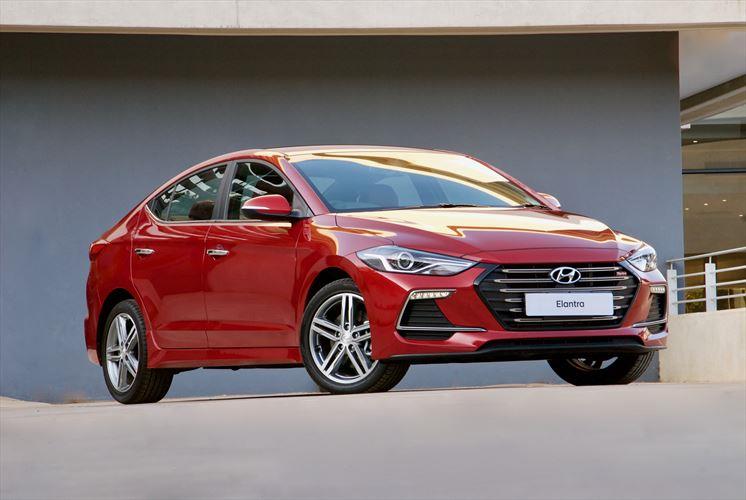

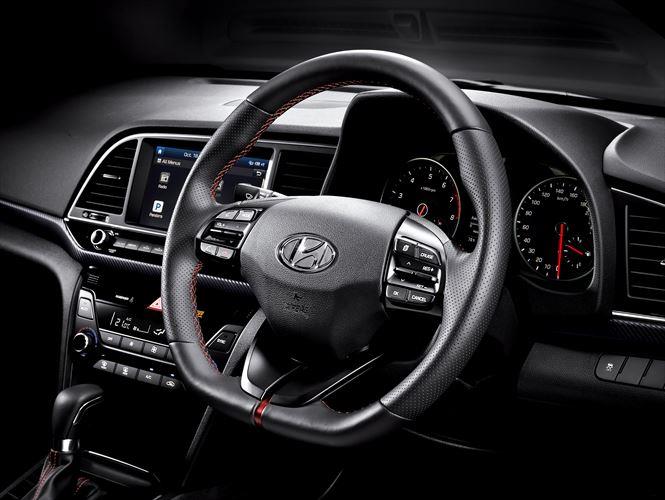
With the latest facelift in 2017, the Elantra was launched to the local market with four derivatives: The Elantra 1.6 Executive manual and Elantra 1.6 Executive automatic (both driven by a 1.6-litre naturally aspirated petrol engine); the Elantra 2.0 Elite (with a naturally aspirated 2.0-litre petrol engine); and the range-topping Elantra 1.6 TGDI Elite DCT Sport, with a perky 1.6-litre turbocharged petrol engine and steering-wheel mounted paddles for quick manual gear changes.
The Elantra 1.8 GLS was a South African Car of the Year winner back in 2012 and Hyundai have only improved on the recipe since.
Considering a new or used Elantra? Here is why we think it's a great choice:

1. It's super safe
All models of the Elantra have ABS and EBD as well as six airbags. Elite models have stability control added as well as hill-start assist which prevents roll-back. The intelligent use of different grades of steel strength also enhances the safety cell for the Elantra’s occupants in case of a collision, and the rear doors also feature dual impact beams.
Related: Double driving impression - Elantra Sport & Hyundai Tucson Sport (2017)
2. Cabin convenience for everyone
“First-time drivers of the new Elantra will be pleasantly surprised to see standard features such as an 8-inch hi-resolution infotainment system, rear park assist, 6 airbags, Isofix latching points for child seats, cruise control and attractive alloy wheels on all the derivatives,” said Stanley Anderson, sales and operations director of Hyundai SA.
The standard 8-inch infotainment system, which includes sat-nav, provides a USB Mirror Link for Android phones, HDMI connectivity for iPhones (to enable screen mirroring), hands-free Bluetooth with satellite controls on the steering wheel, Bluetooth music streaming and AUX and USB ports. It also features a CD player which is a much-loved feature for the over-forties. All four derivatives’ seats are covered in classy-looking faux leather — there's a juicy burgundy colour available in the Turbo Elite Sport model which looks very chic.
Related: Check out our 2017 Hyundai Elantra 1.6 Turbo Elite Sport video here!

While the Executive and Executive auto derivatives already come well-equipped, it's the Elite models that get the lion share of the convenience and comfort goodies. Elite derivatives have automatic air-conditioning, rain sensors for the windscreen wipers, and a smart key push-button to start the engine, to name a few. All models have an adjustable front armrest, and a rear armrest with cupholders.

3. Space, space and more space!
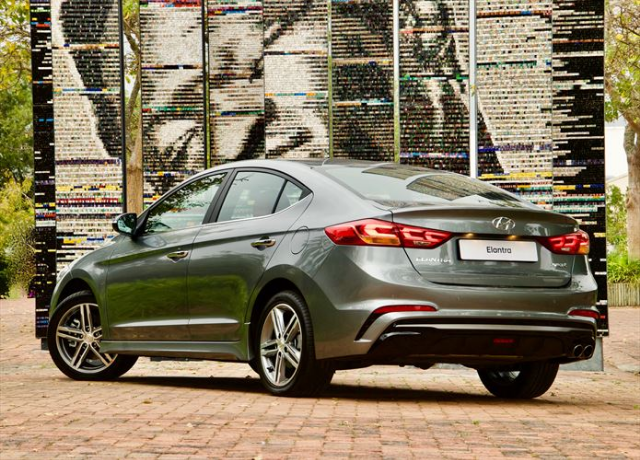
A 458-litre boot is large enough for the entire family's holiday luggage. The rear seat splits and folds should you need to load longer items into the boot. And, should you decide to tow the boat or a caravan to your favourite camping spot, the Elantra has a towing capacity of 1200 kg (braked) and 610 kg (unbraked).
4. Performance and fuel economy
All models offer decent fuel economy, but if that is your main concern, the entry-level 1.6 Executive model is going to be the one for you, with an average of 6.5 litres per 100 km. The 1.6 Executive auto's is 6.9. The 2.0-litre Hyundai Elantra Elite is the thirstiest in the lineup with 8.3 litres per 100 km.
Should you opt for the Elantra 1.6 Turbo Elite Sport, Hyundai estimates your consumption to be around 7.9 litres per 100 km on average.
It's important to note that these are the manufacturer's figures, though, and you can almost add 2 litres per 100 km to get an idea of real-world driving consumption.
Related: Running cost comparison - Corolla vs. Focus vs. Elantra
5. That famous Hyundai warranty & service plan
If you're buying a car for the long-haul, Hyundai's warranty and service plan is currently the best in the business, if you deem peace-of-mind motoring to be of importance.
“Hyundai’s 5-year/150 000 km warranty and additional 2-year/500 powertrain warranty is part of the standard package, which also includes 5-year/150 000 km roadside assistance and a 5-year/90 000 km service plan.”
Current pricing
- Elantra 1.6 Executive (manual) R333 900
- Elantra 1.6 Executive (auto) R353 900
- Elantra 2.0 Elite (auto) R389 900
- Elantra 1.6 TGDI Elite Sport R436 900
Source: Hyundai SA
Recommended next