

South Africa’s double-cab bakkie market is practically a religion. For decades, the conversation has started and ended with a simple debate: Toyota Hilux, Ford Ranger or Isuzu KB/D-Max. But a new heavyweight has entered the ring: The BYD Shark 6 (read our review), a plug-in hybrid (PHEV), now available in two distinct trims, is aiming straight at the hearts (and wallets) of lifestyle bakkie owners.
So, does this high-tech Chinese contender actually change the game for South African drivers, or is it just an expensive toy for tech enthusiasts? Let’s go through the lineup, the real-world fuel maths, and which model you should buy.
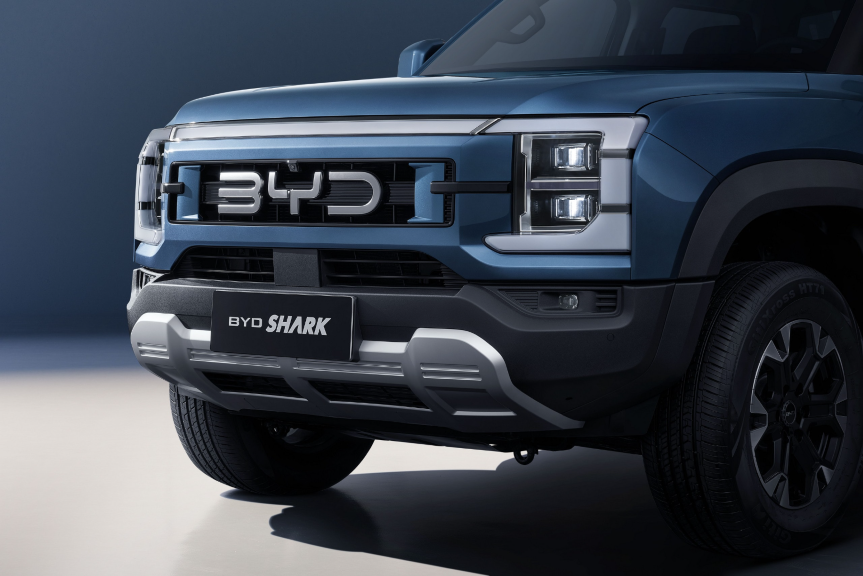
The BYD Shark 6 was the first PHEV bakkie to arrive in SA.
The model lineup: Premium vs Performance
When configuring your Shark 6, the local range splits into two trims separated by a R150,000 price gap and one critical capability: towing capacity.
| Specification | BYD Shark 6 Premium AWD | BYD Shark 6 Performance AWD |
| Price (Approx.) | R999 900 | R1 149 900 |
| Power Output | 321 kW | 350 kW |
| Torque | 650 Nm | 700 Nm |
| 0-100 km/h | 5.7 seconds | 5.5 seconds |
| Electric Range (WLTP) | ~85 km | ~80–85 km |
| Braked Towing Capacity | 2 500 kg | 3 500 kg |
| Payload | 790 kg | 790 kg |
Which One Should You Choose?
- Choose the Premium (R999 900) if: You want maximum value for money. It delivers identical everyday electric range (~85 km), identical luxury cabin tech (including the 15.6-inch rotating screen and Dynaudio sound), and the same V2L load-shedding capabilities as the flagship. If your weekend towing is limited to a small luggage trailer, jet skis, or lightweight utility loads capped at 2,500 kg, the Premium saves you R150,000 while offering 90% of the experience.
- Choose the Performance (R1 149 900) if: You need heavy-duty utility. The bump to 350 kW and 700 Nm unlocks the full 3 500 kg braked towing capacity—the benchmark for South Africans hauling large double-axle caravans, heavy horseboxes, or loaded off-road trailers across long distances.
The fuel maths: Can you lower your running costs significantly enough?
The core value proposition of a plug-in hybrid bakkie in South Africa comes down to daily running costs. If your daily commute, whether it's Sandton to Midrand or Stellenbosch to Cape Town, falls within the 80-85 km pure-electric range, you can theoretically complete your entire workweek without burning a single drop of petrol, provided you plug it in at home (ideally using a solar setup).
When the battery depletes, and the 1.5-litre turbo engine kicks in for long-distance cruising, real-world fuel consumption settles between 8.5L and 10L/100km. That makes it fiercely competitive against heavy-drinking V6 diesel rivals on open-road road trips, while completely rewriting the economics of urban bakkie ownership.
However, towing heavy caravans or off-road trailers will make the Shark drink. Expect 13-16 L/100 km or even higher.
In short, if you plug it in every night for a standard daily commute, you can effectively use 0 to 2 L/100 km.
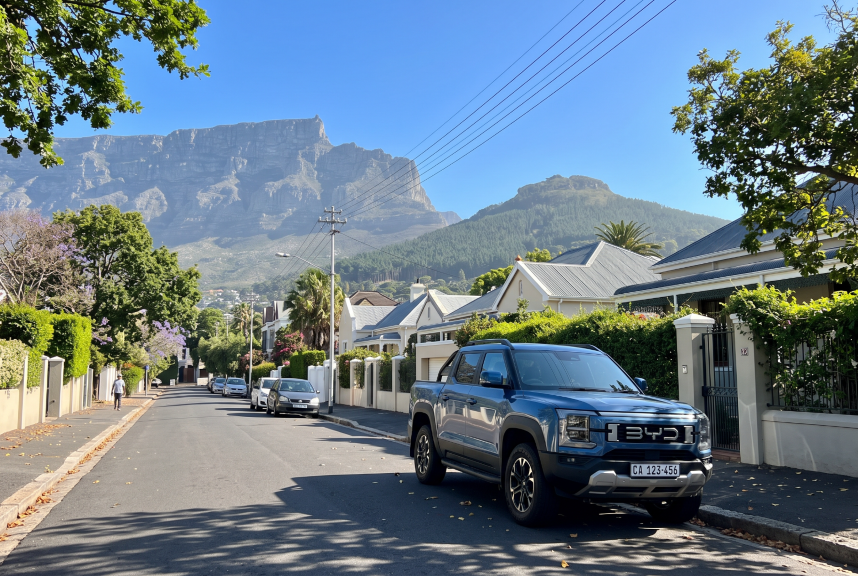
The Shark 6 in Cape Town.
Off-roading & utility: Can a hybrid handle the bush?
Traditionalists are often sceptical of unibody-adjacent architectures and the lack of a traditional low-range transfer case. However, the DMO platform's intelligent AWD system dynamically manages traction via electric torque vectoring. Features like Crawl Mode and Hill Descent Control make light work of rocky inclines and slippery mud tracks without requiring expert 4x4 mechanical inputs. However, the Shark 6 is not built for extreme offroading. As Drive Australia puts it: "You would have no issues tackling some tame trails, though tougher stuff might be a challenge and borderline impossible when it comes to deep ditches and getting the axles really crossed up."
Where buyers must pay close attention is to everyday utility:
- Payload Compromise: At 790 kg, the payload is noticeably lower than the traditional 1-tonne benchmark set by diesel workhorses like the Hilux and Ranger. Heavy commercial operators will find this limiting.
- The Towing Split: As noted above, match your trim choice carefully to your weekend toys—stick with the Performance if you pull a heavy double-axle caravan.
Read! Hilux vs Shark 6 vs Triton vs Ranger
The blackout antidote: V2L Technology
One feature that consistently steals the show is the Vehicle-to-Load (V2L) capability. Powered by its large 29.6 kWh Blade Battery, the Shark 6 features multiple 230V AC outlets (in the cabin and the load bay) capable of outputting up to 6.6 kW of power. For South Africans, this transforms the bakkie into a massive mobile inverter, easily running power tools on remote job sites, keeping camp fridges running indefinitely, or keeping essential household appliances alive during stage loadshedding.
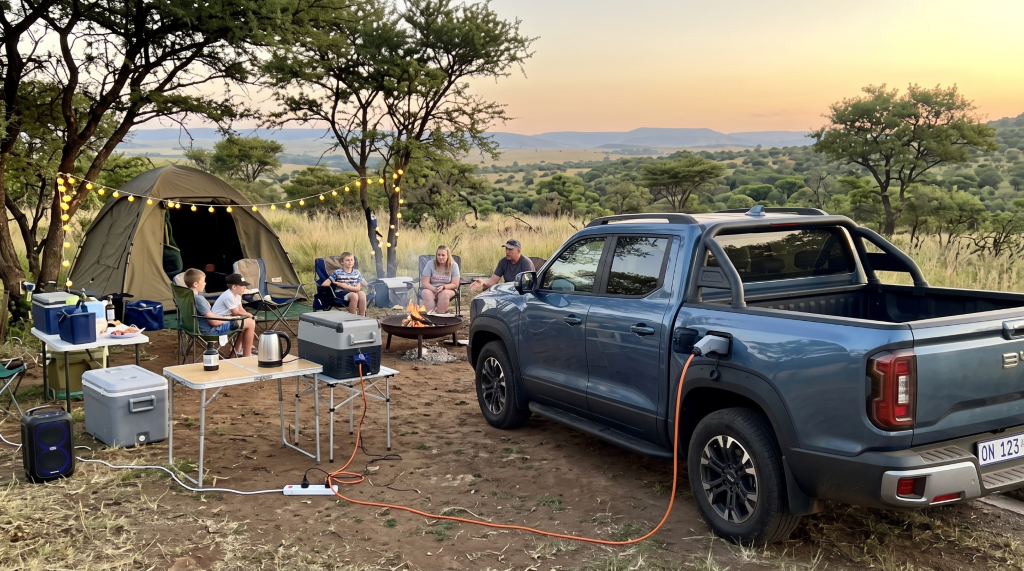
Camping with power! This is super handy for campsites unequipped with electricity.
Cabin tech and everyday user-friendliness
Inside, the Shark 6 feels less like a gritty utility vehicle and more like a luxury SUV. Highlights include BYD’s signature 15.6-inch rotating touchscreen infotainment system, a head-up display, a crisp 10.25-inch digital cluster, and a punchy 12-speaker Dynaudio sound system. Because there is no mechanical driveshaft running down the middle, the rear floor is completely flat, offering exceptional legroom and comfort for adult passengers on long journeys.
Reflecting on the interior feel during his Shark 6 road test, Sean noted: "The quality of the materials inside and the return to physical buttons for key controls are a breath of fresh air. I genuinely looked forward to driving the Shark each day."
Want to go full Electric? Consider the Geely Riddara
If a plug-in hybrid still feels like a half-measure and you are ready to ditch petrol stations entirely, the fully electric Geely Riddara RD6 has also entered the South African market as a native EV bakkie alternative.
Priced significantly lower than its hybrid rivals, the Riddara range spans three models:
- Aspire Econ 2WD: R611,900 (Single motor, rear-wheel drive, ~369 km range).
- Aspire Econ 4WD: R681,900 (280 kW / 485 Nm).
- Apex RD6 4WD: R781,900 (Dual-motor AWD, 315 kW / 595 Nm, 0–100 km/h in 4.5 seconds, and a 424 km NEDC range).
While it offers blistering performance, zero emissions, up to a 1,030 kg payload, and a 3,000 kg towing capacity, switching to a pure EV means planning long-distance holiday road trips around public DC fast-charging networks rather than falling back on a petrol engine.
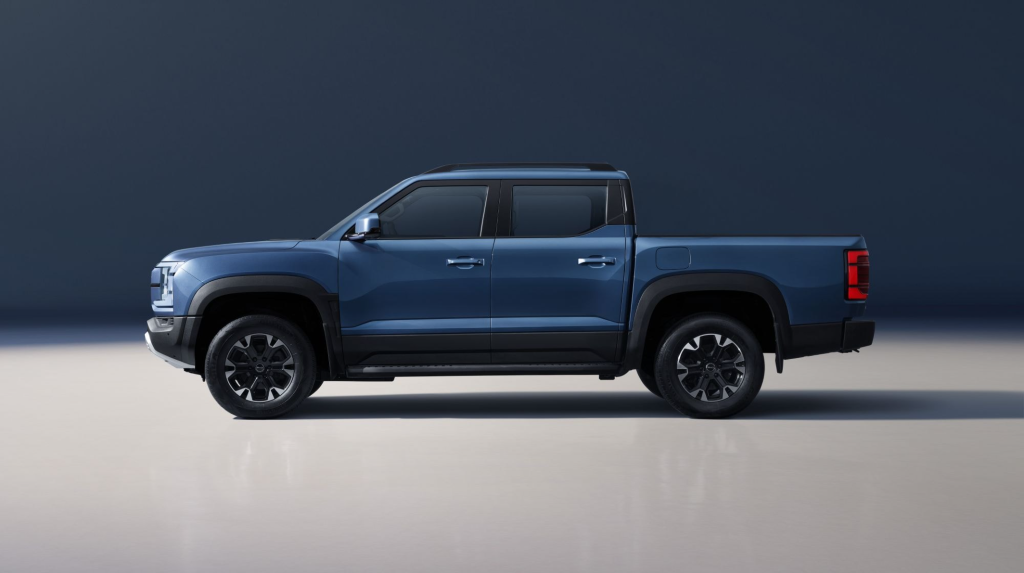
The Shark 6 is the ultimate lifestyle bakkie.
Verdict: Who should buy one?
The BYD Shark 6 is not trying to replace a fleet vehicle meant for heavy farm work or brutal construction sites. Instead, it is a masterclass in lifestyle versatility.
Buy it if: You are a suburban commuter, tech enthusiast, or weekend adventurer with solar at home who wants sports-car acceleration (0-100 km/h in 5.7 seconds), luxury cabin tech, and lower daily running costs without sacrificing bakkie utility.
Skip it if: Your primary requirement is heavy-duty commercial payload capacity or hardcore, mechanical low-roading in remote terrain where diesel remains king.