Hyundai Santa Fe vs Haval H9 vs Kia Sorento: Which is the best value for money?
Hyundai Santa Fe vs Haval H9 vs Kia Sorento: Which is the best value for money?


By Stuart Johnston
Hyundai’s Santa Fe has established itself as a mainstay player in the family SUV category. Its Kia Sorento corporate stablemate is a natural competitor, but the similarly-priced Haval H9 offers a different take on the seven-seater SUV category.
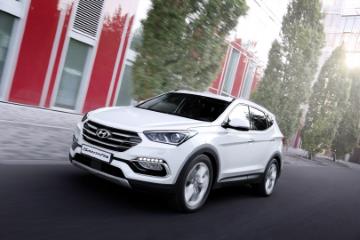
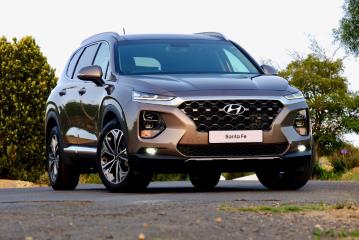
Hyundai’s fourth-generation Santa Fe was launched here late last year and is a thoroughly modern family-SUV, with seating for seven and an extremely stylish body that is carefully-specced to offer a host of features as standard equipment, with a no-nonsense mechanical specification.
The 2,2-litre diesel engine is used in all three available models, offering 142 kW and 440 Nm of torque and mated to an eight-speed automatic gearbox. It is a carry-over mechanical unit from the previous-generation Santa Fe. The entry-level 2.2D Premium and the mid-line Executive model are both front-wheel-drive vehicles, whereas the top-of-the-range 4WD Elite model is all-wheel-drive.
For a launch report on the MY 2109 Hyundai Santa Fe.
Price competitors
In this comparison we chose the entry-level Santa Fe Premium, which sells for R599 900. Selling for an identical price of R599 900 is Haval’s newly-introduced H9 2,0T AWD Luxury seven-seater. And for an asking price of R609 995 is Kia’s Sorento 2,2 CRDi EX, which makes it the priciest model of the trio, by some R9 000.
Mechanical specification
The Kia Sorento uses what is essentially an identical engine and gearbox layout to the Hyundai Sante Fe. This is not unusual, seeing as Hyundai and Kia are under joint ownership and many of the two company’s products share mechanicals along similar model ranges. The minor anomaly here is that the Kia Sorento’s 2,2-litre diesel is rated at 147 kW, whereas the torque figure of 440 Nm is identical to that of the Hyundai. This 5 kW difference is probably down to engine mapping and different air-intake systems. For a report on the up-dated Kia Sorento.
The Haval H9 uses a 1 967 cc turbocharged petrol engine that produces 180 kW and 350 Nm of torque. It has an eight-speed automatic gearbox. It also comes with permanent all-wheel drive, as well as a low-range reduction gearbox. For more on the well-priced Haval H9
Size counts
The two Korean-built vehicles are dimensionally very similar. The Hyundai measures 4 770 mm in length with a 2 765 mm wheelbase, while the Kia is a tad longer at 4 800 mm with a 2 780 mm wheelbase. They are also similar in weight, the Hyundai weighing an un-laden 1 805 kg versus the 1 826 kg of the Kia.
The Haval H9 is the odd-man out here. While overall length of the Chinese-built Haval is 4856 mm – not that much longer than the Korean models – it is much taller. Its maximum roof height is 1 900 mm, versus the 1685 mm of the Kia and the Hyundai’s 1 705 mm height.
Different body-chassis concepts
The Haval is a traditional SUV with more off-road orientation than the Hyundai and Kia. It also has a totally different body construction. Whereas the Hyundai and Kia use so-called monocoque or unitary body-chassis construction, the Haval has a body mounted on a separate chassis in the old traditional SUV or bakkie fashion.
This difference gives the Kia and Hyundai SUVs much lower overall weights, as well as a different ride quality and feel. The Haval is more truck-like in its operation, whereas the Hyundai and Kia feel more car-like.
This also plays a role in overall body weight. The Hyundai weighs 1 805 kg un-laden, the Kia weighs 1 826 kg, whereas the physically taller Haval weighs a hefty 2 357 kg. That makes it over 500 kg heavier than its price competitors here!
Space
Essentially all three vehicles boast very similar accommodation. They all have seven seats, six airbags and reasonable load volumes when the third row of seats are folded away. The Hyundai has 516 litres of luggage space, versus the Kia’s more generous 605 litre intermediate volume, and the Haval’s 747 litres.
Equipment
All three vehicles have infotainment systems. The Kia (in the EX spec) and Haval have navigation as standard, whereas the Hyundai does not have navigation as standard, but offers smart-phone pairing to the Infotainment touch screen as standard. All three have rear cameras and rear park sensor warning. The Haval comes standard with a panoramic sunroof, and also blind-spot assistance and steering intervention to prevent unintended lane departure. All have climate control and electric windows all round, and all have ABS, EBD and traction control. The Kia and Hyundai have genuine leather seat upholstery, whereas the Haval has artificial leather seat covering.
Performance
Given the Haval’s numerically superior 180 kW from its turbo-petrol engine, versus the 142 and 147 kW ratings for the Hyundai and Kia, one might expect superior performance in the larger petrol-engined car. However, all three vehicles have a 0-100 km sprint rating in the 10,0 to 10,5 second bracket. The key factor here is that the Haval’s superior power is nullified by its greater body mass.
Fuel consumption
The Hyundai has a rated fuel consumption of 7,8 litres/100 km, versus the Kia’s 6,3 litres/100 km rating. This is in fact more due to manufacturer’s different methods of measuring claimed consumption, and both should end up with a real-world figure in the 8,0 to 8,5 litres/100 km vicinity.
The Haval has a claimed consumption of 10,9 litres/100 km, but this is in fact very optimistic. Given small-capacity turbo engines’ natural thirst, and this one being used in a car weighing a total of 2 357 kg, one could not expect much better than an average consumption of between 13,5 to 15,0 litres/100 km in real-word use.
Which is the best value for money?
The Hyundai and Kia are closely competitive, despite the fact that the Hyundai Santa Fe is a brand new offering, whereas the Kia Sorento is an older model that has recently been face-lifted. All things considered, we would choose the Hyundai, because it is the newer car, and very good looking. The Kia comes in second, and the Haval comes in an honourable third. However, if more serious off-roading is your bag, you may well consider the Haval, because of its full-time all-wheel-drive and its standard transmission offering of low-range.
If re-sale values are to be factored in, we would still go with the Hyundai. To search current re-sale values of the cars in this comparison, try AutoTrader’s What’s it Worth tool, by clicking here and filling in the various makes and models in the drop-down menu.