
South African Motorsport had a strong 90s golden age that also translated into road cars that were absolute riots to drive. We had Super Touring, Group N Stannic and some stragglers from international championships. Remember legends like Mike Briggs, Robbi Smith and Deon Joubert? That was an era, alright. Nowadays, these cars fetch big money, and we've seen a few gems appear on our website. Which made us think at the watercooler chat, how do the latest hot hatches compare to some of these legends on our local soil?
If you haven't already, why not search AutoTrader today for your dream wheels?
There's no doubt that cars have gotten faster over time. But they've also gained weight, adding many safety features and plush comforts, which many would argue means you lose much of the edge and feeling these vehicles once had. Let's see how these legends match up to some of today's popular hot hatches. It's worth noting that these legends underwent some modifications from the factory models, and one could consider them Skunkwerks projects. Nonetheless, let's check out a select few.
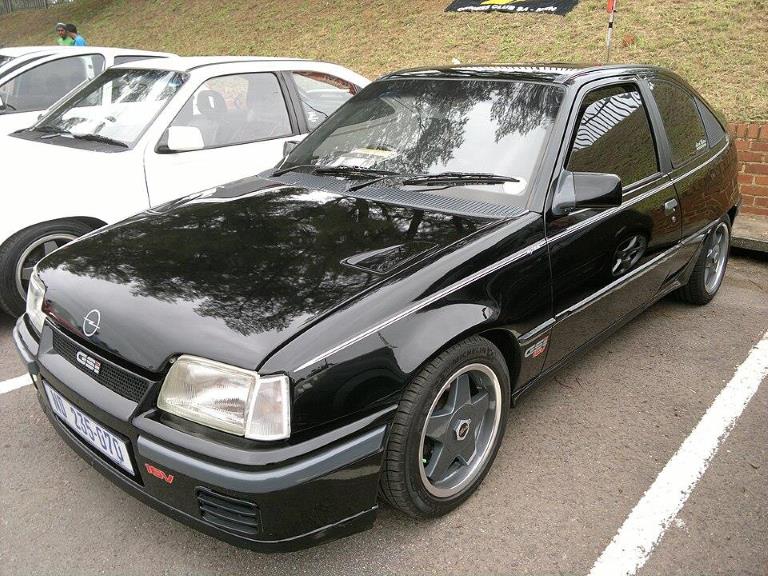
1. Opel Kadett Superboss (E)
A homologation special, with only 500 units built at Delta Motor Corporation in P.E., Eastern Cape. The Superboss, or 'Supie' as it was affectionately known, was based largely on the 'Big Boss' Kadett, but with further engineering and development. The Superboss made 125 kW and 228 Nm, which were sent to the front wheels via the F20 5-speed close-ratio manual gearbox to best harness the Supie's powerband. The 0-100km/h sprint took 7.6 seconds, and the top speed was 223 km/h. Remember, this was a 971 kg kerb-weight car. Finally, the Supie received 15-inch black Aluette wheels, which were iconic to the Supie, as they best accommodated the lowered suspension without rear arch rubbing, albeit with machine-rolled rear fenders. The Superboss also had an exceptional power-to-weight ratio for its time.

What can we compare the Superboss to?
The closest thing sold brand new would be the Volkswagen Polo GTI. The baby GTI, if you will. Straight out of the box, you have a 2.0-litre turbocharged 4-cylinder power mill producing 147 kW and 320 Nm, driving the front wheels via a 7-speed DSG gearbox. The GTI isn't just about raw power; there's also a sports suspension and an XDS locking differential to put that power onto the road better. Coil spring struts lower the standard Polo by 15mm. It's a MacPherson setup in front with an anti-roll bar and a torsion bar in the rear. Plus, we have active dampers! The Polo GTI comes with 17-inch wheels as standard, but can be optioned with 18-inch wheels. Kerb weight is measured at 1247 kg, but the Polo GTI completes a 0-100km/h sprint in 6.7 seconds with a top speed of 238 km/h.
Where the Superboss has the Polo GTI is in its kerb weight. Though we reckon in a straight line, the Polo GTI will briskly walk away from the Supie. What will happen when we throw a few corners into the mix? That's where things will get interesting. Some track time needs to be spent here.

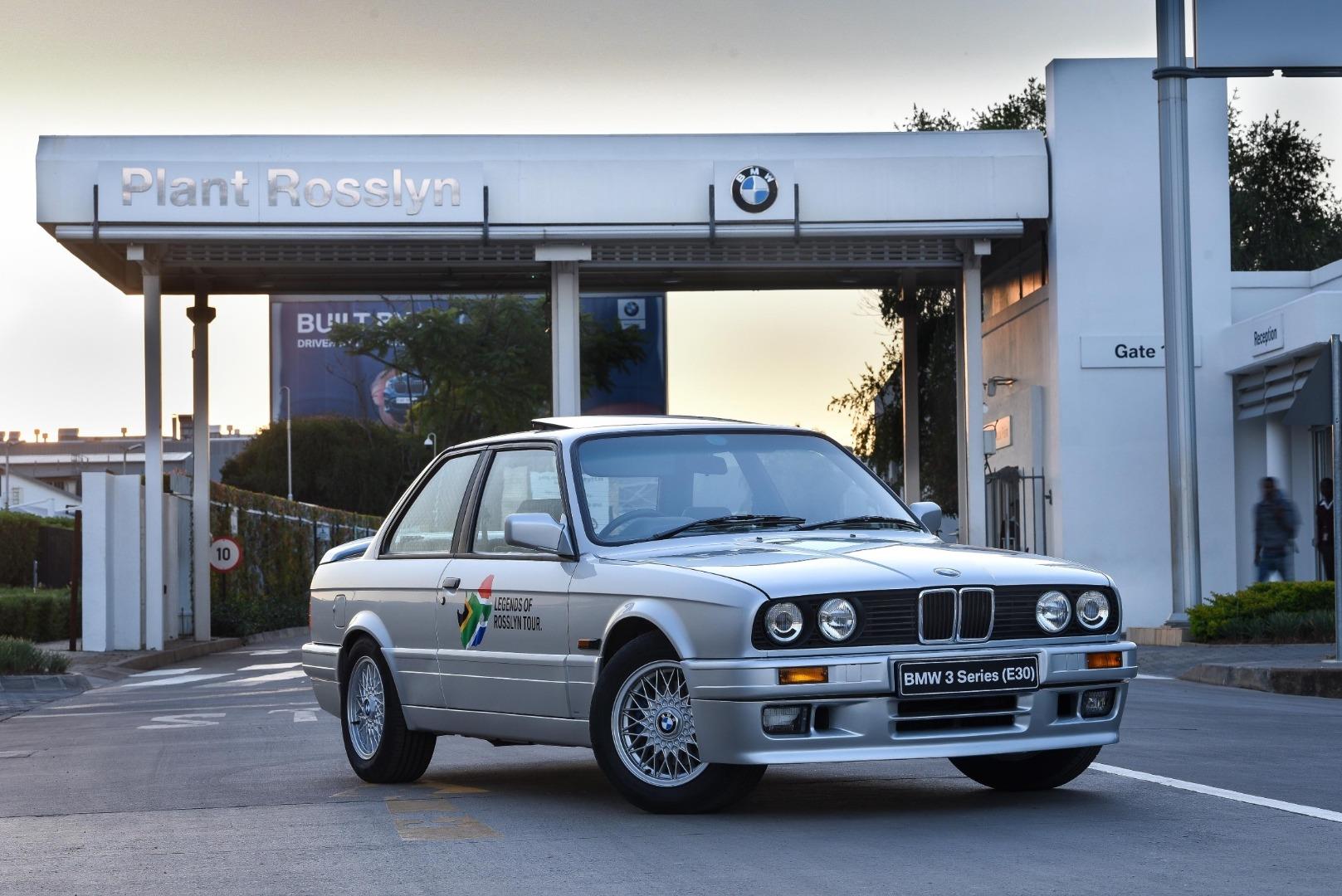
2. BMW 325iS "Gusheshe" (E30)
Those who know will know. It needs no introduction as it holds that much gravitas. We'll talk about the Evo 1 & 2 in this article. The 325iS is another famous South African homologation special, not to be confused with the iS models in other territories. This is the most sought-after version of the iS globally. Here's why...
The 325iS Evo did the 0-100km/h sprint in 7.5 seconds and topped out at 226 km/h. Kerb weight was 1147 kg, thanks to mods such as aluminium doors, fenders, and the bonnet, making this a pretty fun and light horse to tame.
The 2.7-litre straight-six petrol engine was based on the Alpina C2 engine, delivering 155 kW and 265 Nm in the Evo 2. Power was sent to the rear wheels via a 5-speed Getrag manual gearbox, and that power was put down well with the limited-slip differential. Handling mods included an M3 (Japanese-spec Boge suspension) and Alpina anti-roll bars.

Let's keep the comparison within the BMW family, focusing on the M135.
This is certainly a different approach to the 325iS: we don't have Rear Wheel Drive anymore, in favour of All Wheel Drive, but we have a potent 2.0-litre 4-cylinder turbocharged petrol engine making 233 kW and 400 Nm, sent through a 7-speed dual-clutch Steptronic gearbox. The M135 will sprint to 100km/h in 4.9 seconds and top out at 250km/h. Handling-wise, you have M Sport brakes and some M Sport suspension tweaks. The M135 tips the scales at 1550 kg DIN / 1625 kg.
The M135 is definitely a different vehicle compared to the 325iS. Around a track, though, the M135 will trounce the 325iS, but you'll likely have more fun going sideways in the iS.

3. Audi 80 (B4)
Audi was quite the disruptor in racing. Bringing their impressive quattro All Wheel Drive systems to the track gave the Audi teams a significant edge globally, and we saw it in South Africa with Terry Moss Racing. While the race car was based on a 2.0-litre non-turbo, high-revving STW engine in sedan form, the Audi 80 range offered a few powerplants and setups. For the sake of this article, let's look at the spiciest version of this vehicle at the time, the RS2 Avant, a co-development project between Audi and Porsche.
The RS2 Avant used a 2.2-litre turbocharged 5-cylinder petrol engine producing 232 kW and 410 Nm, and, naturally, power was sent to all four wheels via the quattro system and a 6-speed manual gearbox. The RS2 Avant could do the 0-100km/h sprint in 4.8 seconds and top out the speedometer at 262km/h. The RS2's kerb weight was 1600 kg. Managing that weight are Porsche-designed brake and suspension systems, and the RS2 even sports Porsche Cup wheels along with Porsche-branded brake callipers.

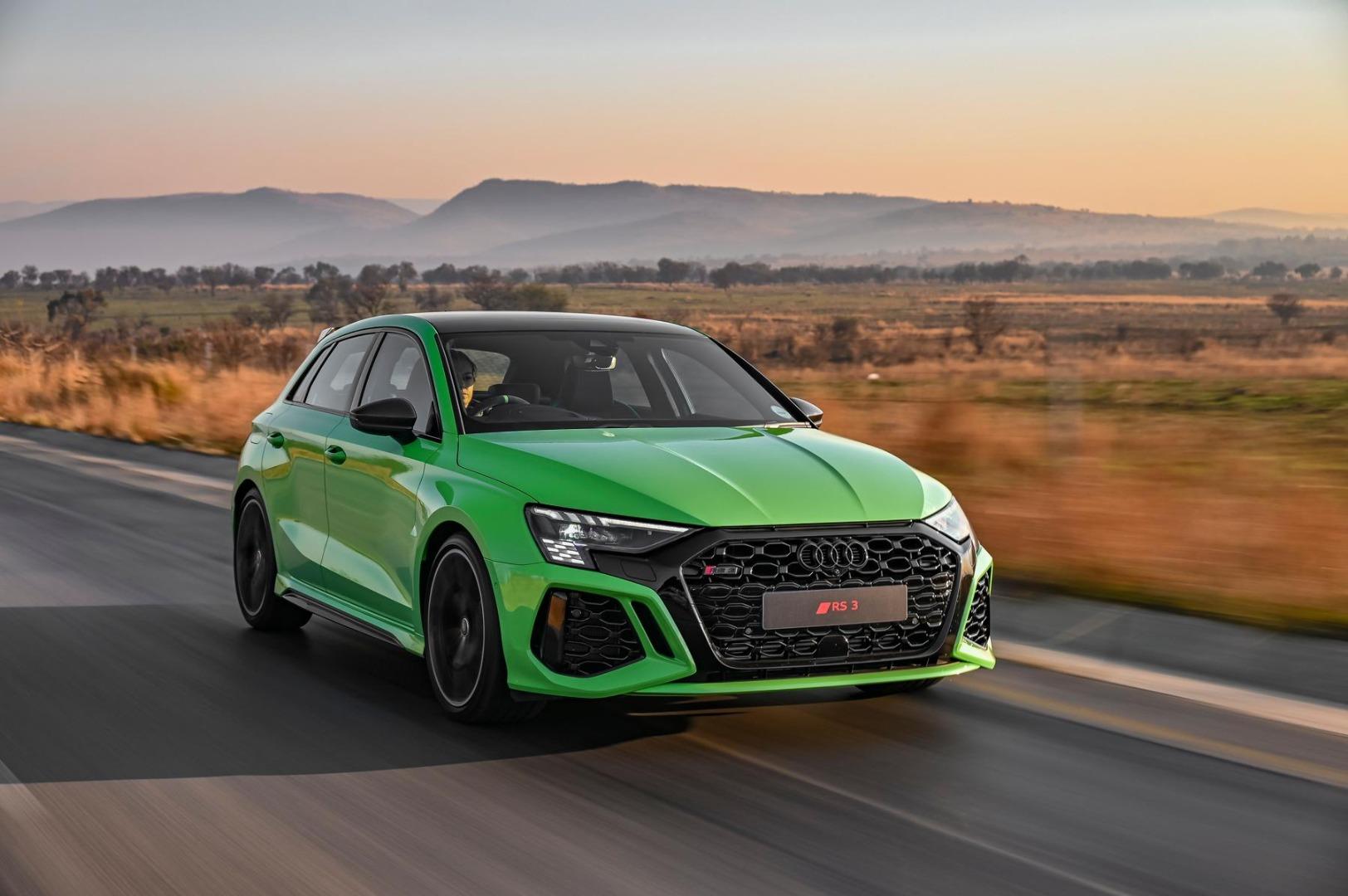
We'll keep things in the Audi family as well and look at a current RS model, the RS3 Sportback.
The ethos is still the same here: quattro All Wheel Drive, a 5-cylinder turbocharged engine, and something that's on Razer's Edge. The RS3 in Sportback trim has a 2.5-litre 5-cylinder turbo engine making 294 kW and 500 Nm, and, through some differential trickery such as the rear RS Torque splitter, power is sent to all four wheels efficiently via a 7-speed S-Tronic dual-clutch transmission. The RS3 Sportback will do the 0-100km/h flash in 3.8 seconds and top out at 250km/h, but can optionally be extended to 290km/h. Managing all that power is a big brake kit and adaptive dampers. You'd expect this vehicle to be weighty, but it's quite the opposite, with a 1565 kg kerb weight.
The RS3 will have the advantage here thanks to its rapid dual-clutch gearbox and differential trickery.