
Honda Civic vs Volkswagen Golf vs Ford Focus: which one has the lowest running costs?
Honda Civic vs Volkswagen Golf vs Ford Focus: which one has the lowest running costs?


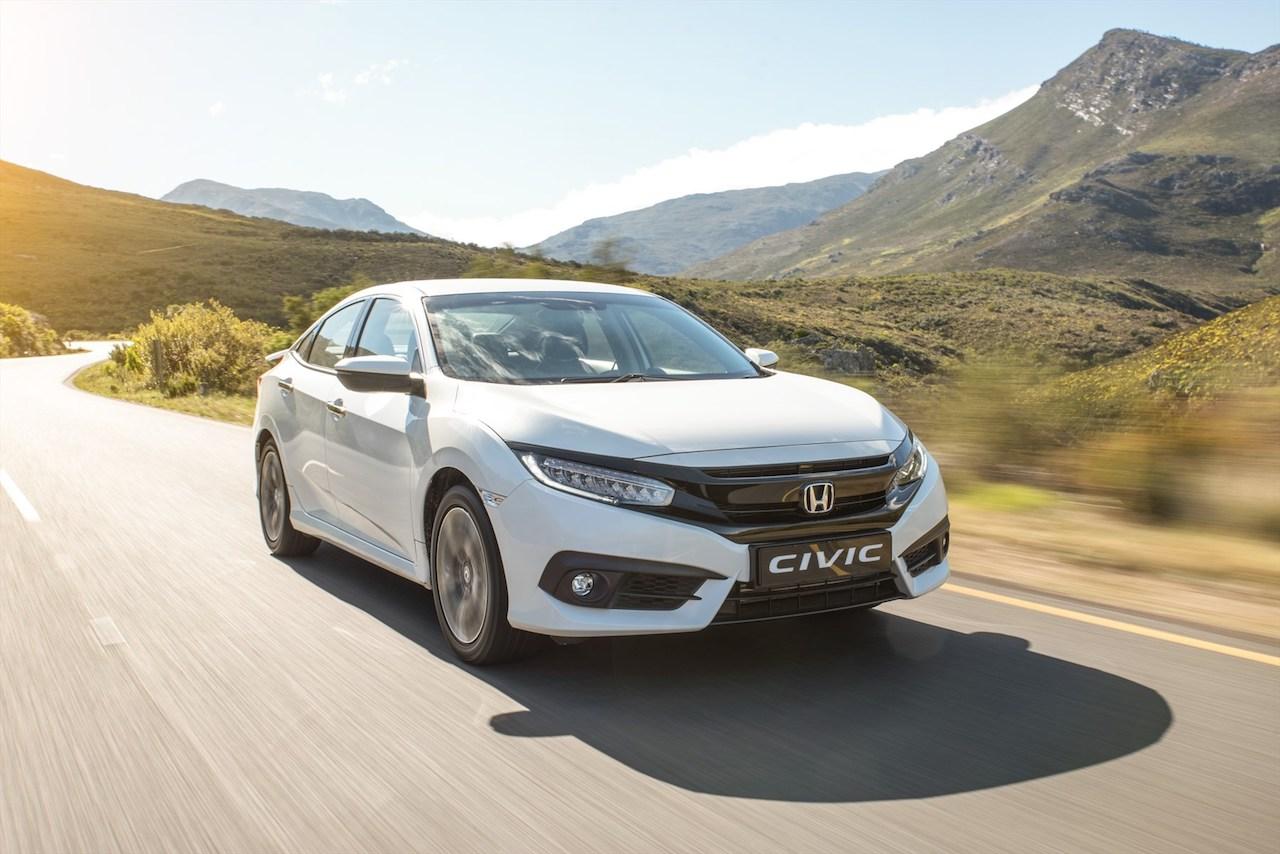
By Farzana Chaumoo
We compare the running costs of three popular cars in terms of their efficiency.
Honda Civic
The Honda Civic’s running costs are favourable due to its fuel consumption and reliability.
The Civic was last updated in June 2019 and the choice of drivetrains remains unchanged. Civic buyers have the option to choose between two proven four-cylinder engines: a refined, normally aspirated 1.8-litre unit, and a sporty 1.5-litre turbo petrol.
The most economical engine in the range is the inline 4-cylinder 1.5-litre VTEC Turbo petrol engine. It features Honda’s ‘Earth Dreams Technology’ and produces 127 kW of maximum power at 5 500 r/min, along with 220 Nm of maximum torque – the latter available in a broad range between 1 700 and 5 500 r/min to enhance all-round drivability. This engine returns a very impressive claimed average fuel consumption of 5.9l/100km on a combined cycle while carbon emissions have been measured at 140g/km.
The second engine is the naturally aspirated 1.8-litre SOHC i-VTEC 16-valve in-line 4 engine. It produces 104 kW at 6 500 r/min, allied to a torque peak of 174 Nm at 4 300 r/min. This engine returns a claimed average fuel consumption of 6.3l/100km on a combined cycle while carbon emissions have been measured at 150g/km. The 1.8-litre also features Honda’s ‘Earth Dreams Technology’ and the engine is paired with the latest generation CVT gearbox. This ensures powerful and smooth performance, with the added benefit of maximum efficiency.
Both engines feature Honda’s ECON mode, which optimises the engine and transmission for maximum fuel economy. Additionally, Eco Assist helps the driver achieve the most efficient driving style by means of a changing colour indication on the instrument cluster.
Starting price: R364,500
Volkswagen Golf
VW's Golf is known for its strong performance, high safety ratings, and class-leading build. It combines affordability with the fun-to-drive factor and all of which comes through with some European flair. It also has an impressive fuel economy. We take a look at the 5 engines in the latest Golf range to see which has the most efficient figures on paper.
Best in the range for fuel consumption is the 1.0 TSI 81kW petrol engine paired to a 6-speed manual gearbox. It has sufficient power and also features BlueMotion Technology: Start-Stop with Brake-energy Recuperation as standard that helps in delivering a low fuel economy of 4.8l/100 km on a combined cycle and 4.2l/100 km on an extra-urban cycle. An urban cycle is rated at 6.0l/100 km. It emits 109 g/km of CO2. This petrol derivative is ideal for owners who will cover less than 20,000 kilometers a year. It’s also a good option for company-car drivers.
If you’re in need of more power, there’s the 1.4 TSI 92kW Comfortline DSG model that puts out the same amount of torque, 200 Nm, as the 1.0 TSI and is paired to a 7-speed DSG gearbox. These two TSI models have very similar figures. It returns 5.2L/100 km on a combined cycle and 4.3L/100 km on an extra-urban cycle, while the urban cycle is rated at 6.1L/100 km. CO2 figures are a little higher with the car emitting 120 g/km.
We then jump to the bigger petrol and diesel engines for the high-performance models in the Golf catalogue. A 2.0-litre engine can be found in the Golf GTI (petrol), the Golf GTD (diesel) and the Golf R (petrol). The 169 kW GTI manages 5.3l/100 km on a Combined cycle and 5.6l/100 km on an Urban cycle with a six-speed DSG gearbox and emits 149 g/km of CO2. The 130 kW GTD 6.4L/100 km on a Combined cycle and 8.2l/100 km on an Urban cycle, also with a six-speed DSG gearbox and emits 139 g/km of CO2. The 228 kW Golf R manages 7.2l/100 km on a Combined cycle and 8.9L/100 km on an Urban cycle with a seven-speed DSG gearbox and emits 164 g/km of CO2.
Starting price: R320,800
Ford Focus
The Ford Focus engine line-up consists of the 1.0 and 1.5-litre three-cylinder and four-cylinder petrol motors and a 1.5-litre four-cylinder diesel. There’s also a 48-volt ‘mild hybrid’ said to be released by 2020, but no there are no immediate plans for a pure-electric derivative.
Be it a manual or automatic-gearbox, the cars have a six-speed transmission. The autos have a 6-speed PowerShift with SelectShift type of transmission.
Ford’s multi-award-winning 1.0-litre EcoBoost petrol puts out maximum power of 92 kW @ 6000 rpm and 170 Nm of torque at 1400-4500 rpm. The 1.5-litre EcoBoost petrol puts out maximum power of 132 kW @ 6000 rpm and 240 Nm of torque at 1600 – 5000 rpm. The 1.5-litre TDCi diesel puts out maximum power of 88 kW @ 3600 rpm and 270 Nm of torque at 1750 – 2500 rpm.
For maximum fuel efficiency, the turbocharged three-cylinder 1.0-litre engine with the standard 6-speed manual and auto-stop/start would be the best setup.
The fuel-efficiency and CO2 emissions from the EcoBoost engines have been enhanced by Ford’s industry-first cylinder deactivation system for a three-cylinder engine. This system automatically stops one of the engine’s cylinders when its full capacity is not needed, like during coasting or cruising when there is light demand on the engine. The technology can disengage or re-engage one cylinder in 14 milliseconds.
Part of the core EcoBoost technologies includes Twin-independent Variable Cam Timing, high-pressure direct fuel injection, and of course, advanced turbocharging. Emissions have also been reduced to its standard gas particulate filter technology.
Starting price: R258,200
Verdict
The Honda Civic has a good reliability record earned over the years which is unlikely to change with the 10th generation model. Keep in mind, that the newer models petrol engines are fresh efforts from the ground up. They are also packed with some impressive technology. Honda has scored well in overseas reliability surveys and customer satisfaction awards and the automaker is keen on maintaining this record to attract new buyers.
The engine technology in the Focus plays a key role. Not only does it help to reduce running costs and emissions but also delivers rewarding levels of power and performance. The Auto-Start/Stop has helped to improve fuel-economy figures across the range. All the new Focus engines have been designed to meet the stringent Euro 6 emissions standards.
Our winner goes to the Golf. All Volkswagen Golf models are efficient in correlation to their performance. Volkswagen uses impressive fuel efficiency as one of the key selling points for the Golf. It competes with many rivals on running costs, be it the eco-tuned models or the high-performance derivatives. When compared to its rivals, the Golf also holds on to its value better and its high-quality image makes it very desirable on the used car market.