
Generic Car Comparison: Renault Duster vs two of its competitors
Generic Car Comparison: Renault Duster vs two of its competitors



By Martin Pretorius
In keeping with this month's value-focused comparisons, let's take a look at some bargain-priced compact SUVs. The Renault Duster is getting on in years, but its overall package has been sharpened through the years to offer an enticing, charming and affordable compact SUV. We compare it to two other budget-minded opponents.
The Renault Duster has been around for quite a while – in fact, there's a new one due to arrive in South Africa before the end of 2018. And yet, in spite of its age, the Duster still offers a solid value proposition to those buyers who want an SUV, but couldn't care less about a premium badge. That's not to say that it's a primitive car, mind you – frequent model updates have added features and sophistication to keep it more-or-less in tune with current requirements, and today's Dusters are a lot better-made than the first examples were.
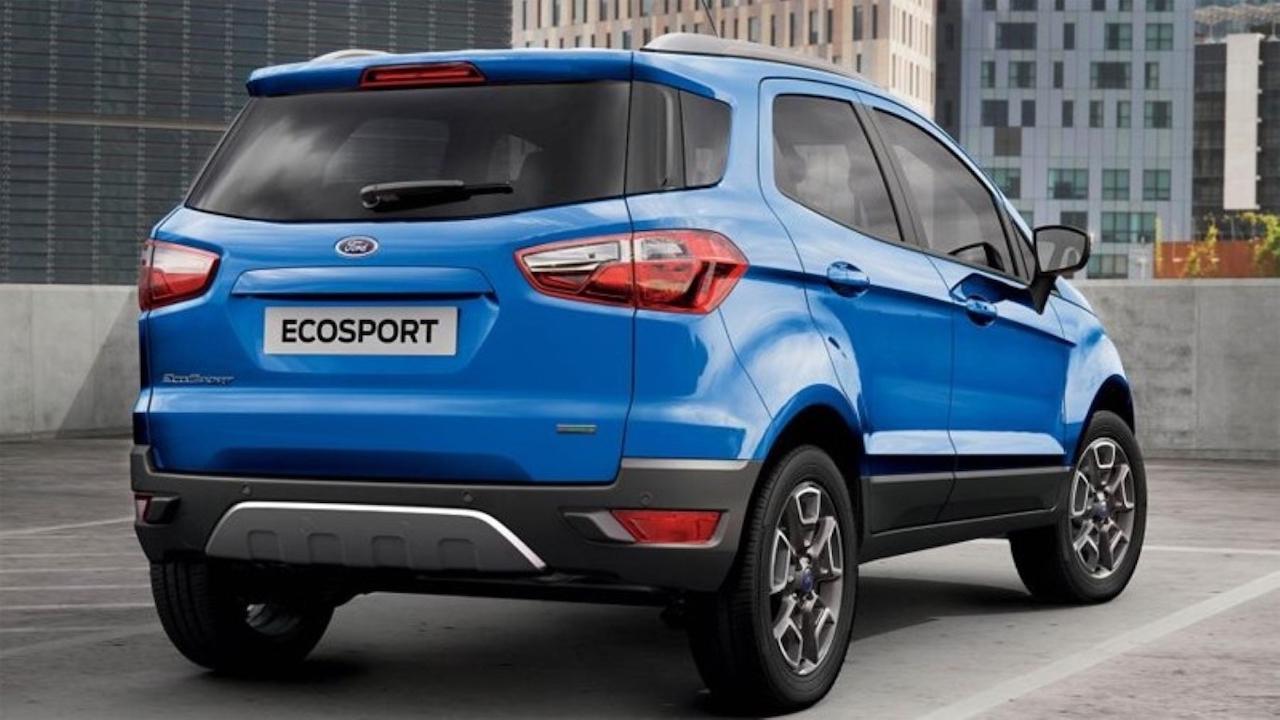
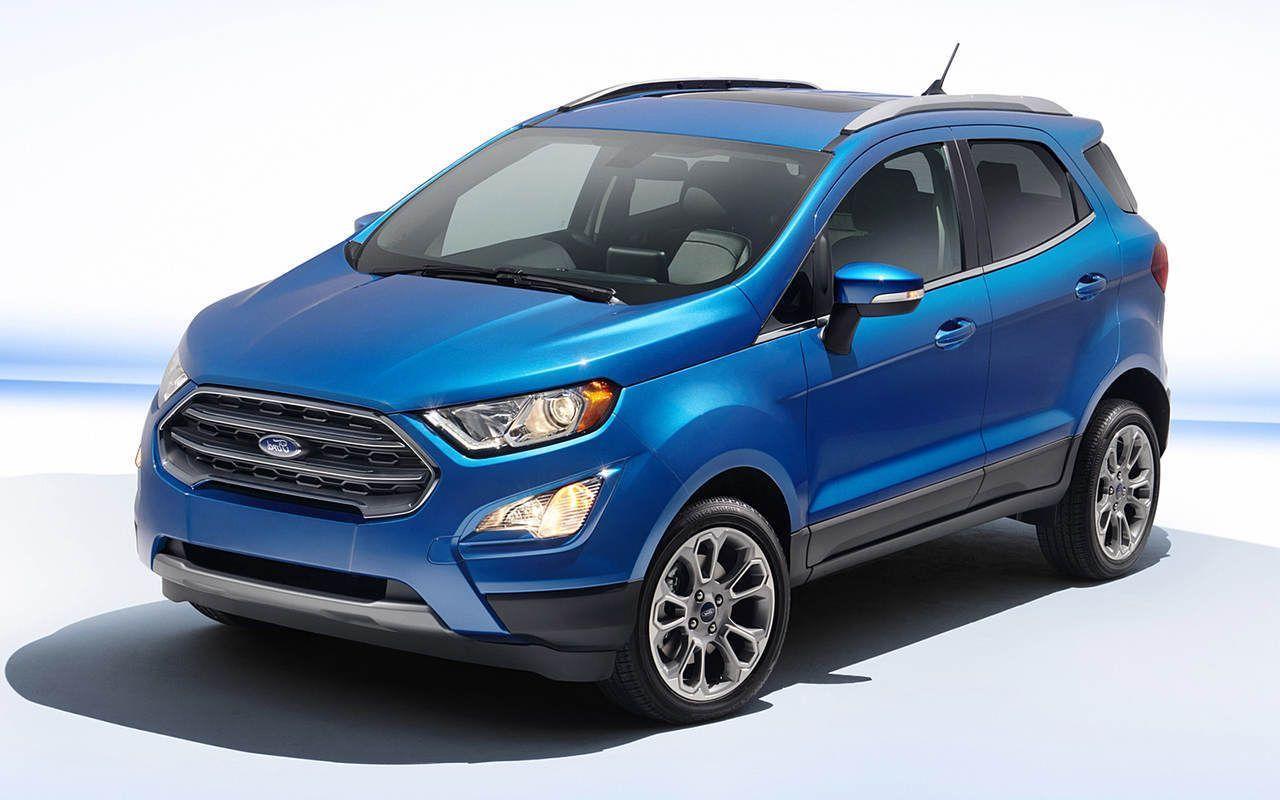
But the market has also moved on in the years since the Duster first arrived. Its principal competitor has always been Ford's EcoSport, which recently received a very comprehensive make-over. Korea hasn't been sitting still either, with Hyundai now offering a much more-modern alternative in the form of the fairly new Creta. So how does the outgoing Duster perform against the updated EcoSport and relatively fresh Creta? We selected variants from each range with similar specifications – all front-wheel driven, manual-gearboxed and petrol-engined – and came to some interesting conclusions...
|
Renault Duster 1.6 Dynamique |
Ford EcoSport 1.0T Trend |
Hyundai Creta 1.6 Executive |
|
|
Engine size (cyl/size) |
4-cyl, 1.6-litre, petrol |
3-cyl, 1.0-litre, turbo-petrol |
4-cyl, 1.6-litre, petrol |
|
Power/Torque |
77 kW/148 Nm |
92 kW/170 Nm |
90 kW/150 Nm |
|
Kerb Weight |
1 171 kg |
1 327 kg |
1 240 kg |
|
Length (mm) |
4 315 |
4 017 |
4 270 |
|
Wheelbase (mm) |
2 673 |
2 519 |
2 590 |
|
Airbag count |
4 |
7 |
6 |
|
Ave Consumption * |
7.6 ℓ/100 km |
5.4 ℓ/100 km |
7.9 ℓ/100 km |
|
Warranty |
5 yr/150 000 km |
4 yr/120 000 km |
5 yr/150 000 km |
|
Price |
R 266 900 |
R 287 500 |
R 329 900 |
*Manufacturer's official figures.
Analysis
These three opponents aim at the same, value-oriented market segment, but their challenges are issued in quite different ways. The Duster is the simplest one here, the EcoSport is the most in tune with current trends, and the Creta takes up the middle ground – more conservative than the Ford, but seemingly more upmarket than the either of the others. At least, that's what the Creta's price tag wants us to believe, because it even says “Executive” right there in its model name.
The Ford is certainly the odd one out here, with its tall, stubby body, it casts by far the smallest shadow of these three contenders. But whatever it loses on physical size, it compensates with clever packaging: its cabin is surprisingly spacious for such a short car (mostly thanks to its upright proportions), and only really loses out on boot space. This is where the Renault's larger dimensions come into play: its extra length creates plenty of cabin room, and it has the largest luggage compartment by quite a sizeable margin. As expected, the Creta slots neatly between them in these measurements.
Engine-wise, the Ford again goes against the grain, thanks to its downsized 1.0-litre turbo-petrol 3-cylinder mill instead of the normally-aspirated 1.6-litre “fours” in the other two. The Renault really shows its age in this area, as it has the least power and torque in this comparison, coming it slightly behind the similarly-configured Creta and quite a distance behind the boosted Ford. Fortunately, the Renault is the lightest of these three, which actually turns it into the quickest sprinter, albeit with a much lower top speed than the more-powerful Ford. The EcoSport is actually the slowest-accelerating car here, largely due to the fact that it's almost 150 kg heavier than the Duster.
But, while the EcoSport is the slowest-accelerating of this trio, it's also the most economical – thanks to that superb little 3-cylinder's efficiency. While Ford claims an official average consumption of only 5.4 ℓ/100 km, experience has proved that it will more likely return high-6 ℓ/100 km figures on real roads. This is considerably less thirsty than the old-fashioned 1.6-litre engines in the other two cars, and while it might not be the quickest car here, its handy helping of extra torque will make it easier to live with, especially at power-sapping Highveld altitude.
They're all pretty well-equipped considering their list prices, with navigation, cruise control and rear parking sensors being standard kit on all of them. To this, the Duster and Creta add rear-view cameras, while the EcoBoost gets hill start assistance. However, the Ford takes a decisive lead in the safety stakes, with 7 airbags and stability- and traction control featuring prominently on its specification sheet. Neither the Creta nor the Duster even have traction control, and the Duster loses out big time due to it only having 4 airbags, while the Creta has 6 airbags.
Yet again, safety becomes the deciding factor, so the Ford EcoSport has to be the winner here, because of its more-impressive airbag count and active safety equipment. Furthermore, its higher price is largely offset by its superior fuel efficiency and torque output, although the Duster does fight back with a lot more cabin- and luggage space. As for the Creta, it's really quite difficult to understand why it carries such a steep pricetag, especially in view of its comparatively sparse safety kit, middling performance, and a spec sheet which is merely competitive. Maybe its model update (due in early September) will improve its value proposition, but for the time being, the EcoSport remains the first choice here.