
Everything you need to know about the BMW 1 Series
Everything you need to know about the BMW 1 Series


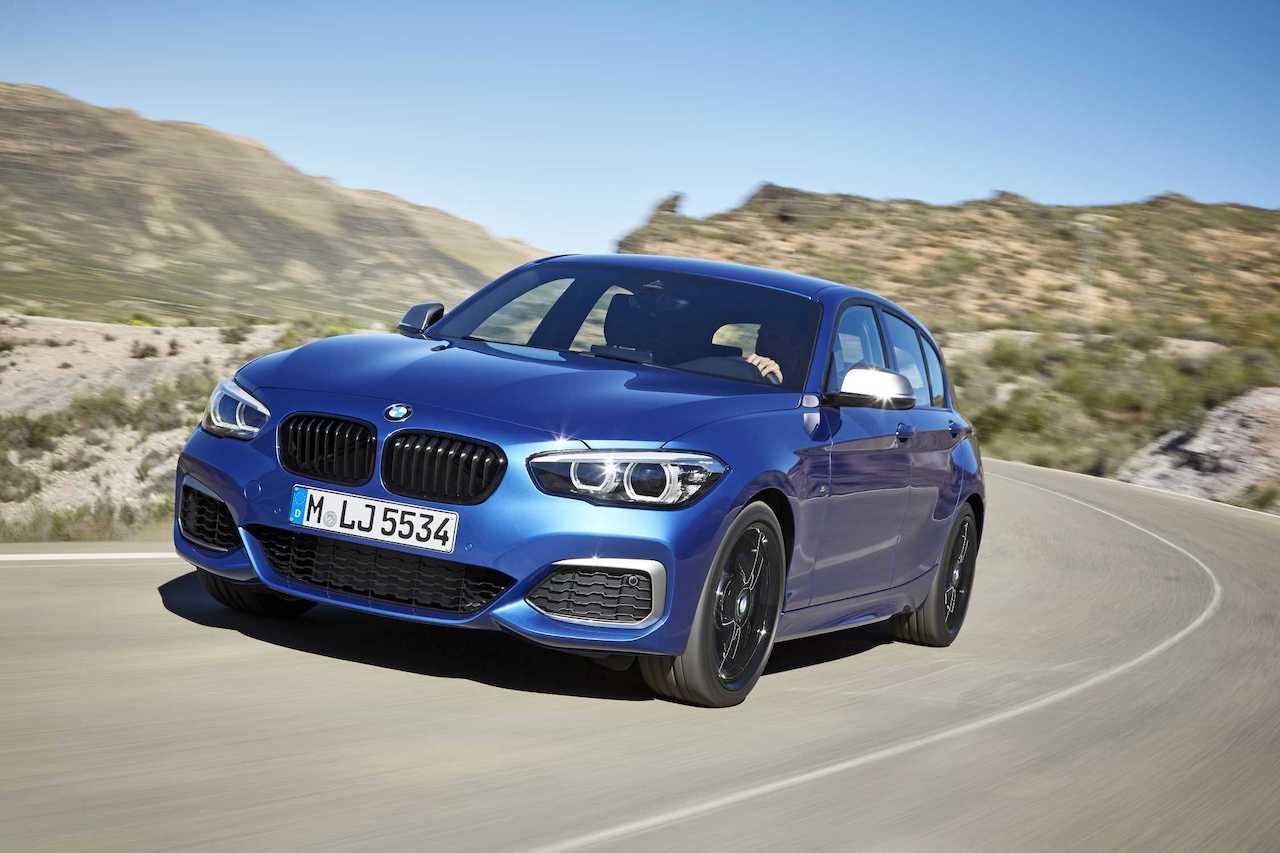


By Martin Pretorius
For many decades, BMW’s range opened up with the 3 Series. But, as the other BMWs grew progressively bigger and more expensive as each new generation arrived, the 3 Series was forced to move upmarket. This left a gap at the bottom of BMW’s model range – and opened up a position for a new entry-level BMW. We take a look at everything you need to know about the BMW 1 Series.
Historical precedent
BMW has had strong representation at the smaller end of the market before, of course: the first 3 Series (codenamed E21) and its E30 successor (which was a smash hit and became a legend in South Africa) were very compact cars, a fact which was reflected in their extremely cosy cabins. But before the 3 Series, there was the immortal “02” – essentially a shortened derivative of the “New Class” sedan which saved BMW back in 1961.
The “02” had an impressive production run, and was built for more than a decade, until it was eventually fully superseded by the E21 in 1977. But even this first update of the “02” concept was notably larger than its predecessor, setting the scene for the evolution of BMW’s smallest offering over the following decades. And, as the junior BMW grew bigger, it grew more complex and expensive.
Now let's fast forward to the year 2004. With the E90 3 Series about to be released, BMW was faced with a conundrum: Their compact sedan has grown up to be almost as big as a 5 Series used to be. The concept of a small BMW, it seemed, had become nothing more than a fond memory of a simpler time.
The solution was obvious. Take their new 3’s platform, shrink it a bit, strip out some equipment, and sell it at a reduced price. And thus, the 1 Series was born: a shortened 3 Series, offering the larger car’s most appealing characteristics but at a lower price. And, just as it worked in the 1960s, this recipe worked this time around as well. The 1 Series soon became a sought-after model in its own right, yet it still managed to maintain the brand’s cachet and snob appeal.
Range expansion was inevitable
Pretty soon, the 1 Series grew new derivatives. The rather frumpy-looking 5-door hatchback with which the model arrived soon spawned a much sexier 3-door hatch, along with a cocky-looking coupé and a very pretty convertible. Its success was immediate and significant, and the 1 Series eventually racked up hundreds of thousands of sales.
When the second (current) generation 1 Series arrived in 2011, the range was trimmed down to only offer the hatchback body style, as coupés and convertibles were renamed to become the 2 Series. This generation launched with both four- and six-cylinder engines, all of which featured turbocharging and direct injection.
Current line-up
Power ranged from 100 kW to 235 kW, with the top-performing M135i quickly carving a niche for itself as the most affordable new rear-wheel driven hot hatchback on the market (mainly because it was the only one of that kind). A mild facelift in 2015 replaced the entry-level four-cylinder engine with a new 1.5-litre turbo triple, and the 2.0-litre turbo “four” and 3.0-litre turbo “six” were replaced by BMW’s latest series of engines from the same family.
As the range currently stands, the 1 Series starts off with the 118i, developing 100 kW and 220 Nm, followed by the 120i (with 135 kW and 270 Nm) and 120d (developing 140 kW and 400 Nm). These 3- and 4-cylinder 1 Series variants are available with either a 6-speed manual gearbox or an 8-speed torque converter automatic, and all are rear-wheel driven.
Capping off the 1 Series range, the M140i uses a 3.0-litre turbo 6-cylinder, good for 250 kW and a staunch 500 Nm. This power again goes to the rear wheels only, and can only be had with the 8-speed automatic transmission. In true BMW style, various styling- and option packs are available, though the M240i can only be had with all the M-Sport regalia.
From pricey to pretty expensive
With price tags varying between R 446 980 and R 750 240, the 1 Series may be the least-expensive BMW range on the market, but it’s also far from a bargain-basement model. Add some options, and just watch those prices grow by leaps and bounds. However, in its current iteration, the 1 Series is appealing enough in its own right to largely justify those hefty prices.