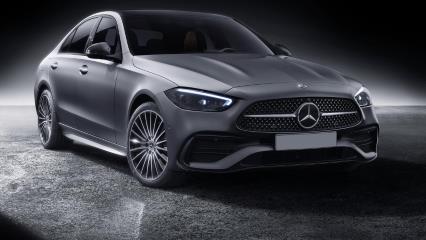
With fuel prices skyrocketing, every drop counts when you're behind the wheel of your diesel C-Class, whether you're driving an old or a new 220d.
Why we love the diesel C-Class
Diesels are disappearing fast as the world seems to jump on the downsizing and plug-in/HEV hybridisation wagon. However, South Africans have a very soft spot for turbodiesels, and those of us who have driven or owned a diesel C-Class will agree: It's the ultimate road-tripping vehicle, with consumption often dropping lower the further you drive. (In this article, my colleague, Ryno, picks it as his favourite fuel-efficient car in SA.)
Read our review of the petrol C-Class (C200) here.

Know your C220d: old school vs new school
Traditional C220d models (2014-2021) are pure turbodiesel without electric assistance. You've got excellent engineering, but no technological safety net; every throttle input matters.
Mild-hybrid C220d models (2022+) combine that same turbodiesel with a 48V electric system that adds 15kW of boost. When the 2022 Mercedes-Benz C-Class launched in South Africa in February 2022, every new C220d came with this technology as standard, plus ECO Assist through the MBUX system.
The good news is that both generations can achieve remarkable efficiency with the right approach.

Let technology think (mild-hybrid models)
If you've got a 2022+ C220d, ECO Assist is your secret weapon. It's built into your MBUX system and ready to become your fuel-saving co-pilot.
Driving to the coast? In conjunction with MBUX, the brand's online driving assistant, the system knows your route's topography, anticipates speed limit changes, and can even predict traffic light timing with navigation active.
In ECO mode with adaptive cruise engaged, it'll automatically ease off the throttle when approaching downhills and maximise energy recovery during deceleration.
You'll find it in your MBUX vehicle settings under "ECO Assist," or select ECO mode via DYNAMIC SELECT and let it work its magic.

Master the fundamentals (all models)
Find your engine's sweet spot. The C220d's turbodiesel delivers peak efficiency between 1 500 and 2 500 r/min, which is where diesels excel: delivering maximum torque with minimal fuel consumption.
Smooth acceleration wins. Traditional diesel owners must think ahead because there's no electric safety net. Mild-hybrid owners can be more relaxed since the electric motor handles the initial push and smooths out mistakes.
Highway sweet spot: Your C220d's fuel-efficient zone is around 110-120 km/h. Push beyond this, and aerodynamic drag starts eating into your efficiency.
5 things you need to know about the 2022 Mercedes-Benz C-Class

A tale of two diesels
Your choice of diesel matters more than you might think. The jump from 500ppm to 50ppm represents a 90% reduction in sulphur content for just 2-5 cents more per litre.
Using 500ppm consistently means your DPF clogs faster, your turbocharger accumulates carbon deposits quicker, and maintenance becomes more frequent. This hits traditional C220d owners harder since no mild-hybrid system can compensate.
Spending more on 50ppm diesel is the cheapest insurance policy against R15 000-25 000 repairs.
Related: How does the Mercedes-Benz C-Class compare to the BMW 3 Series?

City vs highway strategies
Traditional and mild-hybrid models differ most in city driving. Traditional diesel owners must time traffic lights perfectly and coast early to avoid the fuel penalty of complete stops. Many also disable the automatic stop/start system to reduce wear and restart delays.
Mild-hybrid owners have it easier: ECO Assist predicts optimal speeds while the refined stop/start system makes traffic lights less problematic.
Highway cruising benefits both equally. Traditional diesel owners should disengage cruise control on hills where human judgment wins. Mild-hybrid models can trust ECO Assist to handle these decisions automatically.
Related: Top 5 Mercedes-Benz C-Class alternatives
Climate control reality check
You can keep the airconditioning (A/C) on, but be clever about it. Pre-cool the car (via the MercedesMe app) before getting in, park in shade when possible, and set the temperature slightly higher than Arctic Blast mode.
Traditional models feel the A/C load more directly on fuel consumption, while mild-hybrid systems can assist during operation.
Which Mercedes-Benz C-Class is better: Diesel or petrol?

Maintenance is essential
Keep your air filter clean, monitor tyre pressure monthly, and choose quality fuel. For traditional C220d owners, this becomes even more critical since there's no electric system to compensate for poor maintenance.
For older models, regular DPF attention and quality oil changes are non-negotiable, while mild-hybrid owners should ensure their 48V system connections stay clean and book services at dealers familiar with the technology.

Just be sensible
The C220d represents some of the finest diesel engineering ever produced. Traditional owners achieve excellent efficiency through technique, while mild-hybrid owners have technology assistance but still benefit from understanding the fundamentals.
Master these basics, choose your fuel wisely, and enjoy the effortless torque that makes any C220d perfect for local conditions!