Beating the South African fuel price: A guide to being more frugal
The fuel price has increased by R4.00 per litre for petrol and by a staggering R14.50 per litre for diesel compared to the start of the year. To get your wallet back to that January sweet spot, you don't necessarily need a new car—you need a new strategy.

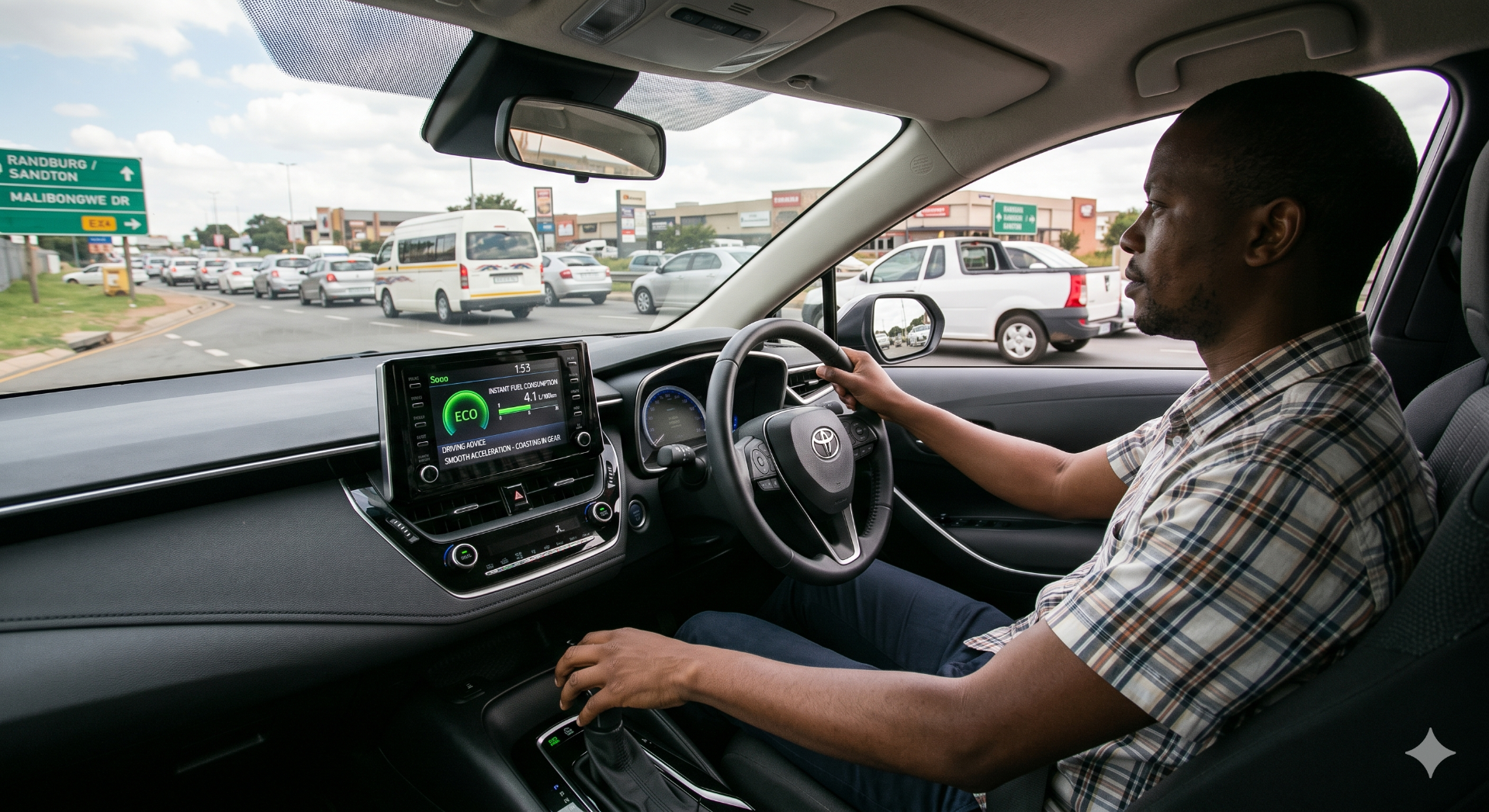
To offset a 15% price hike, you need a 15% efficiency gain. This is entirely possible through Eco-Driving:
The 2 500 r/min rule: If you drive a manual or have a manual override, shift up before you hit 2 500 r/min where possible.
The egg under the pedal: Imagine there’s an egg under your accelerator. Smooth, gradual starts can save fuel in city traffic.
- Use that Eco Mode: If your car has drive modes, use the Eco function. To give you an example, I used this mode during my last tank of fuel in my car and gained 43km of total range, which is around an 8% improvement.
Momentum is money: In South African traffic, we tend to accelerate toward red robots and not anticipate traffic. Coasting in gear and anticipating traffic
The 20% Rule: Aerodynamic drag increases exponentially with speed. Dropping your cruising speed from 120 km/h to 100 km/h can drastically reduce fuel consumption.
Cruise control logic: Use cruise control on the flat stretches of the N1 or N3, but turn it off in hilly areas (like the Gillooly’s Interchange or Town Hill in KZN). Cruise control tries to maintain speed at all costs, often flooring it to get up a hill, whereas a human can allow the speed to bleed off slightly to save fuel.
Maintenance as a hedge
If your car isn't running perfectly, you’re paying a neglect tax at the pump.
Tyre Pressure: Running your tyres just 0.5 bar under-inflated can increase fuel consumption by 3-5%. Check them weekly; it’s free air that saves real Rands. Recommended tyre pressure levels are often found on a sticker inside the driver's side door of your vehicle.
The air filter audit: A clogged air filter in older engines can increase consumption by 10%. If you haven't serviced your car recently, that R1 500 service might pay for itself in fuel savings within three months.
Strategic route planning
We often drive on autopilot, but the shortest route isn't always the cheapest.
Avoid the stop-start penalty: A slightly longer route that maintains a steady 80-100 km/h is often cheaper than a shorter route through 20 sets of traffic lights or speed bumps.
The cold start kill: Your car uses significantly more fuel in the first 5km while the engine reaches operating temperature. Combine your school run, grocery trip, and gym visit into one loop to avoid multiple cold starts.
Downsizing
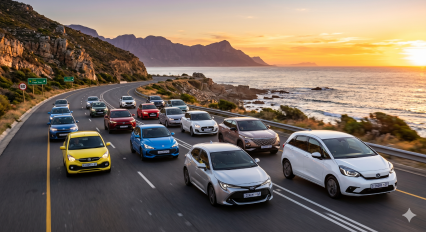
If you are looking at the classifieds, the data is clear: South Africans are moving toward Hybrids.
If you swap a traditional 2.0L SUV (averaging 9.0 L/100km) for a modern Hybrid (averaging 4.5 L/100km), you effectively halve your fuel bill, making even R30/litre feel like R15/litre.
Look for demo models of affordable hybrids entering the market. They are currently offering the best price-to-efficiency ratio in the local segment.
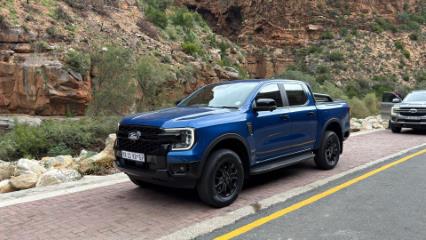
AutoTrader tip: The current Diesel price of R32.30 is a historic high driven by global supply shocks in the Strait of Hormuz. If you drive a diesel bakkie or SUV, your January parity is much harder to reach through driving habits alone. It may be time to consider carpooling, using public transport if available, or requesting some more remote work flexibility.