
Toyota’s three-car team ready to tackle Dakar
Toyota’s three-car team ready to tackle Dakar



By Martin Pretorius
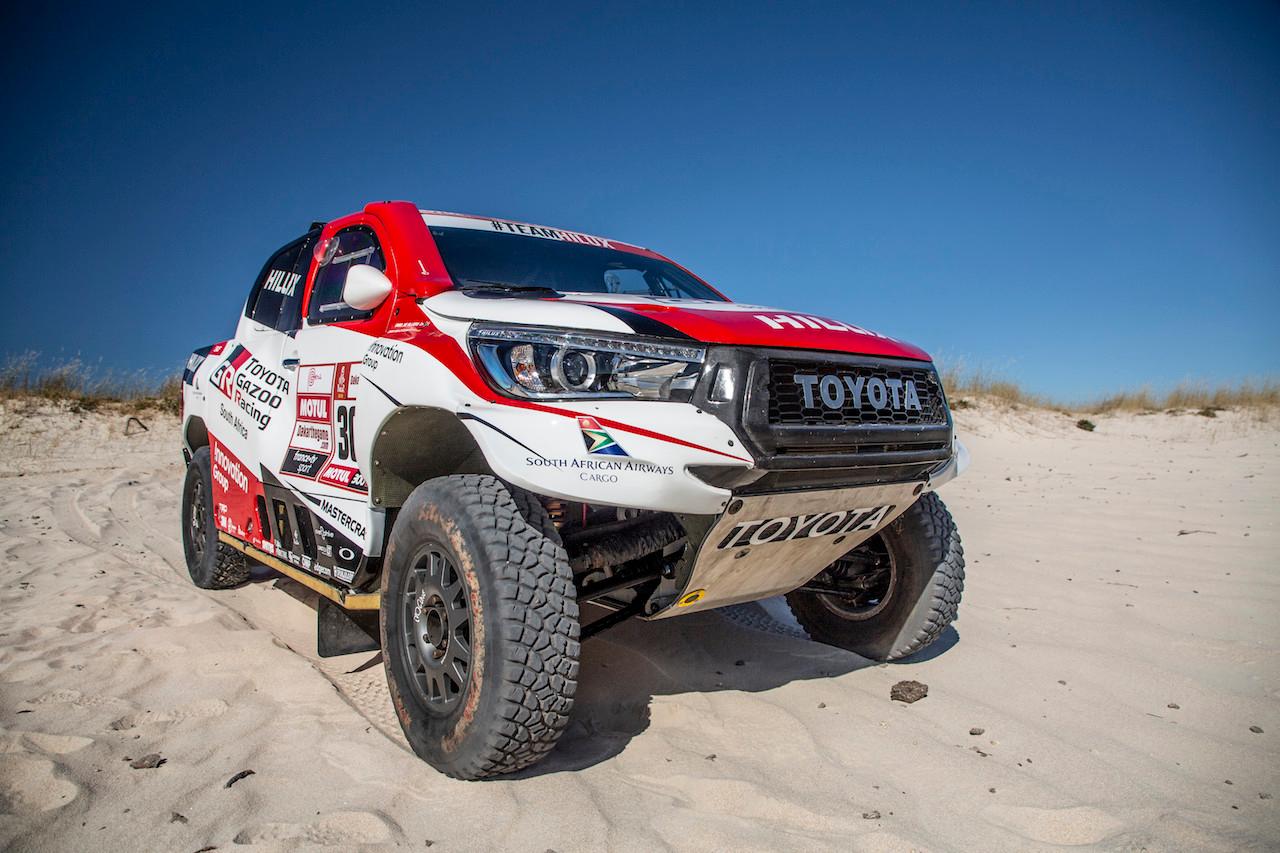
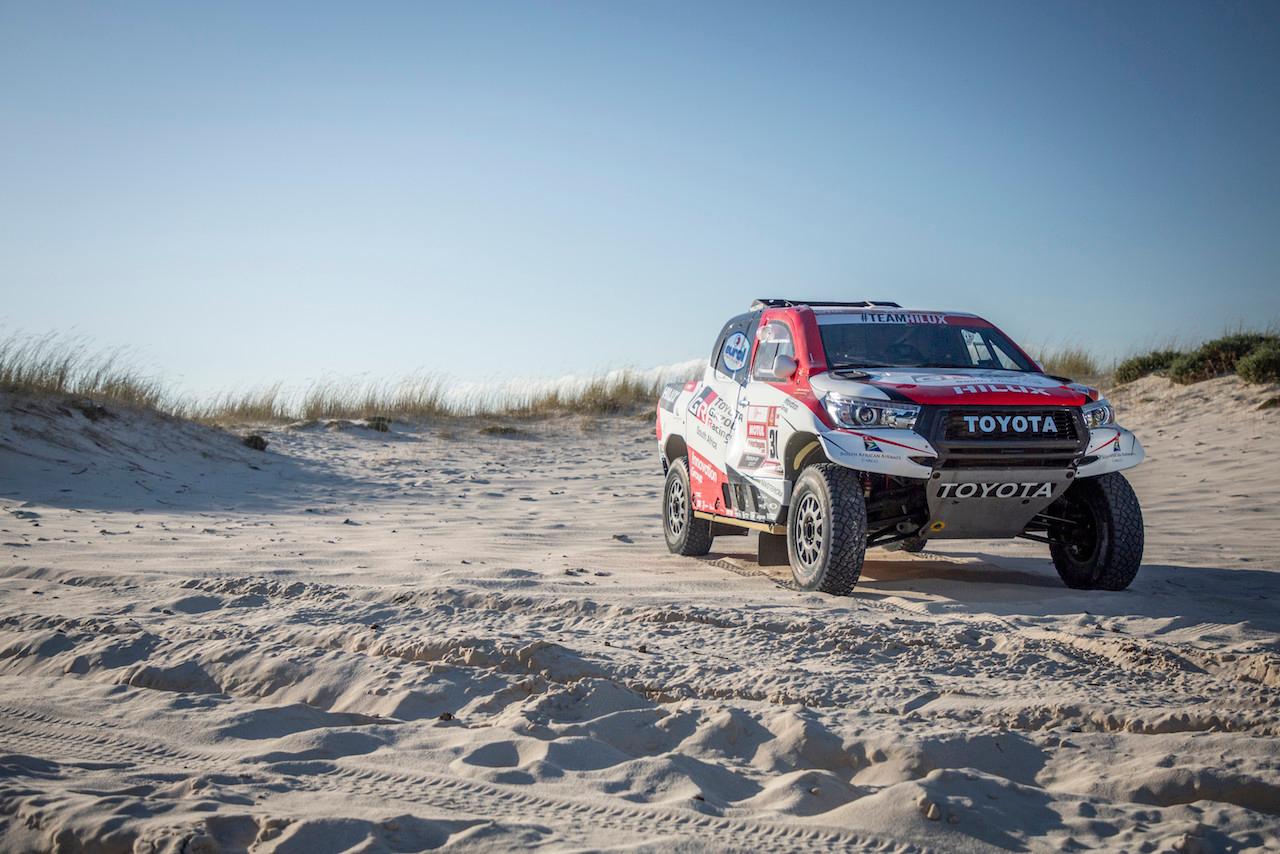
Ever since Toyota South Africa started entering their home-brewed Hilux racers in the Dakar endurance race in 2012, they’ve had at least one car on the podium every year except 2014 (when they finished in a still-credible fourth overall). Will 2019 be the year when they finally grab the sought-after overall victory? Their latest team entry certainly has winning on their mind, as they round off their preparations for next year’s event. This year’s race format sees some good news and some bad news for the Toyota Gazoo Racing team.
For the first time, the Dakar event will run its entire course in a single country, namely Peru. As a result, much of the race will take place in the dunes and at lower altitudes, both of which are factors which play nicely to the four-wheel driven but naturally aspirated Hiluxes’ strengths. However, the organizers have imposed new rules regarding the inlet restrictors, which sees the V8 engines in the racing Hiluxes lose a small amount of power.
What’s the story with these restrictors?
Because Dakar entries in this class use a wide variety of motive power units, comprising petrol- and diesel engines, with or without turbo chargers, some effort has gone into achieving power parity between these disparate engine types. Turbo engines generally have the advantage at high altitudes, while larger, naturally-aspirated engines tend to have their power available over a wider rev range. Meanwhile, turbo diesels have a lot more torque, but less top-end power, which works to their advantage in the dunes and in the mountains, but against them in high-speed stages.
To ensure that these different engine types produce roughly comparable power, they’re strictly regulated in terms of the amount of air the engines can ingest. This regulation is accomplished by placing a restrictor in the engines’ air intakes, which control the amount of power the engines can produce. If the air intake’s size is reduced via the restrictor, it will allow less airflow into the engine, leading to the power being capped. This technique has been used in motorsport for many years, but is still a bone of contention for race entrants. For the 2019 race, the organizers have determined that a 37 mm (inside diameter) restrictor on the Hiluxes’ Lexus-derived V8 engines should yield the desired results.
The Dakar Teams
Headlining the Toyota Gazoo Racing team is Giniel de Villiers, a Dakar veteran and overall winner in 2009. He’s been competing in cross-country racing with Toyota since 2012, and certainly knows how to handle a Hilux for best effect. In the co-driver’s seat is Dirk von Zitzewitz, completing a pairing which has seen considerable Dakar success over the years, and which hopes to again clinch that elusive overall victory. De Villiers has been honing his skills since the 2018 Dakar by competing in the South African Cross-Country Series (with Dennis Murphy in the navigator’s seat), winning the local championship for the second consecutive year.
Next up is Qatar’s Nasser Al Attiyah and his French co-driver Mathieu Baumel, a pair that has fielded a South African Toyota Hilux in Dakar 2017 and 2018; as well as the FIA’s World Cup for Cross-Country Rallies – a title that the pair has won three times in a row, twice in a Hilux. “To me the new version of the Toyota Hilux is probably the best race car I have ever driven,” said Al Attiyah after winning this year’s Rally of Morocco for the fifth time.
Completing this year’s Toyota Gazoo Racing line-up is Bernhard Ten Brinke (Netherlands), with Frenchman Xavier Panseri in the co-driver’s seat for the first time. In 2018’s Dakar, the pairing of Ten Brinke and Michel Périn won the fearsome Fiambala stage and consistently ran in the top-5, before fate cruelly waylaid them with an engine problem in the penultimate stage. The experienced Ten Brinke and Panseri (another Dakar- and rally veteran) looks set to make a big impression on this year’s race, and with the full backing of the Toyota South Africa team behind them, they’re definitely in with a strong chance at victory.
The 2019 Dakar location
The 2019 race will start in the Peruvian capital of Lima on 6 January, with ten stages taking the crews on a massive loop through the southern section of the country, before finishing back in Lima on 17 January.
“There’s no doubt about the toughness of the Dakar Rally,” concludes Glyn Hall, Toyota Gazoo Racing SA Team Principal. “Even in just one country – Peru – there will be plenty of challenges, including the terrain, navigation and temperatures. But we love a challenge, and relish the opportunity to go for glory come January.”