
The Bakkie war just got a whole lot more interesting ...
The Bakkie war just got a whole lot more interesting ...


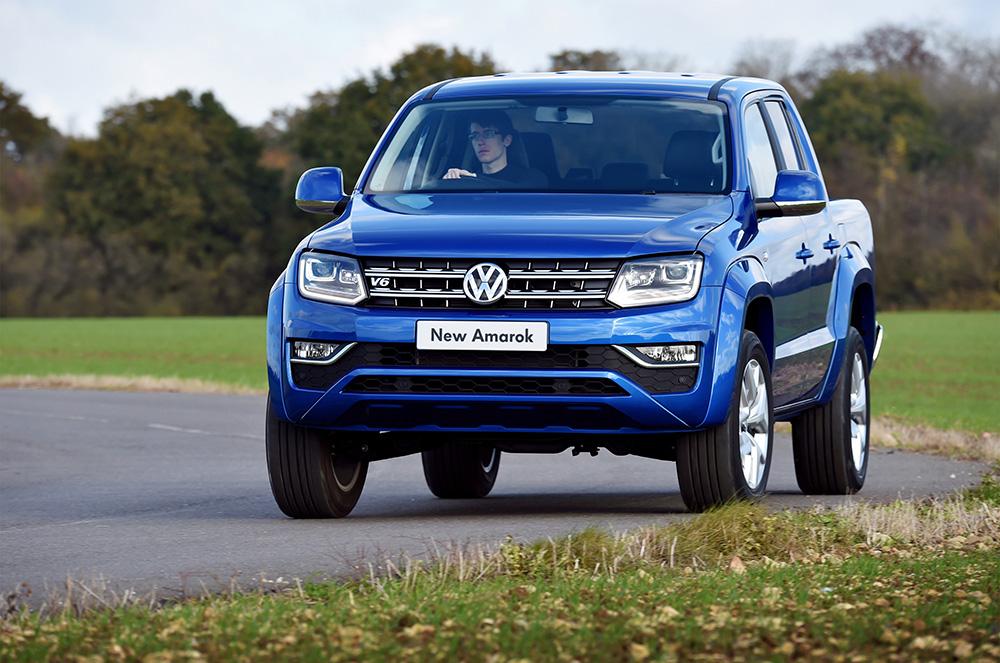
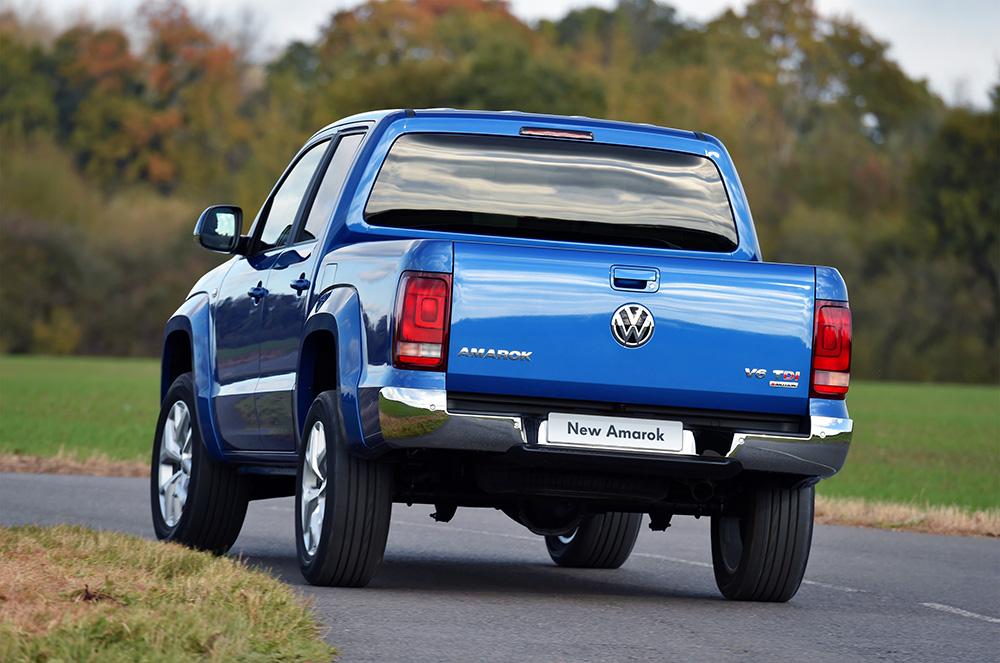
A Man’s perspective on the Volkswagen Amarok 3.0 V6 TDi Highline 4Motion
By Stuart Johnston
Just in case you haven’t noticed it, there’s a bakkie war going on out there. Not just in the sales showrooms, where the pendulum seems to swing back and forth each month between Ford’s Ranger and Toyota’s venerable Hilux. But on the highways, by-ways, burbs and dirt tracks, where private pick-up owners have developed huge loyalty for their brand.
A real man for the job?
No so long ago I saw a Hilux pass by, that bore the following sticker on the tailgate: “Dit is net soos ‘n Ranger, maar vir mans” which, loosely translated, means the Hilux is just like a Ranger, but for men!
In the sorts of social circles where men wear knives strapped to their calves hidden behind long khaki socks, one can only imagine the consternation caused by the likes of Volkswagen’s Amarok. Because when it was launched a few years back, “Real Men” proclaimed that it wouldn’t do the work of a “Real Bakkie”, because of the piddling little two-litre turbocharged engine mounted up front.
Well, the word out in the field is that Amarok’s 132 kW two-litre diesel is more than man enough for the job ( sorry if that sounds sexist, it’s an expression that has been around the block a few times). Interestingly, ensuing pick-up manufacturers have been down-sizing their engines progressively. And now Volkswagen has thrown a curved ball by introducing the only V6 diesel. A 3.0-litre version at that. And what a diesel that engine is!
As ‘car-like’ as they come
From the moment you start the motor up of the new Amarok 3.0 V6 TDi Highline 4Motion, you notice there’s something different. Here is a bakkie that has instantly achieved modern car levels of vibration-insulation from engine bay to cabin. Whether it’s because of a fantastic new engine mounting system or because this diesel is so well balanced and “clean” at start up is something that will have to be discussed next time I stand around the braai grid at the Society of Engineers annual camp out.
Generation II Evo
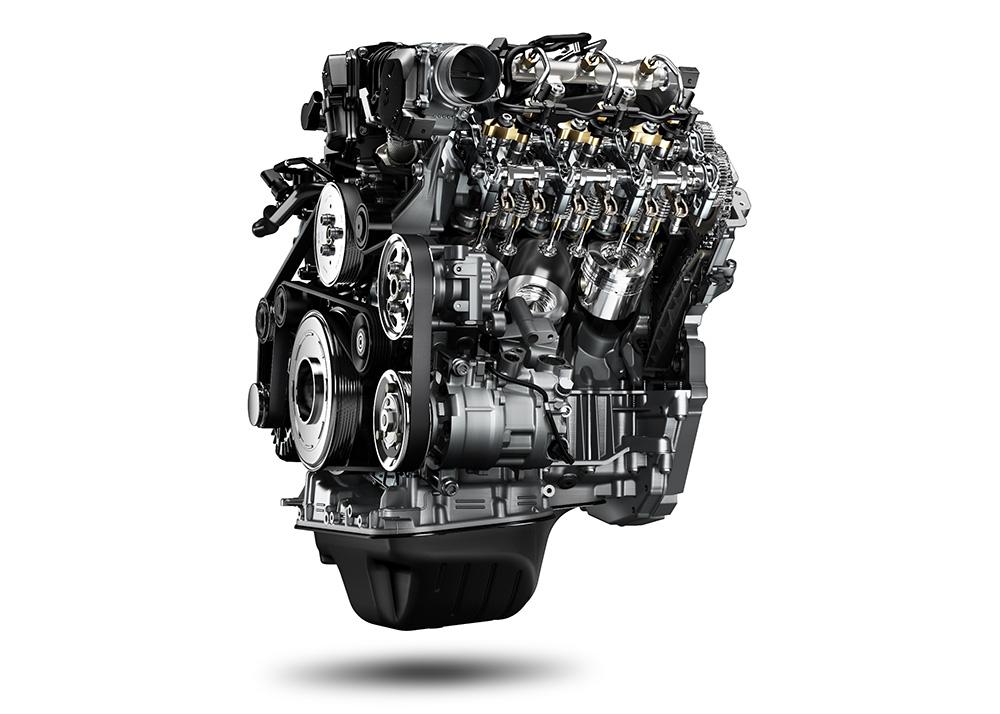
The V6 version of the Amarok, introduced earlier just a few months ago, utilises the engine introduced in the Audi A6 sedan in 2014, but it’s a refined version, known as the Generation II Evo. For a diesel it is a very sophisticated piece of kit, employing four-valves per cylinder, overhead camshafts and the like, special cylinder lining surface and pistons and rings that have been optimised for less downforce!
The end result is a beautifully smooth unit that offers up 165 kW, a stonking 550 Nm of torque and a claimed overall consumption of 9.0 litres/100 km. In real terms this translates to around 1q0,5 litres to 11,0 litres/100 km, depending on your load and right foot angle of attack on the throttle.
Smooth Transmission
The second part of the Amarok that makes this vehicle so stand-out is the eight-speed automatic gearbox. The V6 version is only offered in this form (no manual ‘boxes) and it is way better than the six-speed manual used on the earlier Amaroks, which suffered from sticky shifts and jumpy clutches.
The idea behind the eight-speed is that the ratios are profiled to provide first gear as a really usable off-road ratio for donga-crawling, while eighth is tall enough for economical cruising on the highway. Under normal use the gearbox is profiled to pull away in second gear, and that works just fine with all that torque available.
A perfect combination
On the move, well, there isn’t another bakkie on South African roads to compete with Amarok’s ride and handling mix. Even the new Nissan Navara, with its much-touted new coil-sprung rear suspension, can’t match the level of plushness that this ladder-framed, leaf-sprung Double Cab pick-up achieves on what is considered old school suspension technology. It’s all in the spring ratings, the amount of wheel travel, the location of the moveable suspension arms and the intrinsic rigidity of the ladder-frame chassis-body-combination.
Any surface will do, thank you
As for getting down and dirty, the Amarok, for me, remains the class-leader when it comes to handling seriously bad dirt roads with deep ruts and potholes. And it’s ESP -traction control (Amarok was the first to introduce this system to the bakkie market a few years back) and permanent four-wheel-drive (it uses a Torsen centre diff to constantly vary torque between all four wheels) provides the best stability on fast, loose surfaces. An off-road mode providing hill-descent control for steep off-road inclines is fitted.
Everyday practicality
As for the load area, at 1,55 metres long, 1,62 metres wide and with a low sill height to facilitate easy loading of things like fridges and farm generators, not to mention the normal stuff you’d sling in an Amarok, such as mountain bikes and camping gear, well, it more than does the job in respect of a double cab layout. It has a pay-load of over 830kg and towing certification of 3,3 tonnes.
Start saving…
It still puzzles me why VWSA still have such a relatively small chunk of the pick-up market here, (I’ve asked VW people if it’s a supply problem but I never seem to get a clear-cut answer) but one reason has to be price. At R665 700 for this 3.0 V6 Highline version I sampled, it is by no means cheap. But the word has been out there for some time. If you want a quality double cab with car-like ride and interior appointments that are classy without being in any way ostentatious, this is the way to go.
Fellow journalist Ané Theron will probably wax lyrical about the car-like interior appointments when she drives the new Amarok. As for me, I’m wondering what sort of sticker I can come up with that will irritate all the Navara, Hilux, Ranger, Mitsubishi and Isuzu owners out there. Because I was a champion of the two-litre Amarok cause, long before it was fashionable. And with this three-litre V6-version, well, it is simply in another league.