
The all-new, more refined Mitsubishi Triton Double Cab.
The all-new, Mitsubishi Triton Double Cab - First drive impression


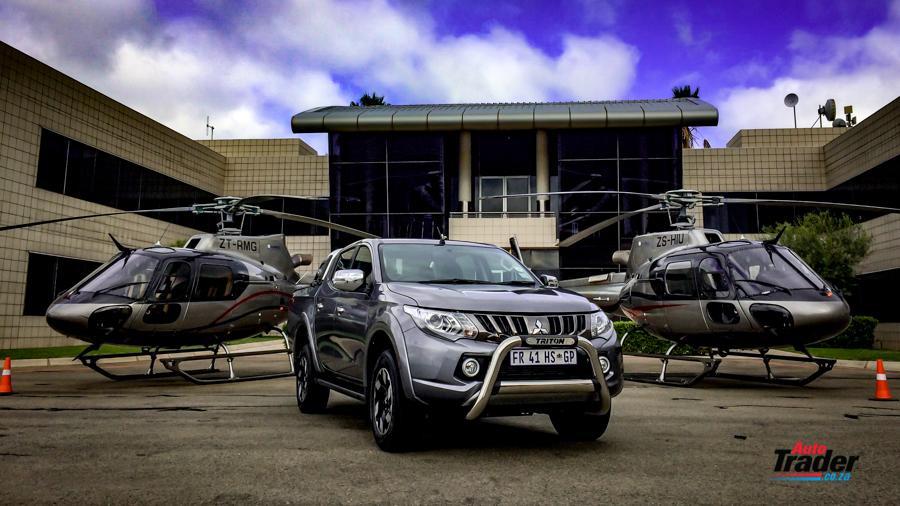
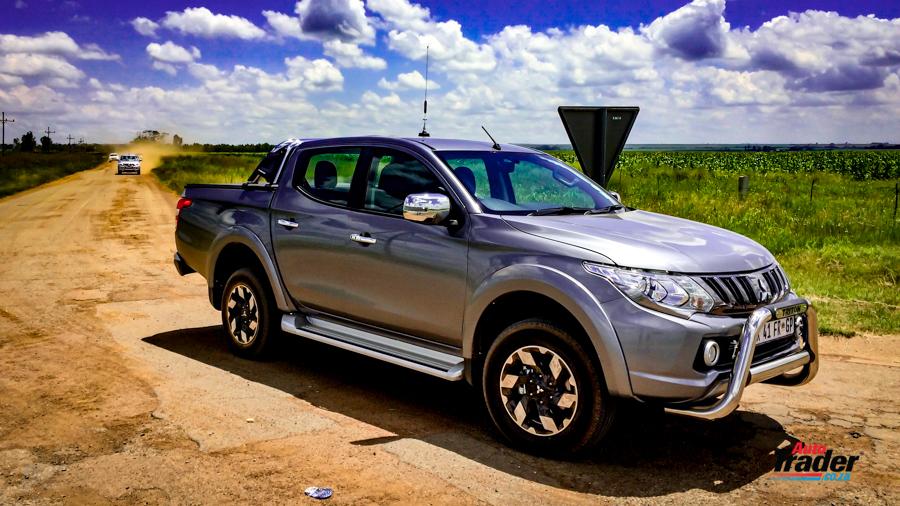

It's been a while since we've had a new vehicle launched by Mitsubishi. There have been a few model introductions, but in the way of new models, very little. Mitsubishi Motors has just pulled the covers off of their new double cab offering, the all-new Mitsubishi Triton.
Styling
We've seen the shape before, it's similar pressings to the Fiat Fullback which, as you may recall, uses the previous generation Mitsubishi Triton underpinnings with the new sheetmetal over it. So styling wise, it's very similar - although the headlights, taillights and grille are unique to the Triton; as are the wheels, which appear a little small, especially when shod with the Yokohama Geolander tyres. A beefier set of wheels that stand a little more proud, would certainly make the new Triton look a little less city-orientated.
Interior
Careful consideration has seen the headroom and shoulder room in the cabin improved. As it stands, the Triton offers 30cm more interior length than its nearest rival. The ‘J-line’ formed between the cab and the load bin allows for more interior space, more recline and comfort for the rear passengers. It also doubles as a safety feature, encouraging the loadbin to slide underneath the cabin in the event of a rear-end impact, rather than squashing into the passenger cell. This ‘J-line’ also allowed the engineers to place the rear wheels closer to the centre, keeping the wheelbase short and improving the turning circle, maneuverability and stability.
The interior trimmings consist mostly of hard-wearing plastics, bar the leather-bound gearknob and multi-function steering wheel that looks like it was lifted straight from the Pajero Sport. The driver's seat is electrically adjustable and the steering wheel is adjustable for rake and reach. There's dual zone digital climate control, and a touch screen infotainment system allows the usual connections such as Bluetooth and USB, but you’ll have to make do without a few luxuries such as navigation, automatic wipers or auto lights.
The interior is a little shy on convenience (and that is probably the Triton's Achilles heel), but it doesn't feel cheap and certainly doesn't suffer from fitment issues.
The Drive
The new Triton drives like a large SUV with a unitary construction, and that's no exaggeration. What impressed the most in the interior, was the quiet cabin: The noise levels are eerily low with only the slightest of whistles coming from the large wing mirrors. A lot of this has to do with the way that the bumpers and A-pillars have been designed. It can be seen in the exterior design language – the Triton is more streamlined than most of the other competitors in this segment, with a Cd of 0.40. The sound from the turbodiesel engine is barely audible, even when placed under load, or revved-up high.
The Engine
Mitsubishi's new Triton comes with an all-new 2.4-litre turbodiesel engine that develops 133 kW and 430 Nm of torque, thanks to an all-aluminium construction. The lower compression ratio aids with driveability, and I found the motor to pull very strongly from down low, not complaining at all with full-throttle high-gear acceleration and inclines. Over the rougher 4x4-stuff, the Triton climbed gradients easily, and the compression for descents was more than enough to maintain control of the speed.
Drivetrain
The Triton has been equipped with the Super Select 4 II AWD system that allows for four different drive modes. A regular 2WD high range, AWD high range, AWD low range and AWD low range with a centre lock. A rear diff-lock is also available via a separate button on the fascia panel. The Super Select 4 II AWD system features an advanced 60/40 split of power to the front and rear, rather than a dated 50/50 split. This promotes better stability at higher speeds, allowing you to use the AWD on gravel and slippery surfaces with confidence, at regular travel speeds. It's a system that works, and not once did I feel as if the Triton was battling for grip, despite the road-based tyres. At higher speeds, the Triton displayed a fantastic stability on dirt and gravel, as well as on the smoother stuff. Where others would have become unsettled, the Triton absorbed most undulations with aplomb.
Conclusion
It's a tricky one for Mitsubishi, as the new Triton doesn't necessarily stack up well against its opponents on paper, missing a few of the benefits that come with the others. On-road, off-road and in motion, the Triton is golden. It has to be driven to be appreciated and if you are in the market for a new double cab, you'd be silly not to give it a once-over yourself.
At present, the new Triton is only available in double cab format with a 2.4-litre turbodiesel engine, mated with a 6-speed manual or 5-speed automatic, in 4x2 or 4x4-guise. Other variants will be released later in the year.
Specs:
• 2.4-litre common-rail turbodiesel
• 4-cylinder – all aluminium
• 133 kW @ 3500 rpm
• 430 Nm @ 2500 rpm
• 7.6 l / 100km average combined
• 215 mm ground clearance
• 28 degree approach angle
• 22 degree departure angle
• 25 degree break-over angle
All models are introduced with a 5-year / 90 000km service plan and 3-year / 100 000km manufacturer’s warranty.
Pricing:
| Mitsubishi Triton 2.4 Di-D 4x2 (man) | – R479 900 |
| Mitsubishi Triton 2.4 Di-D 4x2 (auto) | – R499 900 |
| Mitsubishi Triton 2.4 Di-D 4x4 (man) | – R539 900 |