
New Ford Everest geared for greatness
Ford Everest - First drive impression


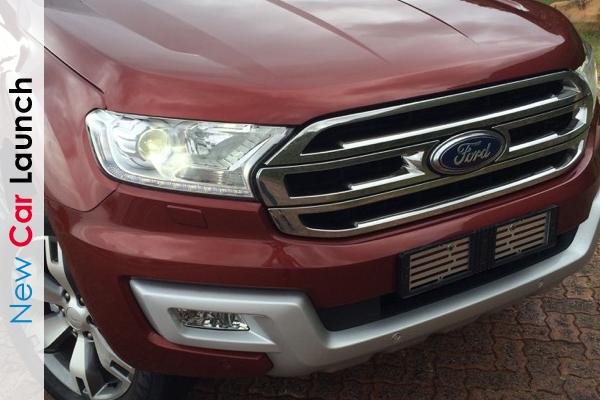

Who’s the new kid on the block that will have every Fortuner, Pathfinder and Trailblazer shaking in their alloys? Why, it’s the new Ford Everest, of course. Based on the underpinnings of Ford’s sales star, the Ranger bakkie, the new Everest is a medium-sized SUV that can’t wait to tackle the local competition. With the Everest, Ford wants to “change what customers expect from SUV’s”, in other words, a well-specced, rugged rabbit is about to get pulled from a hat.
Million Dollar Baby
According to the Everest’s Chief Program Engineer, Ian Foston, Ford asked him and his team to design something “tough, but not rough”. This meant the Everest should be robust enough to withstand all kinds of rough terrain, while the interior should be genteel enough for regular, soccer-mom use. Did they succeed? We drove both derivatives in rainy conditions on the Western Cape’s drenched roads.
Choices
The Everest will be available in two specification levels for the time being, but the range will be expanded at a later stage. For now, Ford fans can sink their teeth into the Everest XLT at R 593 900, and for those seeking more luxury and tech, the Everest Limited will cost R646 900.
All glammed up
First up was a drive in the flagship model, the more glamorous Everest Limited. Even though the interior has a pleasant, contemporary ambience, at closer inspection the quality of some of the plastics isn’t as upmarket as one would expect, such as the lid of the cubby-hole. The indicator and wiper levers feel a bit budget too. The layout, however, is neat and modern, and the latest version of Ford’s intelligent infotainment system, SYNC 2, is to be found in the centre stack. For those who aren’t such seasoned touch screen techies, there are buttons below to directly control air-conditioning, radio settings and so forth. If you’re driving along and you want to change something, fiddling with a touch screen or radio dials is not recommended, and voice activation on the SYNC system is standard on both derivatives. You can adjust the ambient temperature in the car or change a station by giving a voice command, and it’s pretty decent if you don’t slur or stutter, or have a crazy accent.
Safety systems galore
The Limited variant has all the premium safety kit. On our ocean drive to Kleinmond I couldn’t understand why the steering felt so firm, then I realized it was the Lane Keep Assist that was helping me to stay inside my lane. If you stray from your lane, the steering wheel will vibrate, and if the system senses that your concentration is waning, you will be alerted and encouraged to take a break. The Limited variant also has Adaptive Cruise Control, which can be set via buttons on the leather-covered steering wheel. Set the distance you’d like to remain from the car in front, and the Everest will happily stay in its tracks, slowing down and accelerating when needed. It works in the same way as Mercedes-Benz’s Distronic Plus. It also features Forward Collision Warning and Collision Mitigation, which will prime the brakes as well as stop, if it senses you’re going to drive into the back of something. As a car suddenly swerved into our lane en route to the airport, a strip of red lights appeared in the bottom of the front window, and the Everest slowed us right down. Other safety features in the Everest Limited include Ford’s Blind Spot Information System (BLIS) with Cross Traffic Alert, Active Park Assist, and front parking sensors.
XLT impresses me
After a driver change we got the chance to drive the less expensive XLT variant. I had to admit that I preferred the slightly more modest interior. So what if it doesn’t have a powered tailgate or that you manually have to fold the third row flat – it still has SYNC2 and leather seats. Call me old fashioned, but I like to open my own boot, by hand, and close it – it’s quicker. If I had to buy the Everest Limited, it would purely be for those abovementioned safety systems, also seen in the Volvo XC90. The XLT is well equipped, and on www.ford.co.za the entire list of mod-cons can be seen. Standard safety spec in both derivatives are Electronic Stability Program (ESP) with Traction Control, Hill Launch Assist, Hill Descent Control and Trailer Sway Control, along with Curve Control. This is meant to save your behind if you enter a corner too fast. 7 Airbags will protect all 7 occupants. Price wise, the XLT is more expensive than the Trailblazer 2.8 4 x 4 AT (R 575 500) and much more so than the Fortuner 3.0 D-4D 4 x 4 Auto Limited (R 548 300) but it’s much, much prettier to look at, and has more features.
Pick your mode
Both variants are powered by a five cylinder, Duratorq turbodiesel engine, but as good as 147kW and 470Nm torque looks on paper, it feels a little slow off the starting blocks. The Everest is big and heavy, so its power to weight ratio is not ideal. But the Chevy Trailblazer’s 2.8 litre Duramax turbodiesel powerplant feels a little more inspired. The Everest’s smooth, 6-speed auto gearbox can be driven tiptronic-style, and will make a digital rev-counter appear in the instrument cluster. But why even bother? The Everest is very relaxing to drive, with light electric power steering, which is perfect for the city. In the Trailblazer I found it quite arduous to make three-point-turns. The Everest is built for the creature comfort-loving outdoorsy person – and with regards to its off-road talents, its 4 x 4 Advanced Terrain Management System is there to “flatter the novice” and to “assist the expert”, according to Ian. One can choose between Normal, Snow/Mud/Grass, Sand and Rock, by turning a rotary dial. (Incidentally, the little pictures on the dial look identical to Land Rover’s.) If you need to see what the wheels are doing while you’re traversing difficult terrain, a pic of the car (and the wheels) will be displayed in the instrument cluster.
It was raining so heavily when we arrived at Kroonkop 4 x 4 course near Villiersdorp, that they closed it for safety reasons. How disappointing! I was especially keen to see if the wading depth of the Everest really is 800 mm. The Everest is the most extensively tested Ford to date - it has undergone 2 million km worth of testing, of which a quarter was off-road.
The Everest impressed us with its handling, ride quality and general on-road-refinement. It’s a pity we didn’t get to take it off-road, but watch this space, as we’ll be giving it a more thorough test soon. As a capable and sexy family SUV, it most certainly will please both parents.