
Jaguar F-Pace: The cat dons hiking boots
Jaguar F-Pace - First drive impression


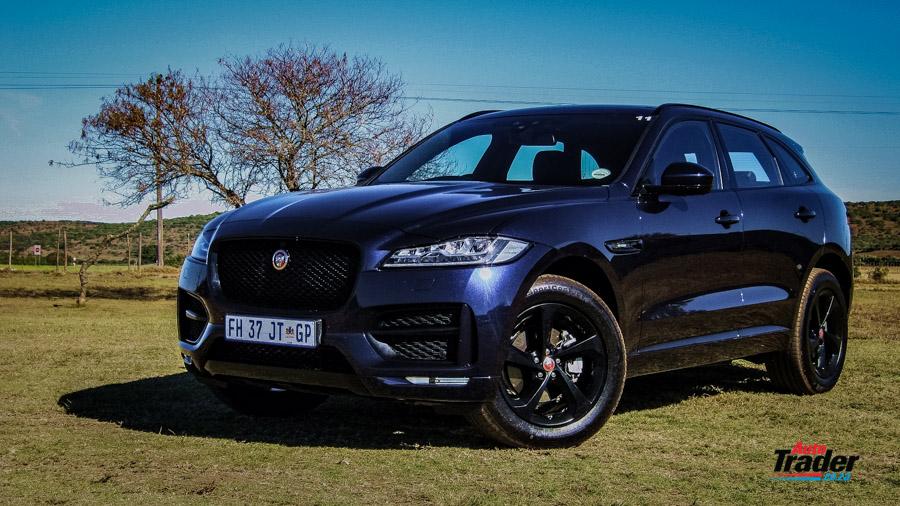
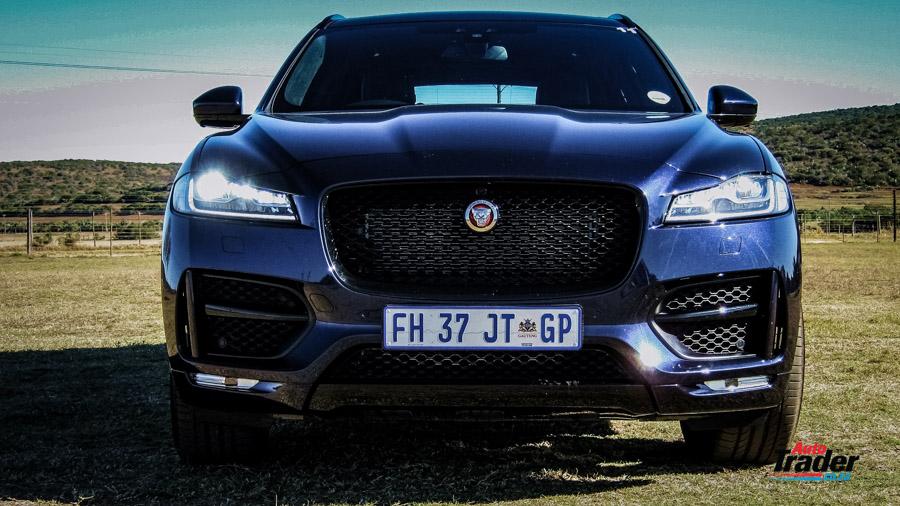
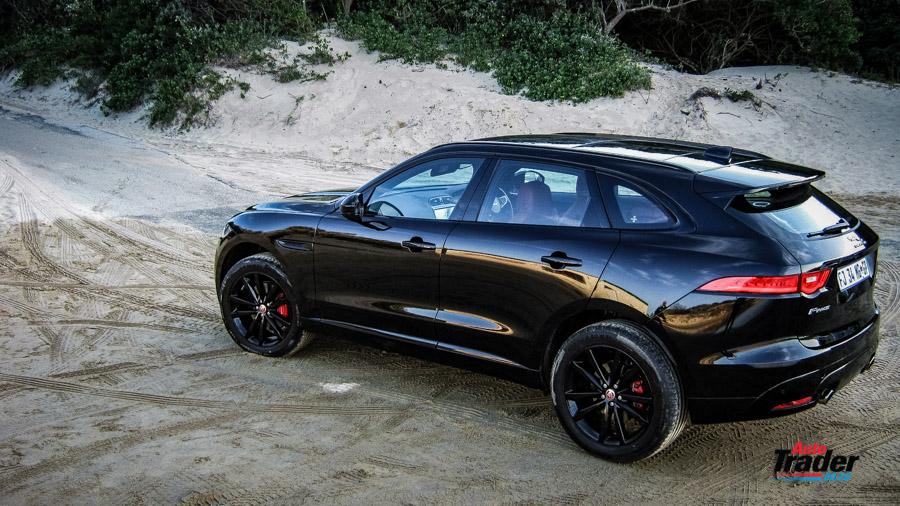
Brand purists might scoff at the idea of a Jaguar SUV, but such a vehicle really is crucial to the sustained financial viability of the company. Land Rover, Jaguar's sister company, makes bucket-loads of money with their offerings, but up until now, Jaguar has been missing out on this action. No matter how seductive their sports cars are, or how enticing their luxury saloons, the fact is that neither of those can compete with the surging global demand for SUVs.
So what did they do?
Rather than dipping into the corporate parts bin and sourcing a platform from one of the Land Rover brands, Jaguar's engineers followed their own course. They wanted their contender to remain a Jaguar at heart, even if it offered a modicum of off-road ability and enough space for an active, outdoorsy lifestyle's paraphernalia. Fortunately, their latest aluminium-intensive platform (from which the XE and latest XF saloons are derived) offered the flexibility for a stretch-and-lift operation to create their first-ever SUV, while a new all wheel drive system (first used in the F-Type sports car) provided the final element they needed to turn their dream into reality. Finally, they handed their new baby to Ian Callum to drape it in some seductive sheet metal.
It's very pretty...
Forget about the competitors' current squared-off design ethos, for Jaguar understood that their brand is as much about style as it is about a sporty driving experience. The F-Pace is actually very similar to 2013's C-X17 concept car, and it's all the better for it. Jaguar's trapezoidal grille takes front centre stage, flanked by frowning headlights of similar design to the saloon units, even though it's obviously all placed quite a bit higher off the tarmac. The stretched bonnet carries a modern Jag's requisite power bulges, and the cabin is moved towards the rear of the car, to lend classic rear-wheel drive proportions to the side profile.
Most impressively, the designers managed to incorporate some styling queues from the F-Type itself, such as those slim, horizontal tail lights and bulging hips. The tailgate window also lies pretty flat, somewhat compromising ultimate load space but compensating with a rakish appearance. Whether by accident or by design, the F-Pace manages to look more coupé-like than just about any SUV-Coupé mash-up currently on the roads.
So it's probably a little tight inside?
Quite the contrary, in fact, for the cabin has enough space to comfortably accommodate five people. There's plenty of knee-, leg- and head room all round, and abundant smaller storage spaces all over the cabin. The boot is also of decent dimensions (minimum of 463 litres), although local F-Paces have a massive bulge in the load floor to hide a full-sized spare wheel – a bold (and expensive) move from Jaguar, given that the largest available rims measure a gigantic 22-inches, but very thoughtful, given the state of our roads. Practicality is boosted by a 40/20/40 split rear seat and under-floor stowage for the removable luggage cover.
Any interesting gadgets?
The biggest news is the introduction of Jaguar's new (optional) infotainment system. Called InControl Touch Pro, it represents a vast improvement on the (standard) non-Pro version. Key to the upgrade is a 10.2-inch, high-resolution touch screen with some serious hardware (such as a quad-core processor, solid-state hard drive and high-speed Wi-Fi connectivity) to back it up. InControl Touch Pro also adds a digital dashboard with a 12.3-inch HD display, offering a range of options including widescreen navigation displays and customisable appearances for the virtual instrument gauges. It's an option worth having.
A built-in SIM card enables all F-Paces to place automatic emergency calls to summon assistance in the event of a serious accident, while yet another SIM card connects to the owner's service provider to turn the car into a Wi-Fi hotspot, capable of supporting 8 devices. There are also four USB sockets placed around the interior, and a plethora of 12V power sockets distributed from the dashboard to the load bay to keep the connected generation charged up. The option sheet also features (among many other things) adaptive full-LED headlights, various accessories such as fold-away side steps, and electrically reclining heated rear seats.
That's a lot of new stuff.
And the list goes on when you look at the oily bits. The F-Pace may share its skeleton with the smaller sedans, but it takes less than 20% of its components from those cars. The fully-independent suspension is completely re-engineered, the (electrically assisted) steering system is different, and strategic strengthening was applied to key points in anticipation of the rougher roads it may encounter.
While the engines are familiar, and they all send their power into ZF's excellent 8-speed automatic gearbox, some changes to the all wheel drive system adapts the F-Pace for adverse driving conditions. Thanks to a new front differential with a higher torque rating, F-Pace can send up to 50% of its torque to the front wheels when required (it sends 90% to the rear until then), while brake-based torque vectoring keeps the tallest Jaguar pointing in the right direction and helps it pull away in low-grip conditions.
What's it like to drive?
The range opens with the Ingenium 2.0-litre four-pot turbo diesel, and its 132 kW and 430 Nm certainly doesn't push the F-Pace's performance envelope. It's sure-footed and agile around corners, offers a surprising amount of road feedback through the steering wheel, and rides extremely smoothly. This is where the smart money will go: it's quick enough, safe and comfortable, but slightly lacking in excitement in comparison to its brethren.
The other end of the range features a 3.0-litre supercharged V6 in two flavours: either with 250 kW and 450 Nm, or 280 kW and 460Nm in the “S” derivative – both to the accompaniment of a delicious engine howl and a burbly exhaust note. They're both very, very quick, and can cover big distances at a scarcely believable rate. These two variants (the only petrols at this stage) come closer to challenging the F-Pace's excellent chassis, but the real hooligan lurks in the middle of the model range.
You wouldn't usually put “hooligan” and “diesel” in the same sentence, but the 221 kW (and more importantly, 700 Nm) on tap from a 3.0 twin turbo diesel V6 shunts the F-Pace around with real authority. It's easy to inadvertently elicit a squeal from the tyres upon pull-away, such is the surge of torque from just above idling speed, and graceful four-wheel drifts on dirt roads are but the flex of an ankle away. Cleverly programmed stability control keeps a tight rein on such shenanigans however, leaving very little chance for even a ham-fisted driver to get into trouble. The big diesel is also really agreeable to live with, due to its refined nature, wide power band and low noise levels, and offers the best balance between performance and fuel consumption.
How much?
F-Pace really slots in between Range Rover's Evoque and Sport models, and respectively overlaps the top and bottom of these ranges. Prices start at R776 200 for the basic 2.0 Diesel Pure and run all the way to R1 321 000 for the limited-production 3.0 S/C Petrol First Edition, so it's safe to assume that exclusivity is guaranteed. The F-Pace really is the Jaguar of SUVs, and presents an exciting new combination of grace, space and PACE. If only they put as much effort into its name...