
How much time do petrol and diesel engines have left?
How much time do petrol and diesel engines have left?


By Stuart Johnston
Lately the media has been full of reports of car manufacturers “going electric”. One manufacturer, Volvo, has stated that it will have a fully-electrified range in matter of two to three years, and others across the globe are making similar noises.
Yet here in South Africa, our fully-electric car-ark can be numbered in the hundreds, let alone thousands. Where does this leave the South African motorist, in a country where electricity supply has on occasion been erratic, and where precious little infrastructure is in place, in terms of public charging systems for electric cars?
It is a fact that many South African motorists enjoy the “personalities” of specific internal combustion engines, and are not exactly embracing the switch to electric cars with open arms. These people, enthusiasts and everyday car-owners, would like to know just how much time is left for the internal combustion engine, in both diesel and petrol form.
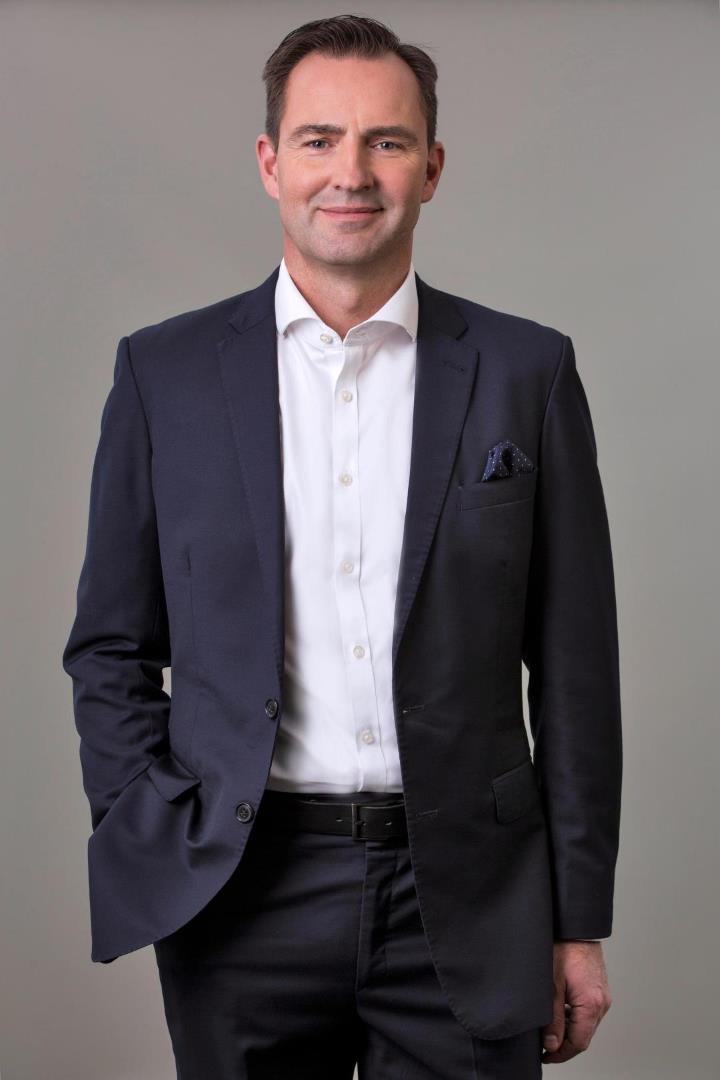
We put a number of questions on these subjects to the man in charge of the Number One manufacturer of passenger cars in South Africa. Thomas Schaefer, Chairman and Managing Director of Volkswagen South Africa, was interviewed exclusively for AutoTrader.
AutoTrader: 1. There has been a huge amount of talk about the so-called electrification of the automobile business, with some companies even stating their whole production will be “electrified” in the next five years. Where does Volkswagen AG stand on this point?
Thomas Schaefer: Obviously there are many variations of car electrification, from hybrids, to plug-in hybrids, to battery-only electric vehicles. Everybody is hyped up about the topic, believing that it’s going to happen next year, when we walk away from the petrol and diesel engines.
There is definitely no doubt that electric drive is the future. Some manufacturers believe it may be hydrogen-fuelled electric drive, but we feel it is going to be battery-electric drive. Better batteries are coming into play now with ranges of 500 to 700 kilometres. Today, a range of 200-300 kilometres, especially in a country like South Africa, is unfortunately not practical.
Volkswagen AG has just started a massive programme, investing over 200-billion Euros in electrifying basically every single model in our production - and that numbers some 300 car models. And by 2030, there will be an electric variant of each of these models. By 2025, we should have already produced one million electric or electrified vehicles.
AutoTrader: 2. How much development is still being done on petrol engines and diesel engines? In a global sense?
Thomas Schaefer: The reality is that we are still going to need diesel engines and clean petrol engines for quite a while. If you consider that if we do one million electric cars by 2025, it’s only a fraction of our annual production of eleven million vehicles. With the environmental regulations getting tougher and tougher in many countries, we still need to spend a lot of time and money getting these internal combustion engines to comply with the regulations.
At the moment, electric cars with special batteries are very costly, and that’s because of the low numbers. But there will be a transitional period. As combustion engines become more and more expensive to produce because of regulations, they will become more expensive and battery-electric cars with higher numbers will become cheaper. And that curve will meet; it will probably happen in the next five years.
AutoTrader. 3. Phew, that is just around the corner! We’ll move on to Question 3. With South Africa being a major manufacturer of Polo for world markets, and VWSA currently in transition from the current Polo to the next-generation Polo, will a percentage of these new models soon be hybrid in some way?
Thomas Schaefer: The new Polo is based on the so-called MQB platform, and that platform is ready to accept any kind of hybrid or electric engine. We are planning to get an electric derivative on the road, but not within the next two years.
AutoTrader: 4. Realistically, how long, in your opinion, does the internal combustion engine have as a viable power source for cars? 10 years? 20 years?
Thomas Schaefer: Yes, definitely, that time frame would be right. Especially in countries like South Africa with vast space between cities, you need to have an alternative to electric mobility. That’s why we have to invest in the combustion engine, which will make it cleaner for the future.
AutoTrader 5. South Africa is so far behind in terms of sophisticated infrastructure for catering to electric cars, or partially-electric cars. Do you see co-operation between manufacturers and the government in establishing some sort of charging-point infrastructure?
Thomas Schaefer: At NAAMSA (the National Association of Automobile Manufactures, South Africa) we have raised this topic frequently. That sort of infrastructure would have to be rolled out by the Metros, and for now we have been having talks with the likes of Eskom. But it’s complicated. Countries like Norway started this journey about 10 years ago. But these discussions are on a NAAMSA level right now, not involving specific manufactures.
AutoTrader: 6. There have been accusations amongst certain media members of VWSA “dumping” the Golf GTD on the local market after the recent backlash against diesel in Europe. What is your response to this?
Thomas Schaefer: To dump anything in South Africa is just a ridiculous concept. We have always been hoping to get the GTD for South Africa because it’s such a phenomenal car - it drives like a GTi, yet has the economy of a 1.4-litre car. We were very proud to launch it in South Africa. It has been very well-received by the customers. And let me point out that the GTD sells extremely well all over the world, so to get allocation for South Africa was extremely complicated. So, no. No dumping!
AutoTrader 7. Many industry heads have reiterated their faith in the diesel engine for the future. Do you see both diesel and petrol models being offered here in SA and other “developing” countries, as models made specifically for these countries where there’s not such a focus on the environment?
Thomas Schaefer: The complication comes in that anything we build now, in terms of the internal combustion engine, is getting more sophisticated. There is a bit of a split, because in the majority of countries the engines are fuelled by very clean fuels, and yet in some pockets of the world they are still driving on salad oil! The problem is you cannot down-develop these engines. I think in the future, in some of these countries with very poor quality fuel, the opportunity will exist to go straight to electric mobility. Rwanda, for example, already generate some 70 percent of their electricity through regenerative sources. So, the opportunity of a switch for them already exists.