
Confident Kadjar the New Feather in Renault’s Cap?
Renault Kadjar - First drive impression


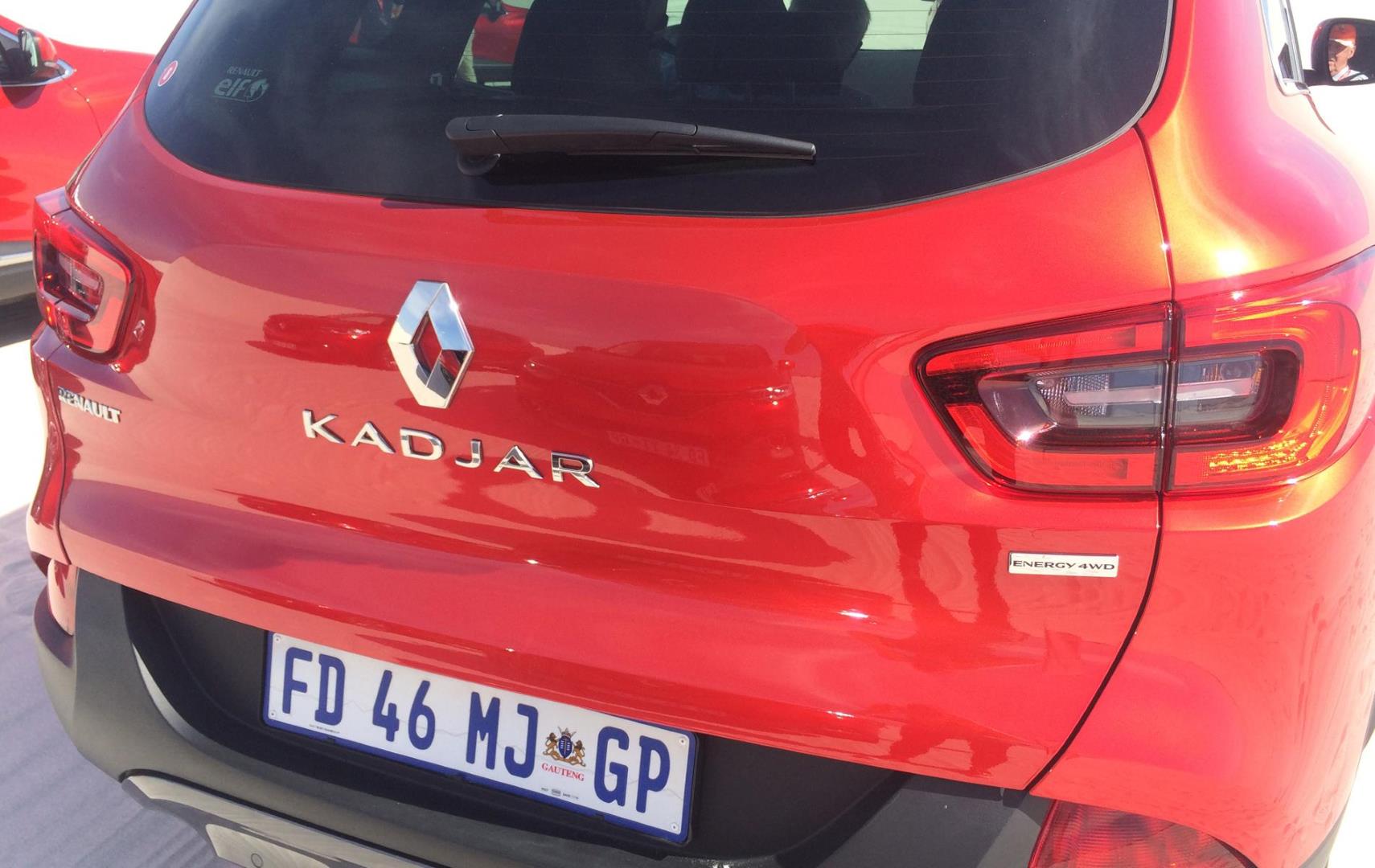

What is the Renault Kadjar?
It is Renault’s brand new mid-sized SUV, which has been very well received abroad. It aims to attract discerning South African buyers in a segment as tough as Springbok biltong.
How big is it, and who is it up against?
The Renault Captur is basically a Renault Clio on stilts, while the more luxurious Kadjar is roughly the same size as a Nissan X-Trail or a Toyota Rav4. The Kadjar shares a platform with the Nissan Qashqai.
Styling wise, how does it compare?
The Kadjar is one of the most stylish pavement hoppers around. It follows exterior design cues from the rest of the Renault family, so as far as looks are concerned, it isn’t that far removed from the Captur. With regards to interior comfort, Renault has given their all with an endless list of standard specifications.
Interior styling is very functional and upmarket, and the quiet, cosseting cabin makes you feel comfortably isolated from the big, bad outside world. The digital instrument cluster is reminiscent of the Honda HR-V - as a matter of fact, so is the shape of the headlamps and the grille.
The entry-level Kadjar Expression 96 kW Turbo rides on 16-inch steel wheels (with covers) and the other two on 17-inch alloys. 19-inch alloys are optional.
The new customisable 7-inch touch screen infotainment system (with voice activation and integrated Satnav) is the most refined we’ve seen on a Renault to date, allowing multiple drivers to add their profiles to the system.
How many Kadjars can you choose from?
The Renault Kadjar comes in three trim levels: The Kadjar Expression 96 kW Turbo (R359 900), the Kadjar Dynamique 96 kW Turbo at R384 900 (from this spec level upwards the fancy new infotainment system is standard), and the flagship Kadjar Dynamique 96 kW dCi 4x4 at R449 900.
What does your money buy you?
The Kadjar is sure to entice prospective buyers with a multitude of mod cons. The entry-level Expression-model gets a colour 7-inch LED cluster, MP3 CD Player, remote central locking, rear parking sensors, tyre pressure sensors, an electronic parking brake, cruise control, a gear-shift indicator, handsfree Bluetooth, Eco Mode, USB plug & AUX input, Isofix anchorage points and a full size spare wheel.
Dynamique-models are equipped with all of this, as well as roof rails, LED headlights, cornering fog lights, skid plates, electric foldable mirrors, the 7-inch touch screen infotainment system, satnav, light & rain sensors, Dual Zone auto climate control, a leather steering wheel and gear lever, Renault Card Key, Park Distance Control (front and rear) and tinted privacy glass in the back. Options include 19-inch alloys for R 8000, a fixed panoramic sunroof (also R 8000), electric & heated leather seats for R12 000 and Park Assist (with rear camera and side Park Distance Control) for R10 000. This allows for autonomous parking, just like in the Opel Adam S, for example.
All of the specifications for each derivative can be seen at www.renault.co.za
Can it do more than park on pavements?
That depends on which Kadjar you choose. The 1.2-litre turbo-petrol Kadjar is more suited to urban use, while the flagship 1.6-litre diesel Kadjar has the ability to lock the wheels into four-wheel drive mode by means of turning a rotary dial. We took the Kadjar Dynamique 96 kW dCi 4x4 to Atlantis outside Cape Town for some dune driving, and it exceeded our expectations. The sand was soft as icing sugar and a few of the more inexperienced drivers managed to get stuck - not the Kadjar’s fault, though. My co-driver and I had plenty of giggles pushing the Kadjar to its sand-driving limits and there wasn’t a single buried alloy wheel in our sight.
What about fuel economy?
Our first part of the launch route was an economy run, designed to illustrate the 1.2-litre Kadjar Dynamique 96 kW Turbo’s fuel frugality, and our combined fuel consumption came to a sensible 6.3 litres/100 km. The Kadjar Dynamique 96kW dCi 4x4 returned a favourable figure of 7 litres of diesel per 100 km in congested 4 o'clock Cape Town traffic.
How peppy are the engines?
The 1.2-litre engine (96 kW and 205 Nm) is smooth and snappy enough at the coast, but the polished 1.6-litre diesel is the one to get excited about. With 96 kW and 320 Nm of torque available, the Dynamique 96kW dCi 4x4 pulls strongly and swiftly scoots past what it needs to. The Kadjar handles more like a hatch than an SUV. The six-speed manual transmission allows for slick and easy gear changes.
Safety?
Every Kadjar gets a five-star EuroNCAP rating, with every safety acronym that matters. ABS with EBA (Emergency Brake Assist), ESP (Electronic Stability Program), ASR (Anti-spin regulation) and HSA (Hill Start Assist). Six airbags (including curtain airbags) are also standard across the range.
And finally… should you consider a Kadjar?
Just like baby bear’s bowl of porridge, Renault managed to get the Kadjar just right. It’s a luxurious multi-tasker at the right price. We think Renault may be onto a winner here.