
Audi RS 5: Audi Sport's uber-GT
Audi RS 5: Audi Sport's uber-GT


By Martin Pretorius
An abandoned airstrip and a brace of high-performance cars: it's a combination which would set many a motoring enthusiast's heart racing. Just imagine deploying all those ponies without fear of the metro police taking offence, or hurling a fine-handling car around a makeshift track – that's the stuff of dreams, right there. This is how I found myself lining up to play with Audi's latest and greatest at the Fisantekraal Airfield in the Western Cape, checking one for the bucket list.
It sounds far more glamorous than it really was, though. Fisantekraal has two operational runways, and they're in fine condition. But a third (unused) runway is losing the battle against degradation and weeds, and that's where we were scheduled to play with the new sports Audis. It's not really ideal for high-speed shenanigans, with abrupt surface changes and randomly strewn gravel patches. However, this makes Fisantekraal a perfect playground for Audi Sport's brand-new RS 5, RS 3 and TT RS, because these are real-world kind of cars – a world where roads are bumpy and rain slicks up the tarmac.
First things first: Who's Audi Sport?
Audi Sport is essentially a rebranding exercise from Audi's high-performance division – think Audi's answer to BMW's M or Mercedes's AMG. This in-house “skunkworks” department used to be known as quattro GmbH, and they were the people behind the brutal Group B rally cars, as well as every RS-badged Audi every sold.
But, even with a back catalogue of greats such as the original RS2 Avant, B7 RS 4, and the Audi R8, and with a motorsport history running up to their record-breaking Le Mans cars, quattro GmbH used to lurk in the shadows. This is now set to change, because quattro GmbH has become Audi Sport, and they intend to raise their public profile a bit.
So what will change?
Expect some dealerships to feature dedicated Audi Sport divisions soon, along with merchandise displays and custom-ordering services. As before, Audi Sport remains responsible for the RS-models and the R8, building most of them at their own factory in Neckarsulm.
However, they now aim is to deliver new RS-models quicker, and produce a full range of cars, instead of only introducing single RS variants late during the base model's lifecycle. That's why we're already seeing a brand new RS 5 on local soil, mere months after the “normal” A5's introduction.
Now onto that RS 5. Is it a Coupé or Sportback?
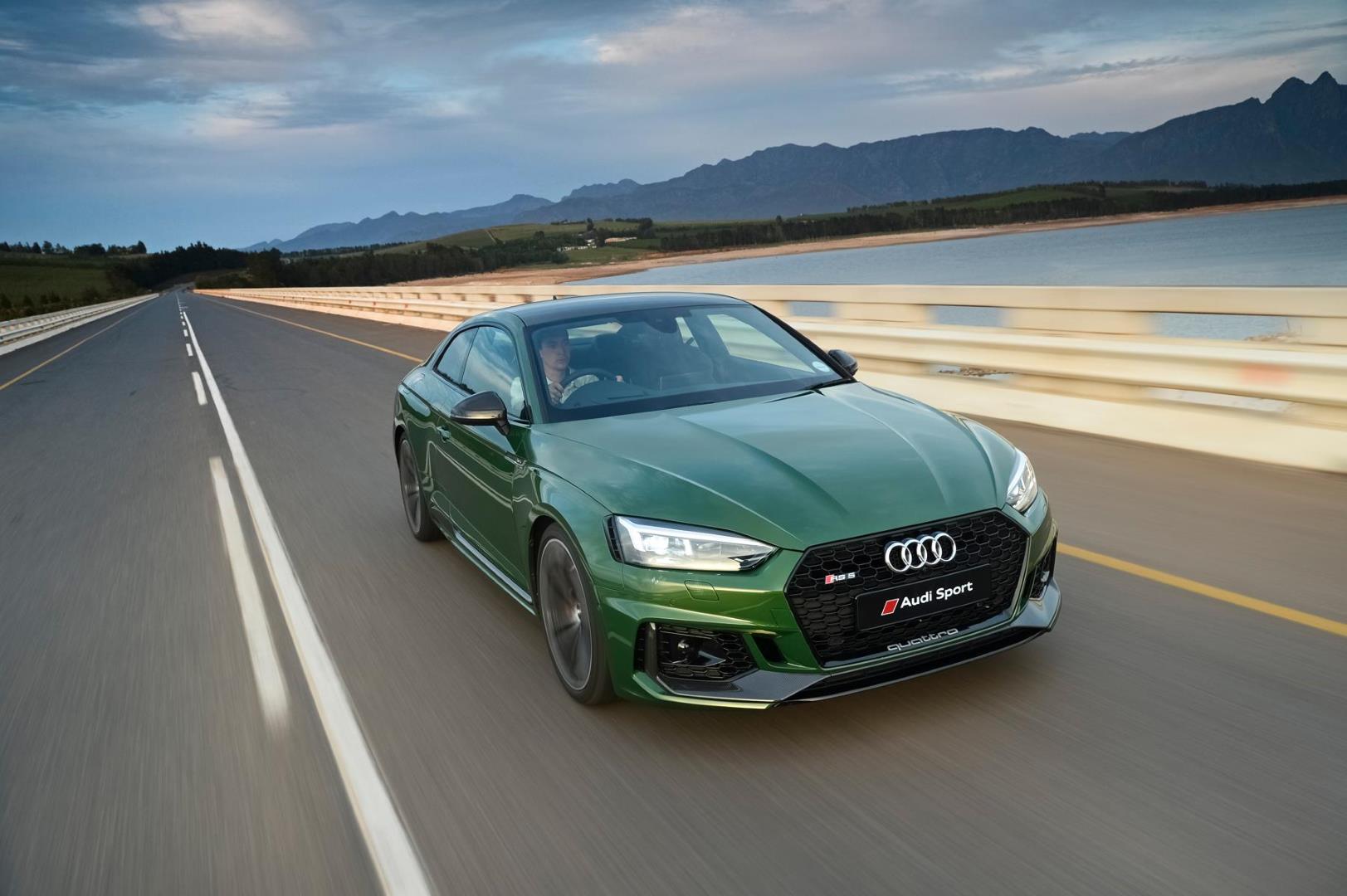
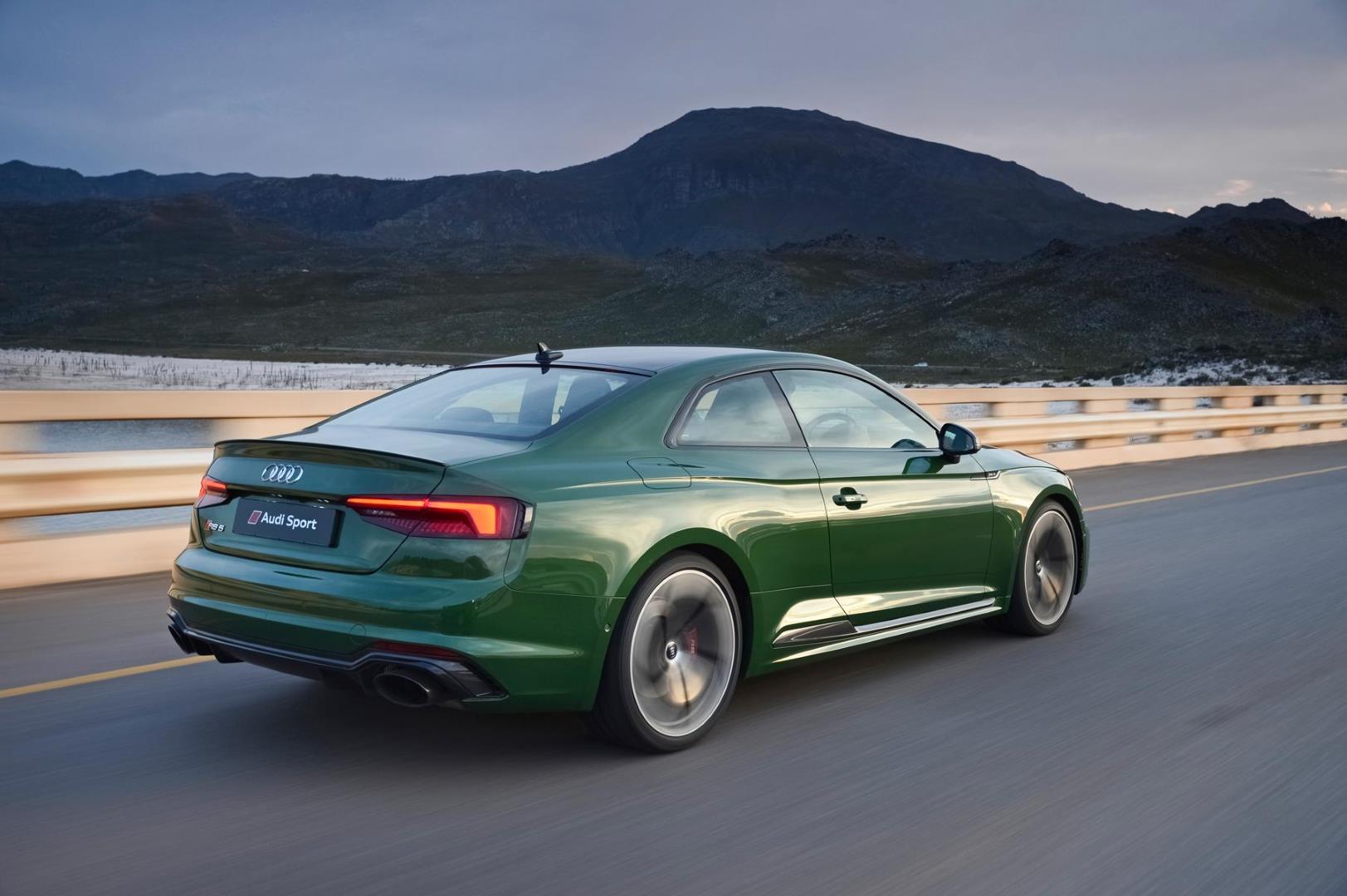
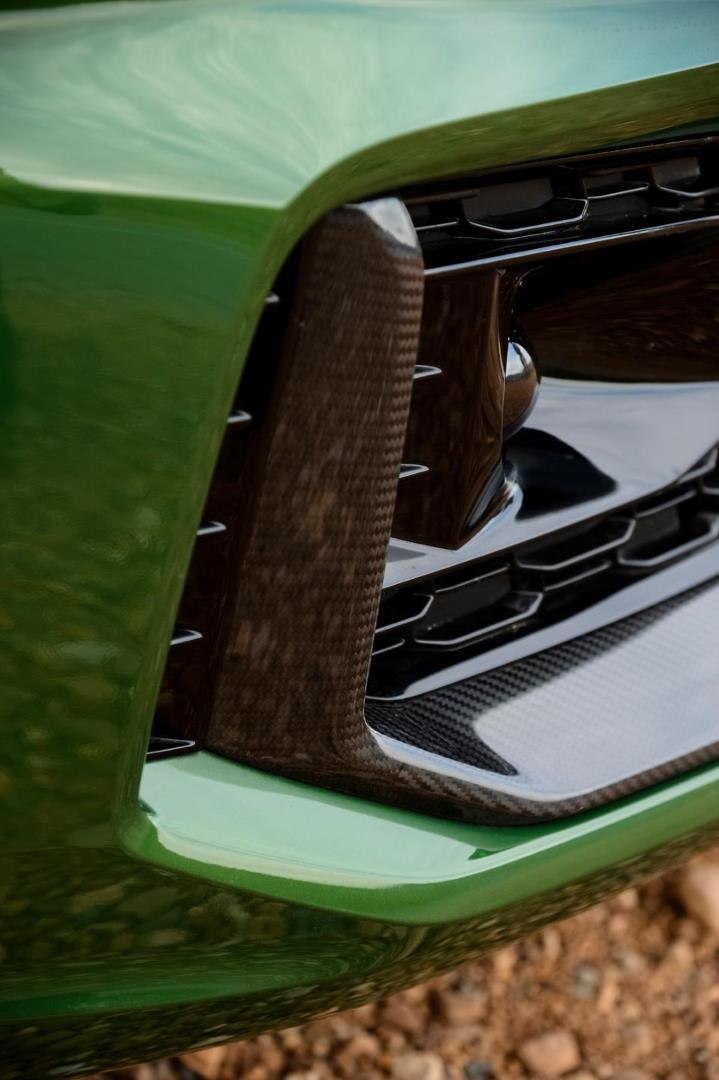
At this stage, the RS 5 will only be available in two-door coupé format, but there are plans to launch a five-door Sportback version around mid-year 2018. Nonetheless, the RS 5 Coupé is a stunner in its own right, with its broad track and matching fender blisters teaming up with the big twin oval tailpieces and gaping air intakes to project an image of discreet menace.
It shares its heart with a Porsche
If its appearance signals some serious intent, the underlying mechanical bits provide the bite to back up the bark. The old 4.2-litre V8 finally heads to the great recycling plant in the sky, and in its place sits an all-new 2.9-litre twin-turbo V6, shared with the Porsche Panamera and distantly related to the unit found in the lower-tier S4 and S5.
This new engine is 60-odd kilograms lighter than the outgoing V8, delivers the same power as before (331 kW), but brings along a lot of extra torque – 170 Nm more, to be exact, for a new total of 600 Nm. The torque is also spread over a much wider rev range than before, making for impressive in-gear flexibility and eye-widening flat-out acceleration.
quattro traction and adaptive dampers
Not even Fisantekraal's poor surface condition could upset the RS 5 composure, thanks to Audi's quattro full-time four-wheel drive system and surprisingly compliant suspension. In fact, apart from the new engine's extra muscle, the ride comfort must count as the new RS 5's biggest improvement on its predecessor.
The optional adaptive damping in the car I sampled managed to offer a reasonably comfortable ride on the freeway, absorbed the airfield's bumps and dips, yet kept the car's movements under firm control during hard cornering. This compromise is far better resolved than it was with the first-generation RS 5.
Weight is its enemy
However, even though the new RS 5 is about 65 kg lighter than the old one, it's still not especially light at its 1665 kg kerb weight. This heft makes its presence felt during sudden direction changes, where there's a touch too much inertia to overcome before the front tyres dig in and throw you in a different direction.
It's clearly far less nose-heavy than the old one was, but its overall handling characteristics are unlikely to pose any serious threat to the Alfa Giulia QV or BMW M4. Think secure, rather than thrilling, dynamics.
Not really that sporty, then?
In the spirit of fastest Audis through time, the RS 5 is a different kind of performance car – one which covers ground at a rapid rate, but doesn't draw attention to the speed. Its talents don't really shine on a test track (although its 0-100 km/h sprint of 3.9 seconds puts its acceleration right up there with the class champions), but it comes into its own on the road.
It's all down to Audi's hallmark AWD system, which ensures that all the available power is used to go faster, and not to convert rubber and high-octane fuel into smoke and noise. Speaking of the noise, the new engine does play its own tune, but it's nowhere near as soulful a sound as the old, high-revving V8 produced. Some pops and bangs from the exhaust do compensate, though.
It's really an all-condition touring car
As a result, it is fast everywhere, and under all conditions. In traffic, it bolts from a standstill without any squealing or drama, and when it gets wet or slippery, you can still lean on the throttle far longer than you would in any of its competitors. No matter what the road surface throws at the RS 5, it will always find a way to get more power to the tarmac.
This makes for a devastatingly effective cross-country car, just not a terribly engaging one. The driver simply has to point it in the right direction, and the car will do the rest. It's serious speed made easy.
It's not even that expensive
It seems ludicrous to talk about a car with a list price of R1 285 500 in terms of value for money, but in reality, the RS 5 is competitively priced against such rivals as the BMW M4 and Mercedes-AMG C63 Coupé. Of course, being German, the options list could easily add another hundred thousand or so to that tag, so be careful when you're ticking those option boxes. The adaptive suspension is a must, as it improves both general comfort and cornering prowess, but at least you get some lovely bucket seats and Audi's Virtual Cockpit digital dashboard as standard, along with LED lights and a host of unique styling add-ons.
Serious about speed and grip
The new RS 5 is the really, really rapid Grand Tourer that its predecessor never was, thanks to that newly-improved suspension and livewire engine. It also looks the part, and proudly continues Audi's tradition of fuss-free all-terrain speed. But I can't help thinking that it might have been even more impressive, if only it didn't take itself so seriously...
Audi RS 5 quattro Coupé
| Engine: | 2.9-litre TFSI bi-turbo V6 |
| Transmission: | 8-speed Tiptronic Automatic, permanent all-wheel drive. |
| Outputs: | 331 kW @ 5700 – 6700 r/min, 600 Nm @ 1900 – 5000 r/min |
| Performance: | 0 – 100 km/h in 3.9 seconds, max speed 250 km/h (limited) |
| Price: | R 1 285 500 |