
8 Essential items to keep in your glove box
8 Essential items to keep in your glove box


By Martin Pretorius
We tend to use them to store surplus drinking straws, and to hide our wallets and sunglasses from prying eyes. But you really should put that storage compartment to better use – doing so could help you out of a sticky situation or save your life. Here's a list of 8 items you need to keep in your glove box.
1. Emergency details
In the event of an accident, emergency responders are trained to look for anything with which to identify the victims. Not only is it important to know who the victim is, but also to determine if there are any specific medical needs to contend with, and to notify those closest to them. This will enable the paramedics and hospital staff to treat them most effectively, and will help them to inform your next of kin about your misfortune.
Here's what you should do: Print an A5 card with your personal details, have it laminated, and then stick it inside the glove box or its lid. Information on this card should include your name, address, ID number, medical aid details, specific medical information (such as allergies and pre-existing ailments), emergency contact details, and insurance information. As a bonus, this will eliminate the need for anyone to go through your wallet and cell phone to try and figure out who you are.
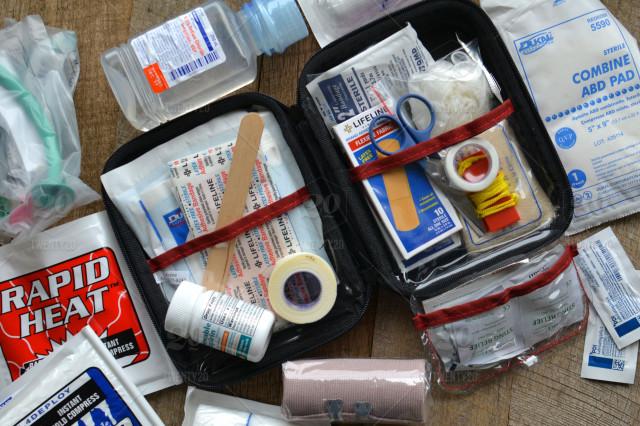
2. A first-aid kit
We're not talking about a full-on “survive-in-the-wilderness-after-an animal-attack” type of kit here, but a basic selection of equipment. Say two rolled-up bandages, a pack of stretch plasters, adhesive tape, a few diaper pins, disinfectant (pocket-sized bottle of Dettol or similar), a ball of cotton wool (stored in a small zip-lock bag), some pre-packaged sterile gauze, a small bottle of hand sanitiser, small scissors, latex gloves and surgical mask, a CPR mouth piece, a few sterile suture needles and a few meters of rolled-up thin-gauge fishing line.
This sounds like a lot of stuff, but can actually be packaged neatly into an A5-paper-sized lunch box, and will prove to be very useful if you come across a road accident, or even if you're in an accident yourself but there's someone close by with some first aid experience. Take note never to store any medication inside the glove box, as elevated temperatures inside that confined space will rapidly render any tablets or pills useless or even poisonous.
3. A torch
Yes, most cell phones can be used as a torch, but sometimes an old-fashioned cylindrical torch will just be easier to handle and more effective in confined spaces. There's no need for a hefty 3-cell torch, though – modern mini-Maglite or LEDlenser torches run off a single AAA battery and consume very little power, but will give you all the light you could reasonably need next to the roadside.
If you're using one of the small LED-based torches we recommend above, it will also enable you to lightly grip the torch between your teeth when you're busy changing a wheel or looking for something in the spare wheel well, freeing up your hands and aiming the light exactly where you're looking.
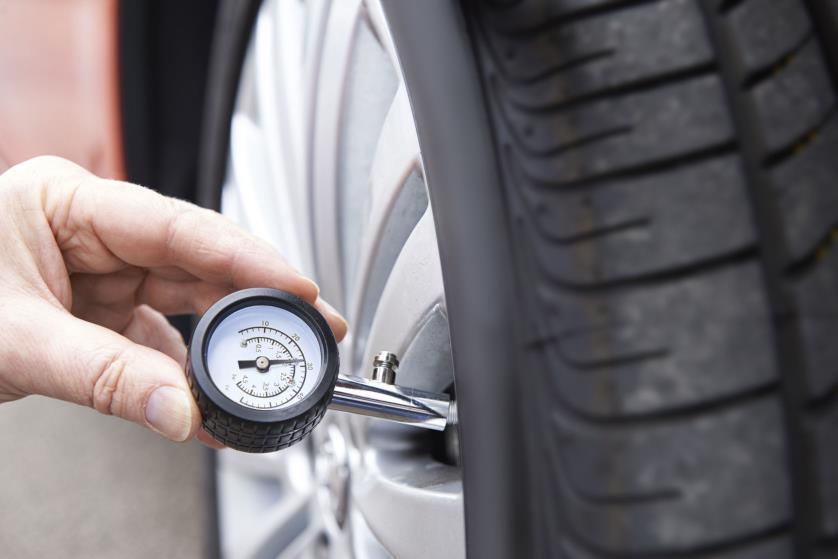
4. Tyre pressure gauge
Yes, I know you sometimes ask the service station assistant to “check your tyres”, but those gauges are often very poorly calibrated, so it's really best to do it yourself. Having a good-quality (though not necessarily expensive) tyre pressure gauge in the glove box will enable you to keep your tyres at the manufacturer's recommended pressure, prolonging their life and adding an extra measure of safety to your driving.
5. A selection of fuses
A little container with a few fuses will save you much frustration when one of them decides to give in at an inopportune moment – that's why every car already carries some spare fuses inside the fuse box. The problem with relying on the car's own supply of spare fuses is that they tend to get used up, eventually leaving you with no suitable replacements when you need them most.
Try to keep at least two spare fuses of every capacity (say 10A, 15A, 20A and 30A) in the container, along with either a small long-nose pliers or the car's own fuse extracting tool. Just make sure that the spare fuses are compatible with your car, as there are many different designs and physical sizes of fuses in use. Always remember to replenish this supply of spare fuses after taking from this kit.
6. Owner's manual
This is the book to which very few of us ever pay attention, except when it's time to enter the radio's security code or check for service requirements. However, keeping the manual in the glove box will also help you understand what any unexpected warning lights mean when they illuminate on the dashboard, and where to find the fuse boxes.
In the event of a serious mechanical failure on the road, it will also describe the proper towing operation, how to attach the towing eye to the bumper assembly, and how to safely jump-start the engine in the event of a battery failure.
7. Notepad and pencil
In the event of a minor accident, it's far less troublesome to keep some old-fashioned writing tools handy – cell phones have made life more convenient, but there's still no easier way to exchange information than with a pencil and paper. Note that I said pencil, not pen, because pens often dry up due to disuse, which a pencil won't do.
It will also come in handy to take down the details of any witnesses or helpful bystanders, and to make rough sketches of an accident scene, because your camera phone might not always survive (or remain accessible after) an accident.
8. Tissues and baby wipes
Contrary to what their name suggests, baby wipes are immensely useful to keep around the car – especially the anti-bacterial type. They're handy to wipe off your hands after attending to a mechanical malfunction, or if your coffee spills next to the cup holder, or if your windscreen keeps fogging up in cold weather, or if you want to enjoy a snack while driving but couldn't wash your hands before setting off.
Tissues have their own special place, and come in pocket-sized quantities as well. Sure, you can blow your nose with them, but they're also great at absorbing accidental spills and wiping off your sunglasses.
All these items might add a kilogram to the total weight your car needs to drag along, but they will definitely make your life much easier in case of an emergency. And if you're clever about stacking this kit into your glove box, there will still be room for leftover Steers sauce packets to slot in next to your wallet. It's a simple part of preparation for your trip, so don't neglect it!