
Latest Information on Triumph
The Triumph Motor Company was a British car and motor manufacturing company with origins that trace back to 1885. It began when when Siegfried Bettmann formed S. Bettmann & Co in Nuremberg. He imported bicycles from Europe and sold them in London under his own trade name. In 1887 Bettmann went into a partnership with another German, Moritz Schulte and the trade name was changed to Triumph. By 1889, the two businessmen began their own bicycle production in Coventry, England. Some years later, approximately 1897, the company was renamed to the Triumph Cycle Co. Ltd.five years later to 1902, they began building Triumph motorcycles. Initially, they purchased and made use of another company’s engines. Once finances picked up they began producing their own engines. During the time when World War I erupted, the British Army had placed a massive order for the 550 cc Model H. Triumph had worked its way up to become Britain's largest manufacturer of motorcycles in 1918. A general manager who had joined the company in 1919, Claude Holbrook, persuaded Bettmann to acquire the assets of Clay Lane premises of the Dawson Car Company. This venture lead them to the automobile sector. Lea-Francis designed a 1.4-litre engine type named the Triumph 10/20 and collected a royalty from the company on every car sold. Production and sales proceeded at a moderate pace. The Triumph Super 7 was introduced in 1927 and sold really well until 1934. In 1930 the name was again changed to Triumph Motor Company. It became evident that they couldn’t compete with the larger car companies for the mass market. They, then, redirected toward the luxury car market to produce expensive cars. The Southern Cross and Gloria were then introduced in the line-up. Demise of Triumph The last vehicle to come from Triumph was a rebadged Honda Ballade labelled as the Acclaim. It was introduced in 1981 and was built under a licence from the Japanese. When the Acclaim was replaced by the the Rover 200, the Triumph name began fading and disappeared by 1984. BMW acquired Triumph upon purchase of the Rover Group in 1994. It then sold Rover to the Phoenix Consortium and refused to sell the Triumph division threatening to cancel the entire deal. The Triumph brand was then transferred to the British Motor Heritage Limited who have a licence for the sale of spares and service for existing Triumph cars.

Triumph Model Range
Related car reviews
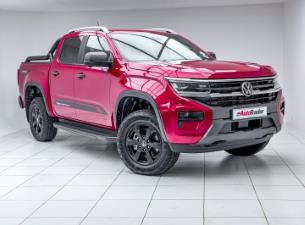 Volkswagen Amarok 2.3 TSI double cab PanAmericana 4Motion (2025) ReviewThe original Volkswagen Amarok rewrote the bakkie rulebook, replacing agricultural interiors with SUV luxury and introducing the legendary V6 diesel that remains a cult classic. In 2026, the Amarok 2.3TSI PanAmericana looks to recreate that "car-like" DNA. By swapping diesel clatter for a high-revving 222kW turbo-petrol heart, VW has created the quickest and most refined Amarok to date. What's it like to drive, though?
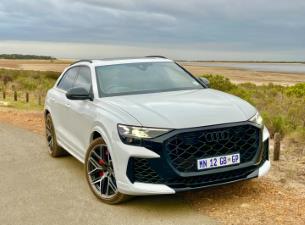 Audi RS Q8 Performance (2026) ReviewThe 2025 Audi RS Q8 Performance takes handling to the next level with sharper power, smarter chassis tweaks, and a variety of dynamic aids that boost control and grip, but is daily driveability sacrificed?
 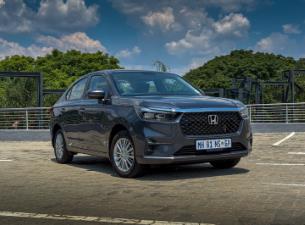 Honda Amaze 1.2 Trend - Long term update 2We recently took delivery of the Honda Amaze in 1.2 trend guise. After a few more weeks behind the wheel, we give an update as to what it is like to live with the compact sedan.
 Is a sub-R400k EV any good? 2026 BYD Dolphin Surf Dynamic ReviewThe BYD Dolphin Surf Dynamic is one of South Africa’s most affordable electric cars, slipping in under the R400 000 mark while offering impressive standard features and a 5-star Euro NCAP safety rating. In this review, we explore its real-world range, performance, practicality, ownership costs, and monthly repayments — and reveal where this budget EV shines, and where it reminds you of its price tag.