
Casting the mindset of a champion: Zarco’s origins
Casting the mindset of a champion: Zarco’s origins



By Adam Wheeler
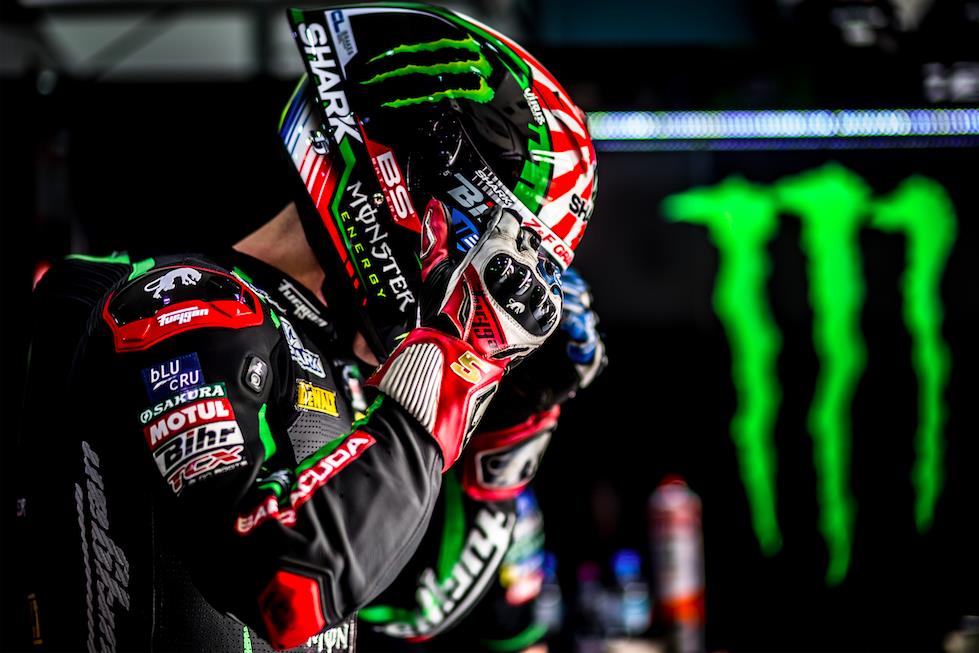
Johann Zarco looks like a man who thinks carefully about his job, and at the 350kmph sharp end of MotoGP with the Monster Yamaha Tech3 team it’s essential that he zoom-in on every aspect of his performance to glean golden tenths of a second on the track. The 28 year old has already done a stellar job with his career. With two Moto2 World Championships, victories in two categories and five MotoGP podiums just eighteen months into his tenure in the premier class he is already the most successful French rider in the 70 year history of the FIM World Championship.
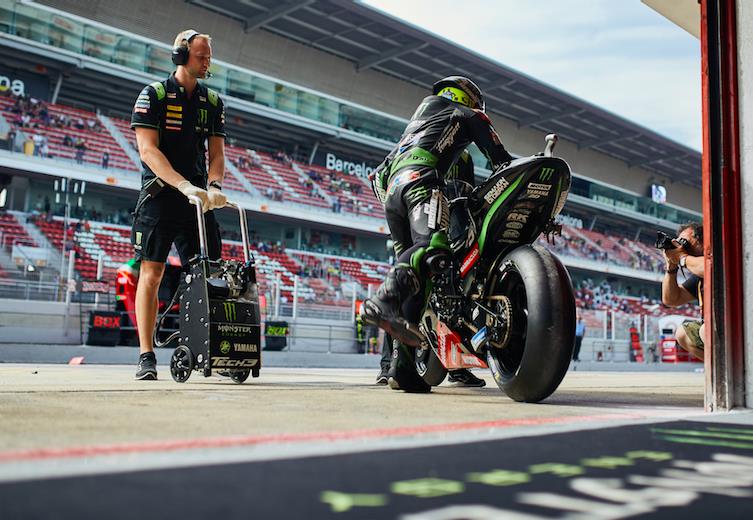
He is now patiently striving for his maiden Grand Prix win on the distinctive black Yamaha M1; a year old machine bestowed to the satellite Tech3 squad and with which Zarco has routinely upstaged factory racers Valentino Rossi and Maverick Viñales, as well as those from other brands.
Direct, aggressive, studious and completely unfazed by the names or challenges around him, Zarco is a virulent addition to the MotoGP grid and one that is adored by the passionate legion of French motorcycle racing fans (indeed the fuss around his Pole Position and possibilities at Le Mans for his home Grand Prix last May were frantic; a whole new level of expectation and pressure for #5 to deal with).
Johann is not the type of guy to be found hiding behind his own sunglasses brand, he’ll rarely be found languishing in fast cars on social media and he is a forthright and thoughtful speaker. His unassuming profile is a contrast to the torrent of energy he displays behind the bars of the Yamaha. He is an interesting case study, particularly through his strive for perfectionism and the work with coach, manager and confidante Laurent Fellon who spotted a shy teenager and they together plotted a course to the peak of the world championship and record book prominence.
We asked Johann to talk about his ‘road map’ and his journey to stardom and how he tries to find the remaining few inches of progress to make it to the final stage: the last step to the highest level of the MotoGP podium. It is only a matter of time…
I cannot remember if I was eight or nine when I first rode a motorcycle…
Next to my home there was a little off-road space and you could pay some money and have a little ride on a PW50 [a junior ungeared bike]. That was the first time. I remember asking my father to go there, and then we went again and again. After a while the guy from the track said to us ‘if your boy likes this then a few kilometres away in the next town is a motoclub with asphalt and other children ride: try it’. We went there and that was the start, in 1999. So I started on the dirt, but I think I asphalt would always have been my way because you hurt yourself less. In motocross I think it is difficult to be a champion without breaking something. In road racing you crash and slide and don't hurt yourself as much.
We met Laurent when we needed someone like him…
I was riding a 50cc bike with a gearbox and that meant some mechanical work. My dad is a chiropractor and didn't know anything about being a mechanic. He learned a few things but in the end found some people to help and he had enough money to support me because bike racing was already expensive. From 2000-2003 we were riding and racing but I can remember him coming to my room at home and asking ‘do we continue?’ I said yes. It was a hobby and I was winning on the PW50 but when we had to work on the 50cc bike then it was difficult at that point I met Laurent and he was able to help with what I was doing on the track. My Dad relaxed a bit because we finally had someone that knew this world. I had never seen racing on the TV. I watched a race in 2001 – when Valentino Rossi had that yellow bike in the 500cc class and I said ‘look, they are doing what I do!’ I really was a child…!
My studies on the bike actually helped me at school…
I didn't know that much about what I wanted to do. I was not that great in school. I was thirteen-fourteen when I met Laurent and I really responded to the things he was saying to be able to improve on the motorcycle, and the same methods also worked for me in the classroom and I got better results! For the bike I was listening a lot but I needed time to take it on-board and be fast. He could see I was listening and trying and then knew it was just a matter of time. Being able to ‘digest’ was one of my best attributes when I was young and still now maybe.
I was watching and listening and trying to understand…
Most the time Laurent did not give me the solution. He told me what he saw and he believed he was right. I listened and tried to adapt to the feedback to - for example - make a corner better. Over time I found my own way and he saw that; if we had stayed like it was then he knows I would not have ‘grown up’. Many times he used the say the same things as feedback and that was good because you came back to a ‘base’ but sometimes you had to interpret feedback, almost make a ‘translation’ of it, and when you understand then you have the feeling you are working well and it is satisfying. For sure I needed someone like him, it was the way for me to become what I am now and to have this technical and motorcycling ‘base’, like a mechanic understands how a bike works, I understand how to race. It was necessary, as well to have that fighting mentality. I accepted to be in this type of situation and to make myself as good as I can be.
I’m the sort of guy that might looks like he is thinking a lot but I am also able to jump on the bike and forget everything…
I must be focussed on one thing. I am happy to have ‘drawers in the closet’ and be able to ‘open’ just one when I get on the bike. In MotoGP at more than 300kmph if you have multiple thoughts then you cannot hold them in your mind. I almost say to them: ‘see you in the pitbox later!’ This sport is complicated in the way that you look at the bike: you will feel good with it one session and then not so good the next. Why is that? You need someone to explain it or to help you so you are not disturbed by it. Perhaps it is only the track conditions that are changing or the tyre has been used. Perhaps there actually is a problem on the bike or maybe you have something in your mind that meant you didn't do well: it is difficult analyse all of that if you don't have experience. You need a guy to look at the difficult things and say ‘it is you’ or ‘it is not you’. Most of the time I would think ‘it is me’, so I worked on myself but Laurent also said ‘maybe it is the bike not allowing you to ride like that, try to work on the bike as well’. He was the one to say that to me and I think that was important.
When you want success then living every day trying to improve is not tiring…
You are happy to do it. That search gives you motivation. To try things and to discover if they are working or not is a key thing for improvement. People can become obsessed with getting better but that is where the balance of a professional sportsman comes into it. You can do all the technical things possible but in the end it just comes down to feeling. Some riders just ride…but when they have a crash then they have problems to understand it. If you have measured everything and know the technical parts well then I would say you have 80% of the job done but to win or reach the podium you need 100% and to find that last 20% comes down to you; whether you have the quality and whether it is your day or not. If you just stay at 80 and don't push for the last 20 then you will be a good rider but not a champion.
Training and working with Supermoto for me is about being really smooth and to find that limit with a clean style…
I feel that there is something useful to be taken from the front end of the bike to be able to take a better line, one to make you go faster but not at the point where you slide to turn. I would like to ride three times a week but at the moment we only really have time for once a week. As a MotoGP racer you need to ride; to do laps without thinking. You must always push yourself to the limit to keep progressing. Riding at least once a week I am in good form to get on the bike and go for it. If you do it every day then maybe you are tired and you don't push at the right limit. The fun side of riding is almost always there but you cannot always ride for fun, you must do it for performance: to be ready for the race. Sometimes you can come home from MotoGP and know that you need a couple of days rest or to be away from the bike so you can be at the maximum for the next time.
I don't have a plan to be MotoGP Champion…
…but I have a dream and I think that is a big thing. I need to keep learning from someone like Marc Marquez. Becoming like him is not possible, I have to be me, but maybe if I can do a couple of things that he is doing then I might be stronger. I have to trust in that and push for it.