
In Search of the Good Green Life
We review the Toyota Prius 1.8-litre Petrol-electric


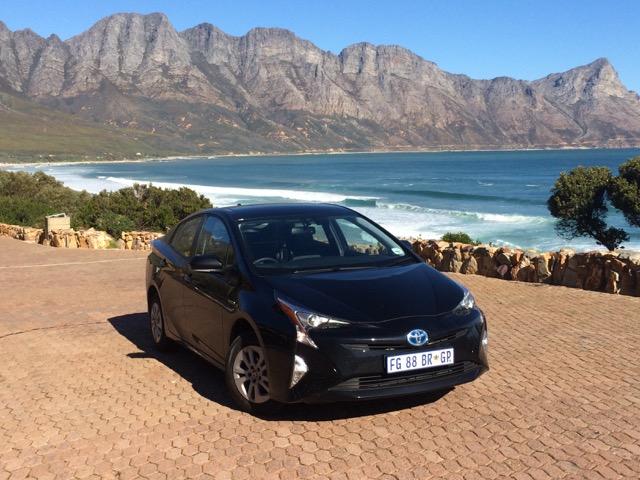
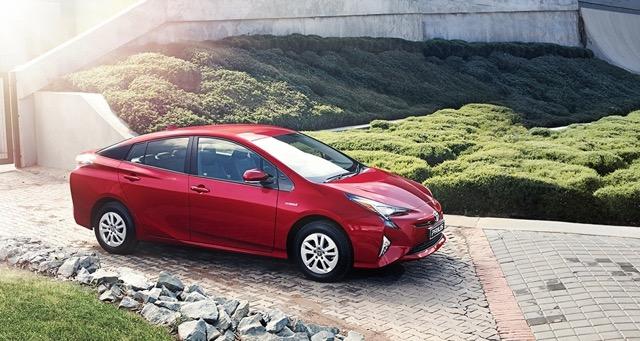
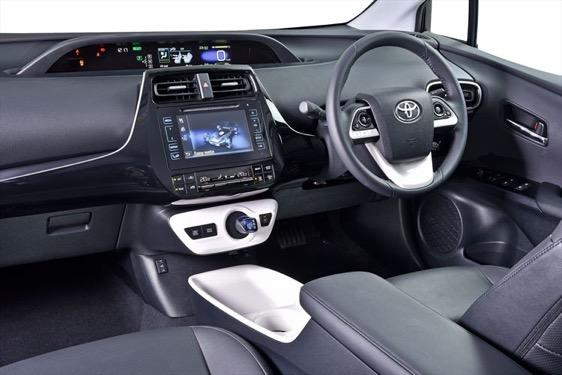
Life very rarely turns out as planned. When I heard that Toyota’s new Hybrid eco-warrior, the Prius, was making its way to me, I had plenty of bright ideas of how I was going to do ‘green’ things with it. Loved by the cream of Los Angeles’s eco-aficionado celeb set such as Leonardo di Caprio, Selma Hayek and Cameron Diaz, the Prius has cult status in California. Built on a Toyota’s new TNGA platform, its hybrid powertrain has been tweaked to be more responsive and efficient, and the car itself is lower, and much more edgily styled on the inside and outside too. I couldn’t wait to see (and drive) it for myself.
Back to the future
At Cape Town International Airport, the stealthy black Prius is already waiting for me in the valet parking area. I’m beginning to feel like a celebrity already! The designers must have had fun designing it, because it sure is flamboyant – but is it good-looking? From the side it looks sporty, the front end is highly angular, leaning towards premium brand Lexus, but the rear-end leaves a lot to be desired, looking a smidgen unbalanced. The high boot-lid is split so you can see what’s going on behind you, and it increases the luggage volume. But hot, it is not.
As I step inside the black, space-yacht kind of cabin with winter-white accents, it feels peculiar. Where is the instrument binnacle? What’s this funny little joystick protruding from the centre dash? But I do like how clean and serene it feels. Soon I locate the start button and maneuver the tiny gear lever into ‘Drive’. But boy, did I struggle to find the parking brake. A quick call to my press-fleet guy cleared that up quickly. The handbrake is more like a footbrake, such as the ones found in the older Mercs. You step on it to activate it, and to release it. Kind of primitive for a Prius, but it does save space.
In complete silence I pull away, and with no polite way to alert oblivious pedestrians that I am right behind them, I patiently wait as they saunter across to the other side. Now I can get onto the N2 to pick up the kids, before setting off on some eco-friendly Prius-owner adventures on the weekend. It’s a chilly day, so I switch on the standards seat heaters and feel my backside warming up pleasantly.
Wistful weather & hunger pangs
Saturday morning arrives, and the weather is foul so we just chill at home. Sunday morning arrives, and the sky is dark with heavy clouds. Knowing full well that the Prius has to go back after the weekend, we decide to drive to Stellenbosch (in the rain) to Vredenhof Organic Estate. I make the mistake of not packing snacks for the trip, thinking that healthy, pesticide-free food and a play-area paradise is only an hour away. When we get there, it’s closed. It’s a Sunday, and I didn’t check opening hours. Not so clever, Mom.
I pull over and Google plan B on my phone. The kids are moaning with hunger but I insist that we’ll be eating soon (and that they have no actual idea what it feels like to be starving and how lucky they are to be sitting, warm and dry, on the Prius’s standard leather seats). Plan B entails driving a little further to Weltevreden Estate that has a child-friendly restaurant and a kiddies’ carnival area with huge jungle gyms, sandpits, a scooter track (with scooters to rent) and even child minders. With much enthusiasm we arrive, but due to the morning rains, the carnival area is closed. By now the kids’ complaints are bordering on hysteria.
We climb back into our pretty Prius (its looks are growing on me) and head back to the R44, spotting the multiple white tents of the large and cheerful-looking ROOT44 Market on the left. I pull into the somewhat muddy parking area, and we head straight for the food court. The kids are excited! Anything you could possibly want to eat, from sushi to German Bratwurst, pizza cones to Banting ice-ream is all under one roof. The kids opt for sushi, I tuck into a hot Indian Curry and we end it off with full-cream vanilla bean ice-cream. With sufficiently stuffed kids, I wander to the play-area where we only have time for a quick look-around before heading home. Next time we’ll surely make a day of it, because even if it rains, there’s plenty to keep the kids (and adults) fed and entertained. Because I’m a foodie, the food court is what will actually be bringing me back.
Hybrid handling
On the way back we take the scenic R43 home, so the kids can try spot some whales in the waters of Kogel Bay along Clarence Drive. It’s a fabulously twisty road, but the Prius is no Ford Focus. The Prius is classified as a hatch, yet is spacious as a sedan. It has a lower centre of gravity than the outgoing Prius, which does improve handling. But there’s no denying how heavy it feels around tight bends. The Prius is meant for leisurely driving – after all, you won’t get those stellar consumption figures by drifting it up a hill like Ken Block. The Prius also helps you to improve your green-footedness by evaluating the way you drive, offering tips as well as a score, which you can’t help but want to improve every time you go somewhere.
Investigative journey
On Monday morning I depart for Cape Town again (150 km away) in the Prius. This time I will check exactly how much fuel I use on the way there, and whether the fuel saved by driving in electric mode in town, is reason enough to want to buy a Prius. The real reason behind the trip is to pick up a used elliptical trainer for my lounge, so I can exercise in front of the telly after dark. Upon my arrival in Diep River, my consumption is sitting at about 8 litres per 100 km. It’s pretty decent, but does it warrant the price tag?
And will I fit the huge machine into the Prius? I fold the rear seats completely flat, and with a bit of shifting about it fits perfectly. So the Prius is practical too, and even bigger inside than it looks.
Then I venture into town for a few other errands, allowing the Prius do the work in full electric (EV) mode. 5 Kilometers (in heavy traffic) later, and the Prius’s trip computer congratulates me on my economical driving, with a figure of only 3.8 litres per 100 km in town. It’s brilliant, considering that Toyota’s figure (in perfect conditions) is 3.7.
The natural way of things
In the spirit of all things environmentally friendly, I stop for lunch at Mary-Anne’s Natural Way on the way home, which is a cosy little restaurant/health shop between Gordon’s Bay and Somerset-West. Mary-Anne’s offers food and fare which is a hundred percent vegan, as well as preservative- and gluten-free. But before you’re tempted to say ‘boring vegan?’, let me assure you that the food is as tasty and flavourful as it is colourful and healthy. Sitting in front of the cosy fireplace, I order a beetroot, apple and ginger juice (all organic, of course) and then make my way to the heavily laden buffet table, with an imaginative assortment of all kinds of deliciousness! For R100, you can tuck into soups, salads, sauces, dips, pizza (yes, pizza, and it’s good!) veggies, seeds, nuts, and everything your nutritionally-starved body could possibly desire. I eat until I am satisfied, then I browse around all the natural products & supplements in the shop. Then Mary-Anne and her hubby see my new black Prius parked outside, and they come check it out. Mary-Anne says she’s always wanted one, but they’re so darned expensive in SA…
So is the Prius pricey, for what you’re getting?
Well, hybrid technology is not cheap, so in South Africa, the Prius will cost more to buy but less in the long run. The Toyota badge helps its resale-value, but Hybrids aren’t popular enough in SA so the Prius will depreciate more than a (diesel) RAV4 2.2 D GX (R 459 000), for example. The hybrid should pay for itself in fuel after about 5 – 7 years, but only if you are an urban dweller who rarely ventures out into the open road. In South Africa we drive very long distances. If you live in London, the Prius makes a lot more sense, as you’ll pay no congestion charges. In Cape Town or Johannesburg? There are a lot of diesels that will give you similar combined consumption figures. My point is, if you’re a Prius fan and subscribe to the whole glamorous tree-hugger vibe, you’re going to buy one because it suits your image – and yes, it is a brilliant car, but for the average fuel-saving family, there are other cars to consider for around R446 400 or less. All Volvo’s diesel vehicles boast frugal consumption, such as the Volvo V40 D2 Kinetic (R 344 200), at around 5 litres per 100 km. With regards to boot space, it’s no match for the Prius, though – so perhaps the Renault Kadjar 96kW dCi Dynamique 4WD (a 2017 COTY finalist, R449 900), is a better idea. Other frugal alternatives include the Volkswagen Golf SV 2.0 TDI Comfortline at R376 000, or the regular-sized Golf 2.0 TDI Comfortline at R 359 800. Also have a look at the Nissan’s diesel Juke, Qashqai and X-Trail.
If your heart is set on the futuristically glamorous Prius, however, you won’t be disappointed by everything that it offers.
Facts & Figures
| Price | : R466 400 |
| Engine | : 1.8-litre Petrol-electric (hybrid) |
| Transmission | : CVT (Continuous Variable Transmission) |
| Power | : 90kW (total, combined with electric motor) |
| Torque | : 142 Nm |
| 0-100 km/h | : 10.6 |
| Top Speed | : 180 km/h |
| Fuel Tank | : 43 litres |
| Realistic fuel consumption |
: 3.8 - 8 litres per 100 km |
| Boot size | : 502 litres (seats up) |
| Warranty | : 3 years or 100 000 km |
| Service plan | : 5 years or 90 000 km |
| Hybrid battery warranty | : 8-years or 195 000 km |